
Last updated September 21, 2026
Free on-site gate assessment - hinges, posts, and your LiftMaster or Nice gate operator checked before anything is quoted
The assessment is free and the quote is the invoice.
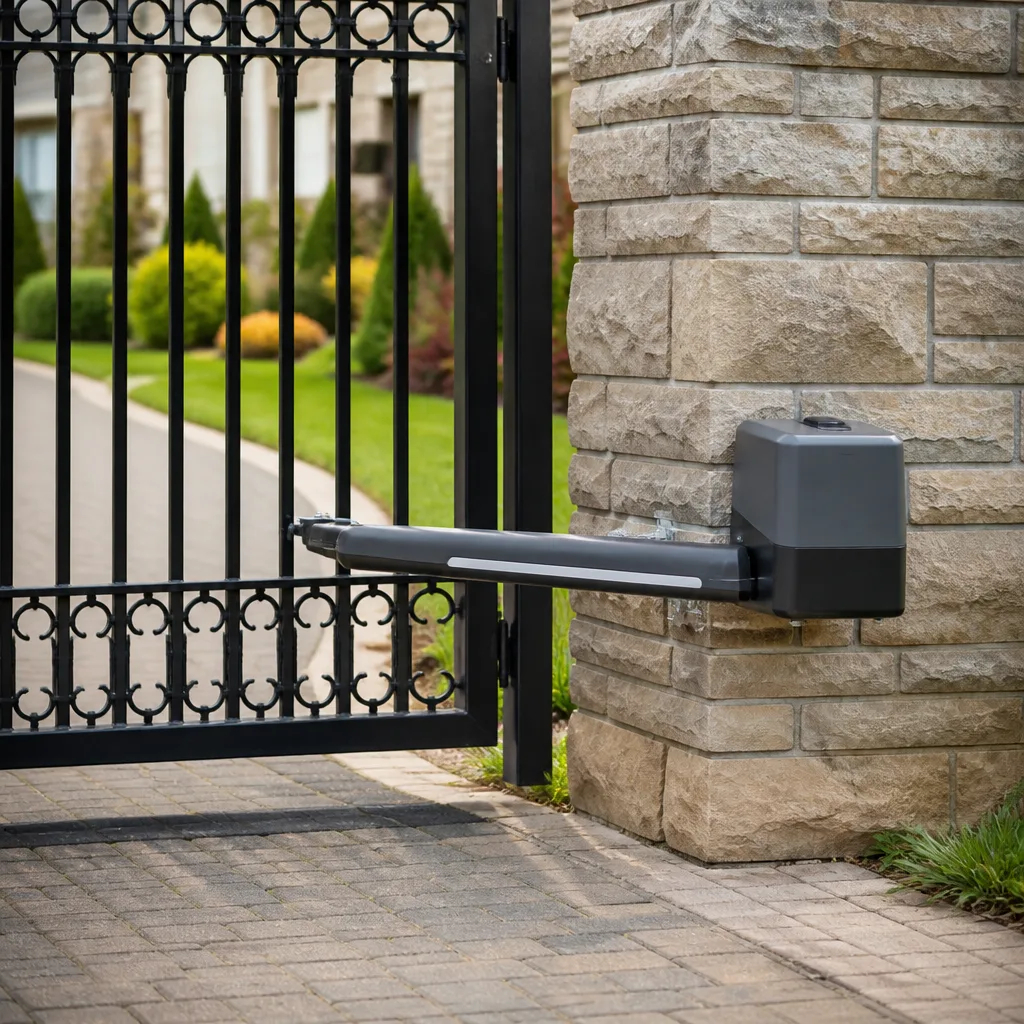
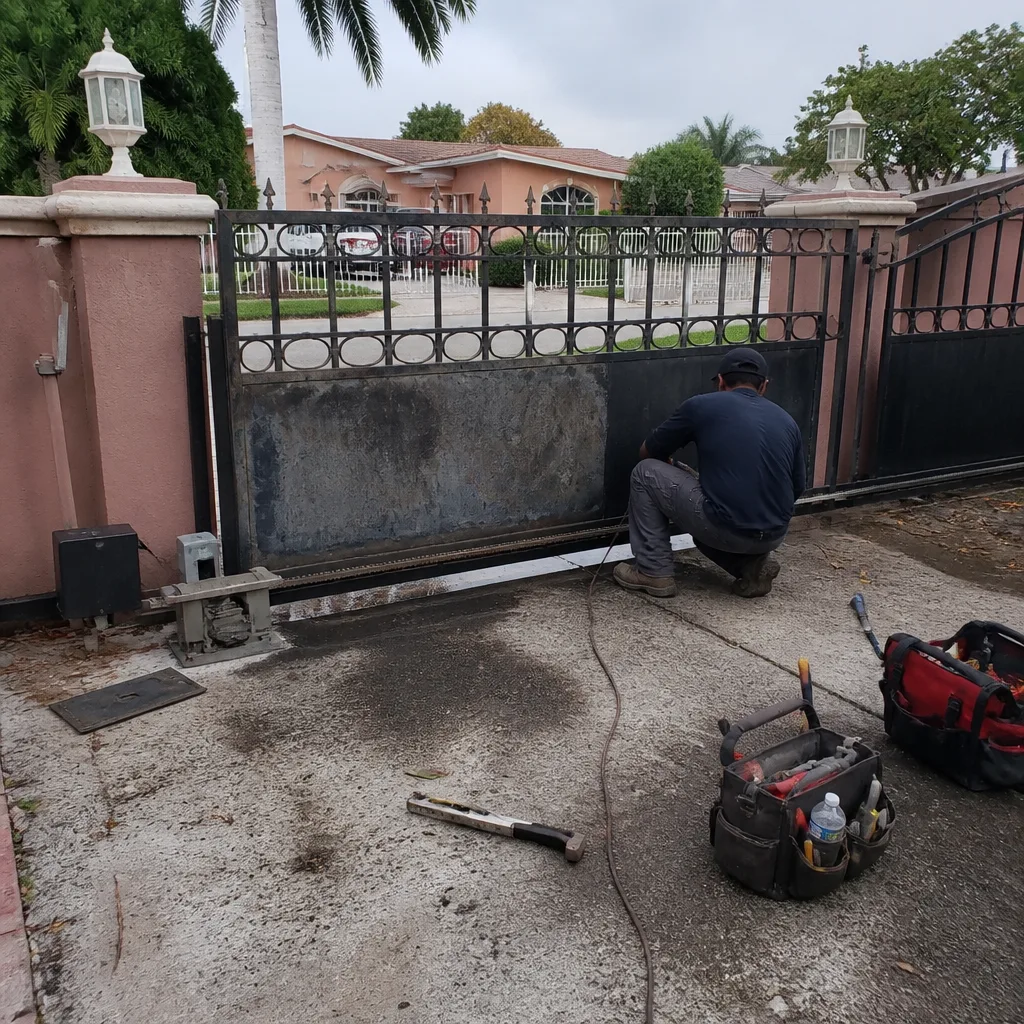 Before
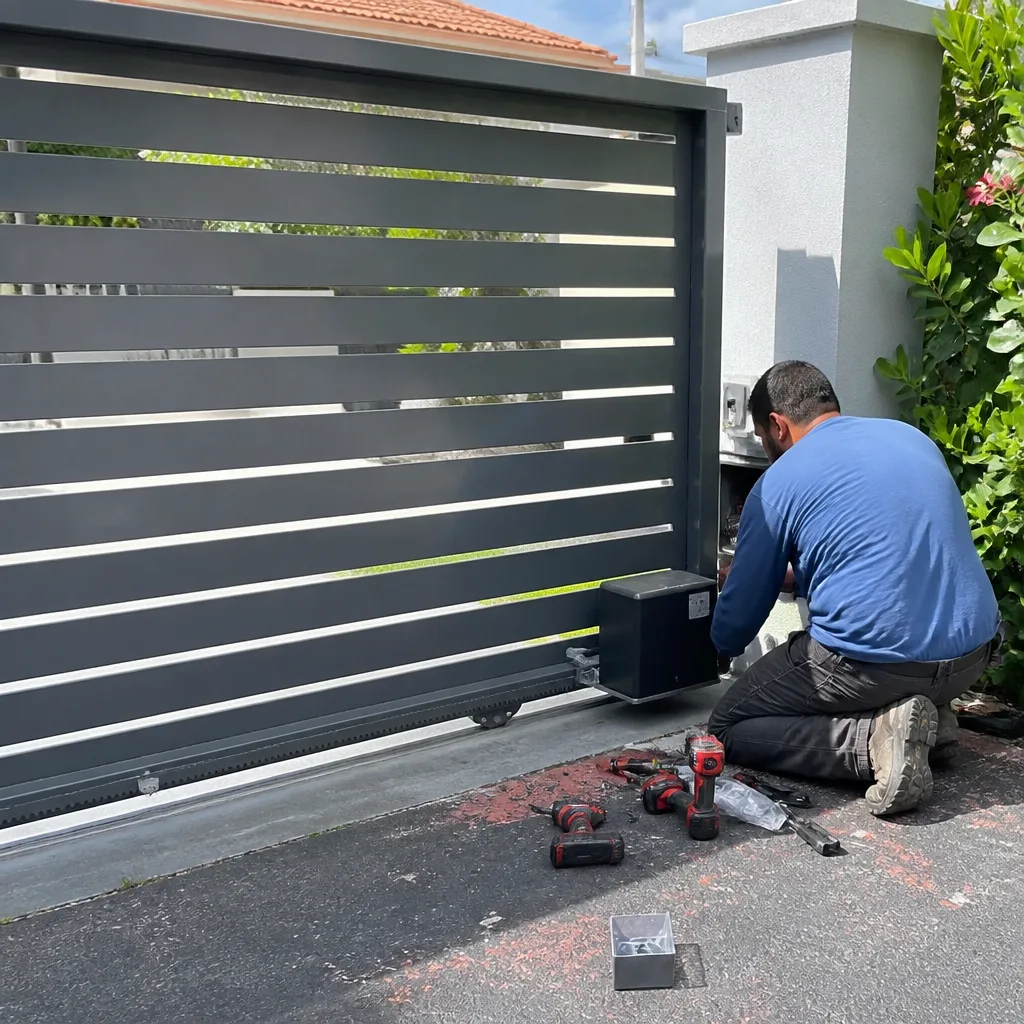 After
After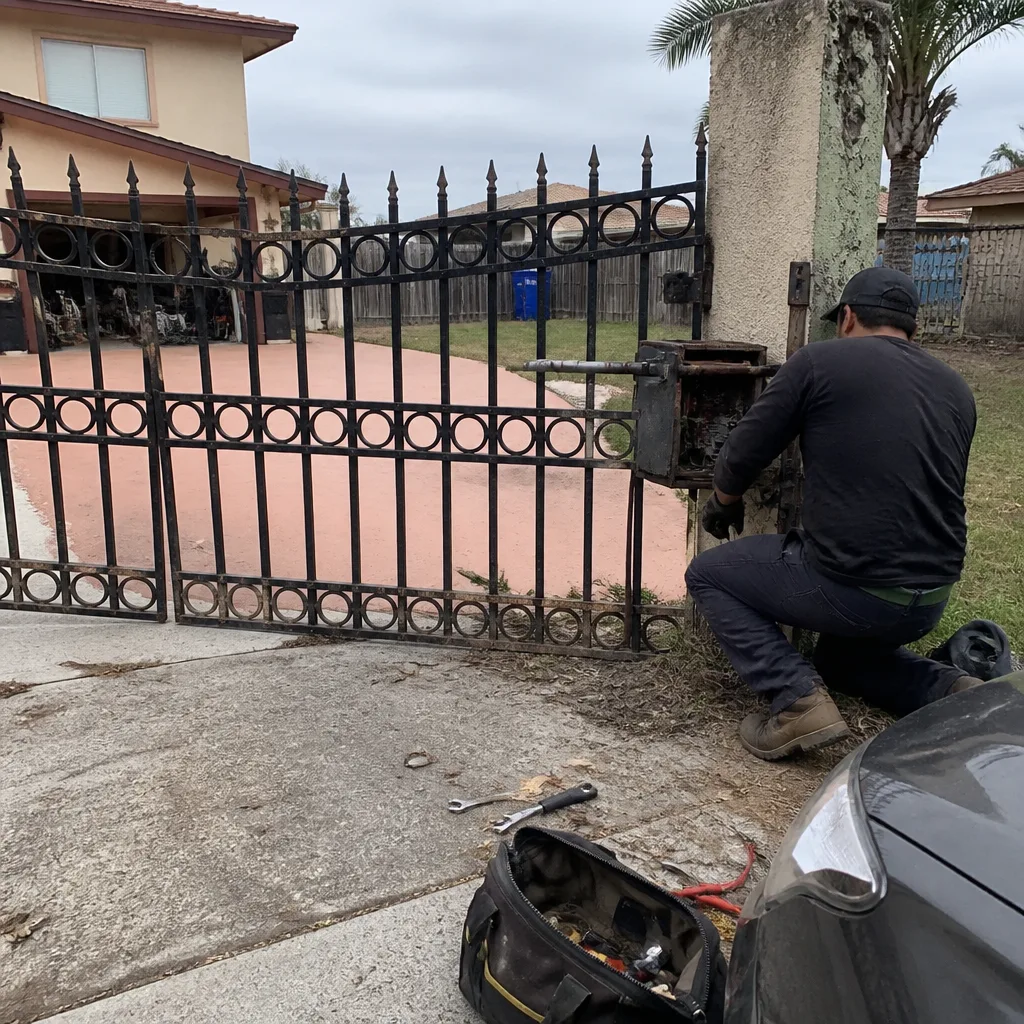 Before
 After
After Before
 After
AfterGate Repair Permits, Codes & Inspections in FL: What You Need to Know
A Hialeah homeowner had a new gate operator installed in 2022. The contractor gave a verbal estimate, finished in four hours, and left. Two years later, at closing, the buyer’s inspector flagged the unpermitted electrical connection to the 240V pool-equipment subpanel. The deal nearly collapsed. The retroactive permit, required emergency inspection, and rewiring to current GFCI standards cost $1,840 - more than the original installation. This happens regularly in Hialeah, where the line between “simple repair” and “permitted alteration” sits in a place most contractors do not discuss with homeowners. This guide explains exactly where that line is, what Florida law requires, and how to protect yourself at resale.
Quick Answer
Gate repair in Florida does not require a permit when the work stays within “like-for-like” boundaries: same part, same location, same electrical load. The moment a repair introduces a new gate operator, runs new electrical conduit, relocates safety devices, or modifies structural footings, it becomes an alteration requiring a permit under Florida Building Code Section 553. Miami-Dade County enforces these rules through the Building Department, and unpermitted electrical work on automated gates routinely fails 4-point resale inspections.
Table of Contents
- When Is a Permit Required for Gate Repair in Florida?
- What “Like-for-Like” Actually Means (And What Voids It)
- Miami-Dade County Gate Codes: Height, Setback & UL 325
- The Inspection Process: What Inspectors Check and How Long It Takes
- Resale Implications: Unpermitted Work and 4-Point Inspections
- Permit Costs and Timelines in Hialeah
- Common Mistakes to Avoid
- When to Call a Professional
- Frequently Asked Questions
 Before
 After
AfterWhen Is a Permit Required for Gate Repair in Florida?
Florida Building Code Section 553 draws the permit threshold at “repair versus alteration.” A repair maintains the original approved design, capacity, and location. An alteration changes any of these, and alterations require permits. For automated gates, this distinction matters because most residential gate problems involve electrical or structural components that sit right on the boundary.
Here is what triggers a permit in practice:
- New gate operator installation: Replacing a failed motor with a different model, brand, or voltage class - even if the mounting looks similar - is an alteration. The electrical load characteristics change, and the inspector must verify the new unit against the approved plans.
- New electrical run: Any extension of conduit, addition of a junction box, or relocation of the power source requires an electrical permit. This includes running 120V or 240V to a new location on the property.
- Structural footing modification: Adding a post, changing a post depth, or pouring new concrete for a gate support touches the structural code. In Hialeah’s coral-rock substrate, footing depth and rebar specification are specifically regulated for wind-load resistance.
- Relocation of safety devices: Moving photo eyes, edge sensors, or loop detectors changes the entrapment-protection zone. UL 325 requires documented verification of the new safety envelope.
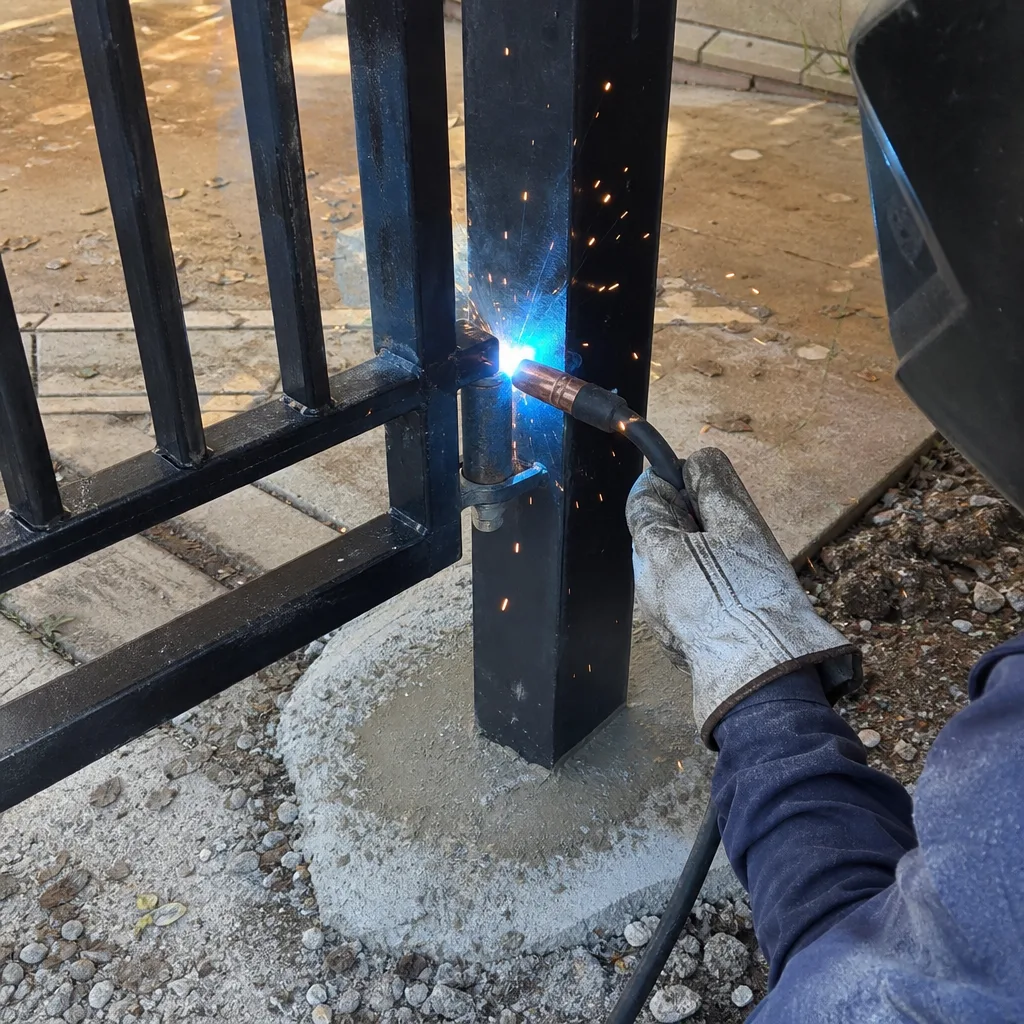
What does not require a permit? Adjusting travel limits on an existing Linear or Viking operator, replacing a broken chain on a slide gate, welding a cracked hinge, or swapping a failed photo-eye for the identical model in the identical location. These are repairs. We document them under Clause 4 of the Haven Standard, but we do not pull permits for them.
The confusion arises because many Hialeah contractors treat “repair” as a marketing word rather than a legal category. A homeowner asks for a “repair” and receives a new operator, new wiring, and relocated sensors - all unpermitted. At Vance Gate Repair Hialeah, we flag permit triggers during diagnosis and include the permit cost in our written scope before work starts. Learn more about our Gate Repair services. Under Haven Standard Clause 1, nothing is hidden.
What “Like-for-Like” Actually Means (And What Voids It)
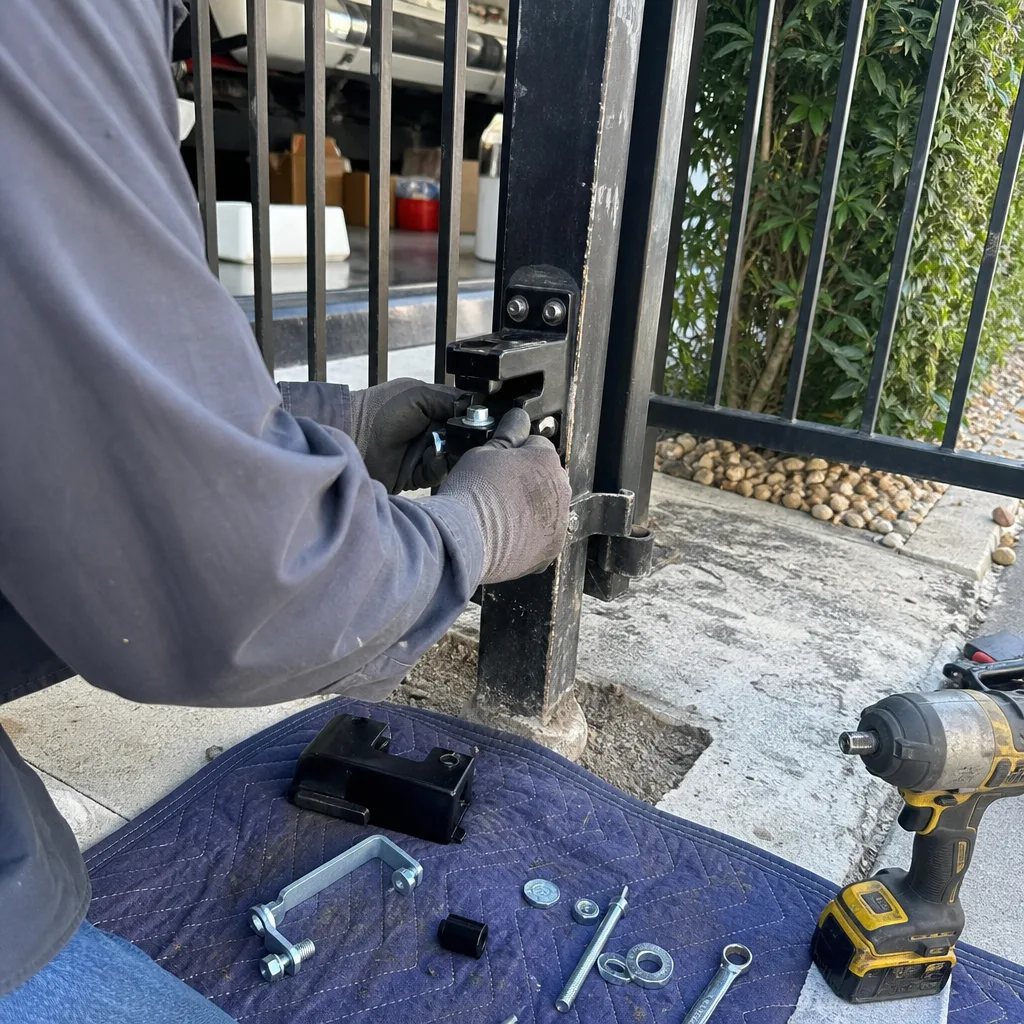
Miami-Dade County’s building officials apply a strict interpretation of “like-for-like replacement.” Homeowners often assume it means “roughly the same thing in roughly the same place.” It does not. Here are the specific criteria that must all be met:
- Same manufacturer and model number. Replacing a Ghost Controls TSS1XP with another TSS1XP qualifies. Replacing it with a Ghost Controls TDS2 (dual swing, different torque rating) does not.
- Same mounting configuration. The operator must attach to the same bracket, post, or pad with the same bolt pattern. A BFT submersible operator replaced with another BFT unit on the same pedestal qualifies. Switching from a pad-mounted to a post-mounted installation voids the exemption.
- Same electrical supply. The voltage, amperage, and circuit protection must remain unchanged. Upgrading from 120V to 240V to handle a heavier gate voids the exemption.
- Same safety device layout. Photo eyes, edge sensors, and loop detectors must remain in their approved locations. Relocating a photo eye to accommodate landscaping changes voids the exemption.
- No structural changes. The gate leaf, posts, and footings must remain as originally approved. Adding a pedestrian gate to a driveway system voids the exemption for the entire assembly.
We have seen Hialeah homeowners told their job was “just a repair” when three of these five criteria changed. The contractor completed the work, collected payment, and left no documentation. When the homeowner later needed a permit for unrelated work, the building department flagged the unpermitted gate alteration and required full remediation.
Under Haven Standard Clause 1, our written scope specifies which criteria apply to your job. If any criterion fails, we list the required permit, its cost, and the inspection schedule before you approve the work. You see the total price - including permit fees - before we pick up a tool.
Miami-Dade County Gate Codes: Height, Setback & UL 325
Miami-Dade County layers local ordinances on top of Florida Building Code requirements. For gates in Hialeah, these rules apply regardless of whether a permit is required for the immediate repair:
Height restrictions: Front yard gates may not exceed six feet in height without a variance. Side and rear yard gates may reach eight feet. These measurements include decorative finials or scrollwork. We have measured gates in Hialeah’s Palm Avenue corridor where ornamental ironwork pushed the total height to six feet four inches - a code violation that complicates any subsequent permitted work because the entire structure must be brought into compliance.
Setback rules: Automated gates must maintain a minimum setback from the property line and public right-of-way. For corner lots in Hialeah’s grid-pattern neighborhoods, the sight-triangle requirement (typically 25 feet from the intersection) can prohibit gate placement that would be legal on a mid-block lot. A gate installed without verifying this can be forced to relocate at the owner’s expense.
UL 325 entrapment protection: This is the federal safety standard that applies to every automated gate in the United States, permit or no permit. It mandates:
- Two independent entrapment-protection devices (typically a photo eye and an edge sensor, or two photo eyes)
- A constant-pressure hold-close switch for industrial applications, or automatic reverse-on-obstruction for residential
- Warning signage visible from both sides of the gate
- Gate travel limits that stop the gate within one second of contact with an obstruction
UL 325 is not a permitting rule - it is a product safety law. But Miami-Dade inspectors verify UL 325 compliance during every gate-related inspection. An operator without functioning entrapment protection will fail, permit or no permit. We test every system we touch against UL 325 criteria and document the results in our photo record.
Hialeah’s subtropical climate adds a local factor: corrosion of safety-device housings is accelerated by salt air and humidity. A photo eye that passed inspection in 2019 may have a compromised seal by 2024. We check for this specifically and replace weather-damaged components rather than adjusting around them.
The Inspection Process: What Inspectors Check and How Long It Takes
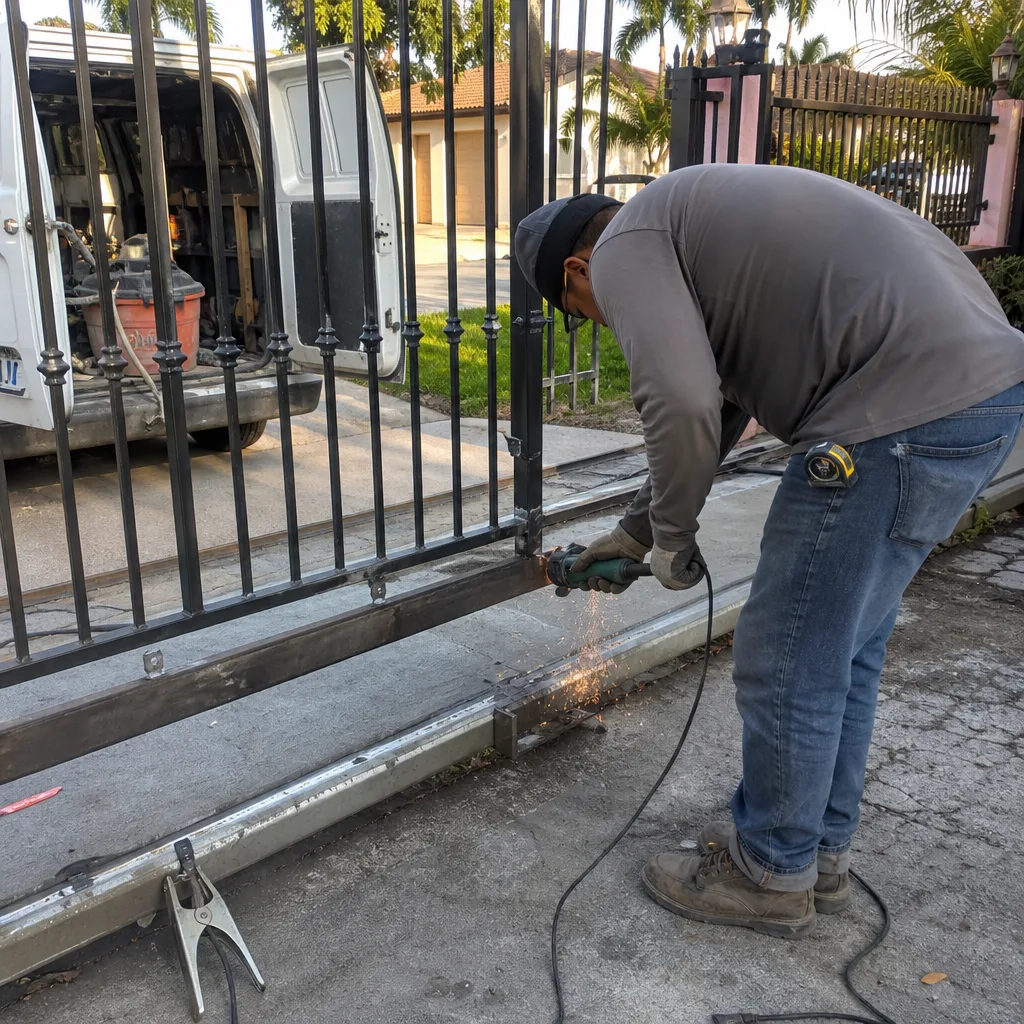
Once a permit is pulled, the inspection sequence in Hialeah follows Miami-Dade County’s standard process with local scheduling through the Hialeah Building Department. Here is what happens:
- Rough electrical inspection: Required if new conduit or wiring was run. The inspector verifies wire gauge, GFCI protection, grounding, and conduit support spacing. No operator may be connected during this inspection. Scheduling in Hialeah typically takes 3-5 business days.
- Structural inspection (if applicable): For new posts, footings, or gate frames. The inspector checks depth, rebar placement, concrete strength, and attachment hardware. In Hialeah’s coral-rock areas, shallow footings are common failures - the rock layer can stop a post hole at 18 inches when 36 inches are required.
- Final inspection: The complete system is operational. The inspector verifies:
- UL 325 entrapment protection function (photo eyes, edge sensors, auto-reverse)
- Gate travel limit settings and stopping accuracy
- Ground fault protection on all outdoor electrical
- Warning signage placement and legibility
- Height and setback compliance against the approved plans
The final inspection in Hialeah typically schedules within 5-7 business days of request. If the inspector finds deficiencies, a re-inspection is required. Re-inspection fees run approximately $75-$125 per visit. We have accompanied homeowners through this process when prior contractors left non-compliant work; the most common failures are missing GFCI protection and photo eyes mounted outside the manufacturer’s specified height range. For early warning indicators, see our Gate Repair Warning Signs: A Hialeah Homeowner’s Reference Guide.
Under Haven Standard Clause 4, we photograph every safety-device setting and electrical connection before the inspector arrives. If a question arises, we have dated evidence of compliance. This documentation stays with you and in our job file.
Resale Implications: Unpermitted Work and 4-Point Inspections
Florida’s 4-point inspection is required for most home insurance policies and is standard in real estate transactions. It examines four systems: roof, electrical, plumbing, and HVAC. Gate electrical work does not appear in the 4-point form itself - but it surfaces through related paths.
First, the 4-point inspector examines the electrical panel and visible wiring. A gate operator tapped into a pool-equipment subpanel, as in our opening example, creates visible non-standard wiring. The inspector notes it. The insurance underwriter requests permit documentation. None exists. Coverage is declined or conditioned on remediation.
Second, many Hialeah buyers now order supplemental inspections beyond the 4-point. A wind mitigation inspector examining the property for hurricane-discount eligibility will note structural gates and their attachment methods. An unpermitted gate with inadequate footings can affect the wind-mitigation report, which affects insurance premiums.
Third, the seller’s disclosure form in Florida asks about “work performed without required permits.” Answering truthfully creates a negotiation point. Answering untruthfully creates liability. The buyer’s title insurance may exclude permit-related defects.
The cost to remediate unpermitted gate work typically runs 150-250% of the original permit cost because it requires:
- Exposing and documenting existing work for inspection
- Bringing any non-compliant elements to current code (older installations are not grandfathered if they were never permitted)
- Paying retroactive permit fees, which include penalties
- Potentially replacing components that cannot be verified against current standards
We have reviewed written estimates from other companies where the “savings” of skipping the permit evaporated entirely at resale. For help choosing qualified professionals, read our How to Hire a Gate Repair Contractor in Hialeah: A Step-by-Step Guide. Our free second opinion includes permit-requirement review - bring any estimate and we will flag what requires permitting and what it should cost.
Permit Costs and Timelines in Hialeah
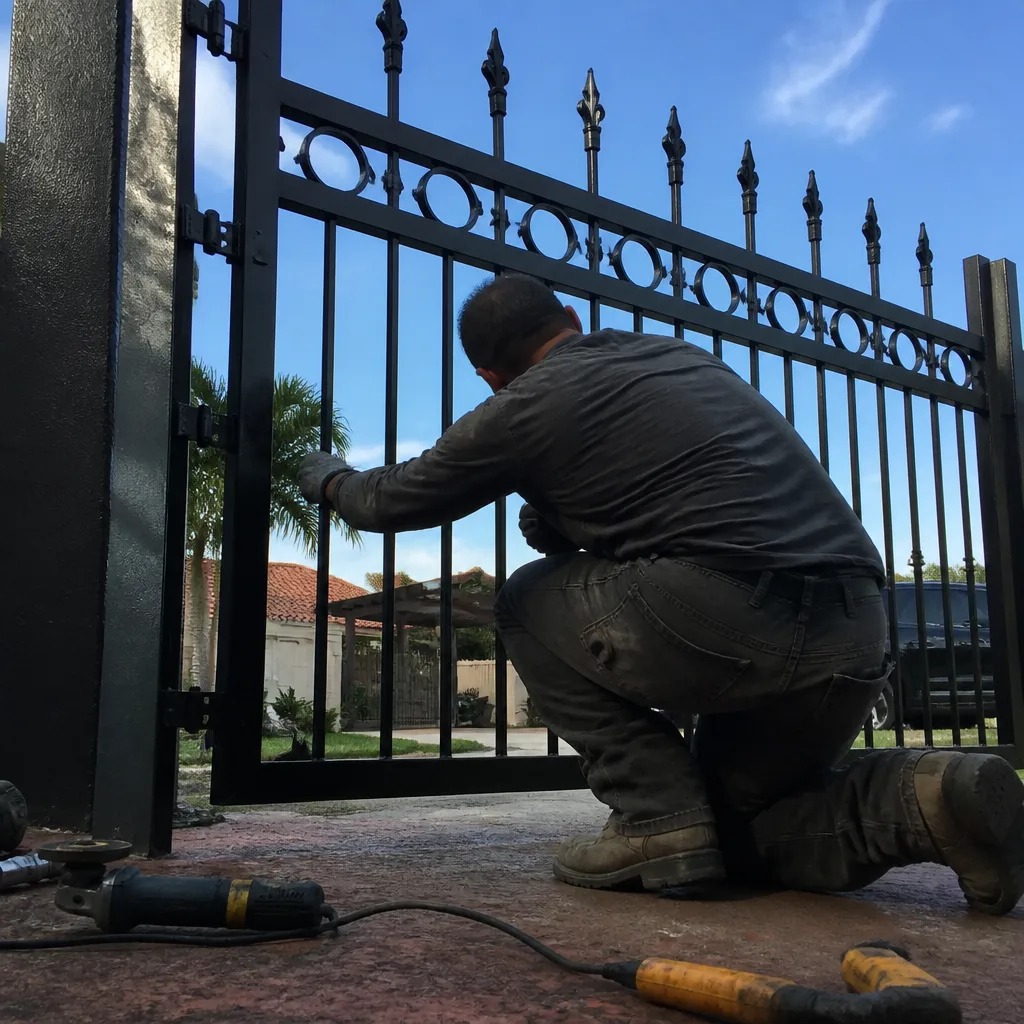
Permit costs in Hialeah follow Miami-Dade County’s fee schedule with local administrative additions. Here are the ranges we encounter in our work:
| Permit Type | Typical Fee Range | Timeline to Approval |
|---|---|---|
| Electrical (new operator, new circuit) | $180-$340 | 3-5 business days |
| Structural (new post, footing, gate frame) | $220-$450 | 5-10 business days |
| Combined electrical + structural | $340-$680 | 7-14 business days |
| Retroactive permit (after work completed) | $450-$920 | 14-30 business days |
These fees do not include plan preparation if engineered drawings are required. Most residential gate replacements do not need engineered plans. Custom installations on corner lots, commercial properties, or gates exceeding standard dimensions may require a survey and engineered drawings, adding $400-$800.
Timeline factors specific to Hialeah: the Building Department experiences volume spikes during hurricane season (June-November) when homeowners combine gate work with other storm-preparedness improvements. Scheduling inspections in September and October can add 3-5 days. We factor this into our project planning and communicate it in our written scope.
Our pricing includes permit costs when required. Under Haven Standard Clause 1, the written price you receive before work starts itemizes labor, materials, permit fees, and inspection scheduling. No category is buried or omitted.
Common Mistakes to Avoid
- Assuming “repair” means no permit. In Hialeah, replacing a failed BFT operator with a different model is legally an alteration, not a repair. Contractors who call it a repair to avoid permit costs leave you exposed.
- Accepting verbal estimates. A verbal estimate cannot include permit costs because the contractor has not committed to pulling one. Written estimates that omit permit line items often indicate the permit will be skipped.
- Ignoring UL 325 on “grandfathered” gates. There is no grandfathering for safety-device failure. A 2015 installation with non-functional photo eyes fails current standards regardless of when it was built.
- Relocating safety devices without documentation. Moving a photo eye to accommodate new landscaping changes the entrapment-protection zone. This requires permit amendment and re-inspection.
- Tapping into existing pool or HVAC circuits. Gate operators require dedicated circuits with GFCI protection. Shared circuits with pool pumps or air conditioners violate electrical code and fail inspection.
- Skipping the final inspection. Some contractors pull permits for rough work but never schedule final inspection, leaving the permit “open” and the work legally incomplete. This shows in property records.
When to Call a Professional
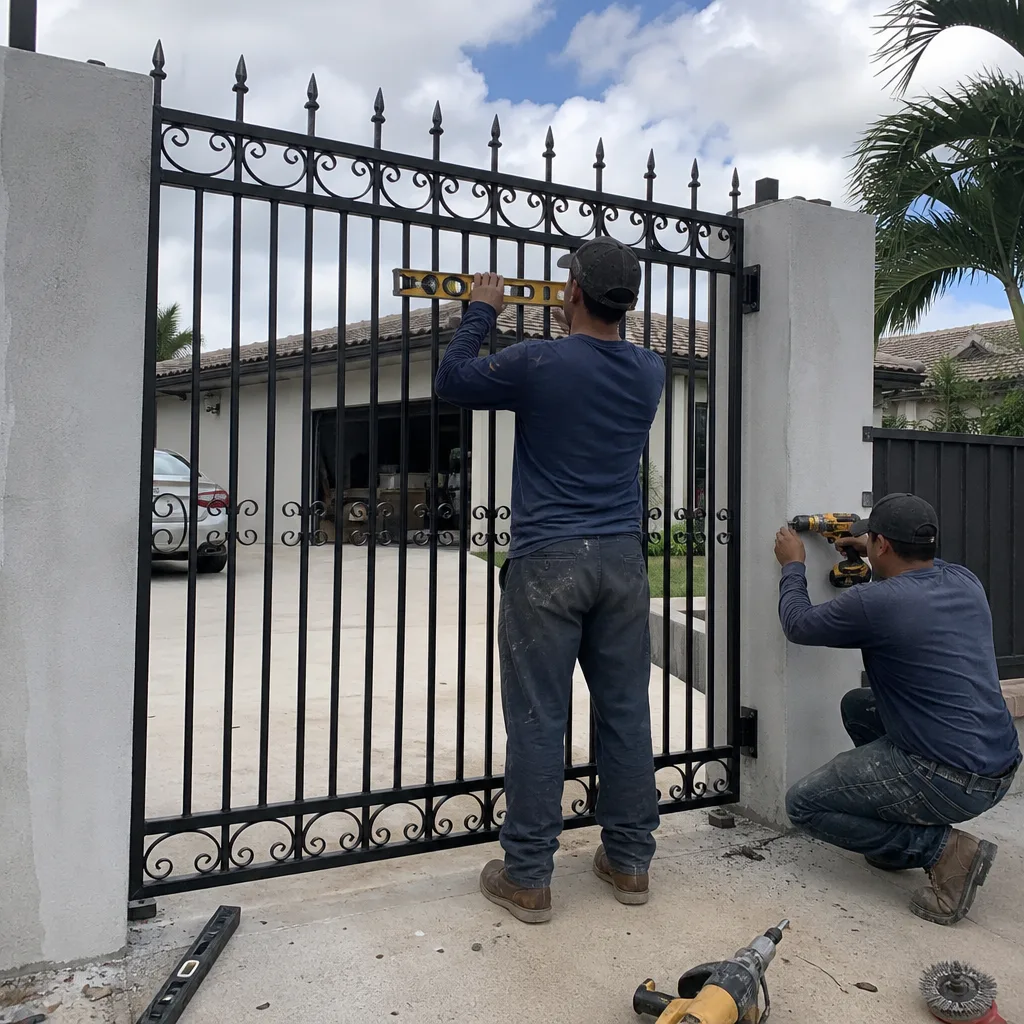
Call a licensed gate technician when your job touches electrical systems, structural components, or safety devices - which is most gate problems beyond simple lubrication or debris clearing. In Hialeah, the combination of salt-air corrosion, coral-rock substrate, and strict Miami-Dade enforcement means that “simple” repairs often reveal code issues once the technician examines the system.
Specific scenarios that require professional assessment: any operator replacement, any new electrical run, any safety device that has been relocated or is non-functional, any gate installed before 2008 (pre-UL 325 enforcement), and any gate work preceding a home sale.
Vance Gate Repair Hialeah offers free estimates in Hialeah. We assess permit requirements during diagnosis, include them in our written scope when triggered, and handle scheduling with the Building Department. Call (786) 458-8210. A live person answers, 24 hours a day.
Frequently Asked Questions
Yes, if the replacement is not identical in manufacturer, model, mounting, and electrical supply. A like-for-like swap of the same Viking or Linear model qualifies as repair. Any other replacement requires an electrical permit under Florida Building Code Section 553. Call (786) 458-8210 and we will evaluate your specific motor against the criteria.
Most residential gate electrical permits run $180-$340, and structural permits run $220-$450. Combined permits for full replacements typically fall between $340-$680. Retroactive permits, required when prior work was unpermitted, cost $450-$920 due to penalties and additional inspection requirements. Our written estimates itemize permit fees before work starts.
The unpermitted work will likely surface during buyer inspection, either through the electrical panel examination or supplemental inspections. Remediation costs typically exceed the original permit cost by 150-250%. In some cases, the buyer’s lender or insurer may require full remediation before closing. Pulling the permit correctly before work begins eliminates this risk entirely.
UL 325 applies to all automated gates in operation, regardless of installation date. There is no grandfathering for entrapment protection. If your photo eyes, edge sensors, or auto-reverse function are non-functional, your gate does not meet current safety standards and will fail any inspection. We test these functions on every service call and document the results.
From permit application to final approval, most residential gate projects take 10-20 business days. Electrical rough inspections schedule in 3-5 days, structural inspections in 5-10 days, and final inspections in 5-7 days. Hurricane season (June-November) can add 3-5 days to each stage. We schedule inspections as part of our project management and communicate timelines in our written scope.
Homeowners can pull permits as owner-builders in Florida, but the work must still be performed by appropriately licensed contractors. For electrical work, this means a licensed electrical contractor or a gate company with the proper electrical licensure. At Vance Gate Repair Hialeah, we pull permits as part of our scope when required, handle all scheduling, and accompany inspectors with our documentation. The permit is in your name, but we manage the process.
The Bottom Line
Florida gate permits are not about the size of the repair - they are about whether the work changes electrical load, safety zones, or structural capacity. Most operator replacements, new wiring runs, and safety-device relocations cross into permitted territory. Miami-Dade County enforces these rules strictly, and unpermitted work surfaces at resale through 4-point inspections, insurance underwriting, and buyer disclosure requirements. The cost of retroactive permitting far exceeds doing it correctly the first time. A written scope that specifies permit requirements before work starts is your protection against hidden liability. Explore our more guides & resources for additional homeowner guidance.
Written by Adrian Vance, Owner at Vance Gate Repair Hialeah, serving Hialeah since 2014.