
Last updated September 21, 2026
Free on-site gate assessment - hinges, posts, and your LiftMaster or Nice gate operator checked before anything is quoted
The assessment is free and the quote is the invoice.
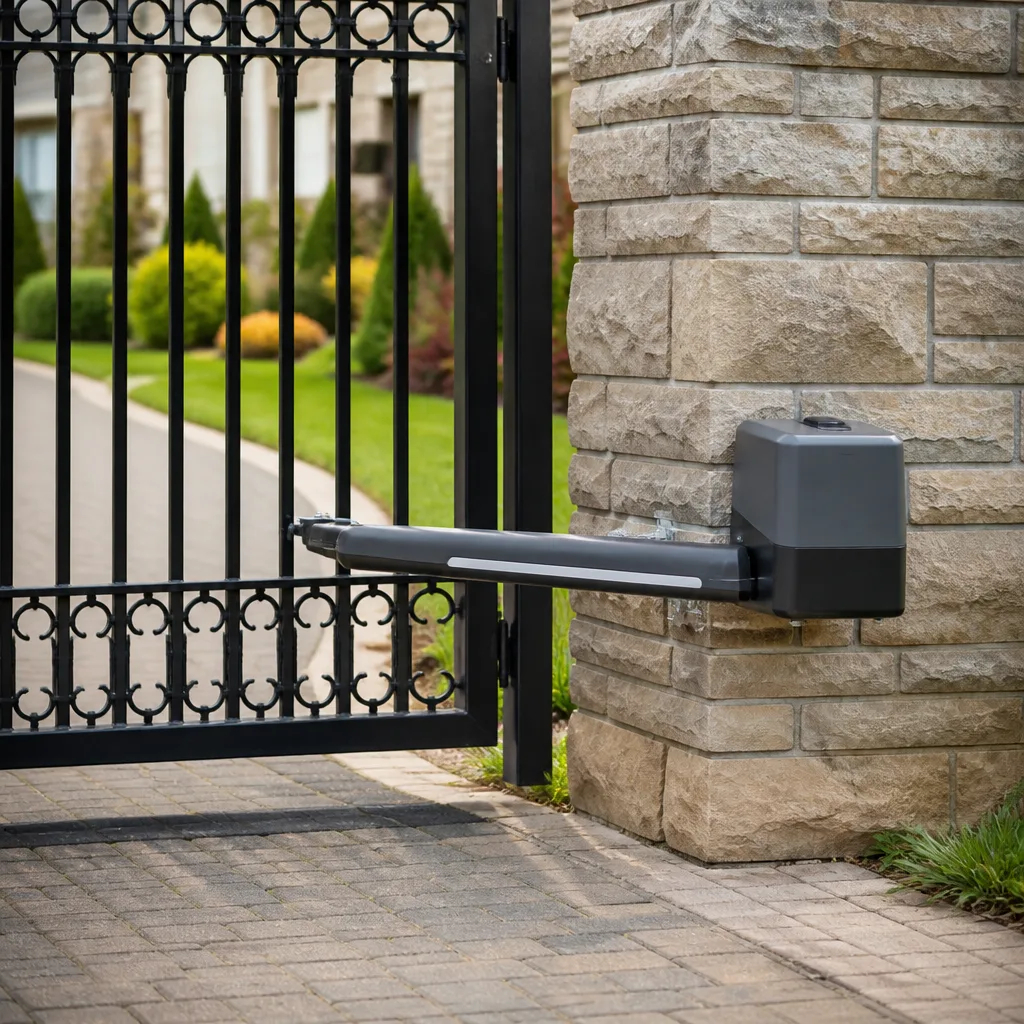
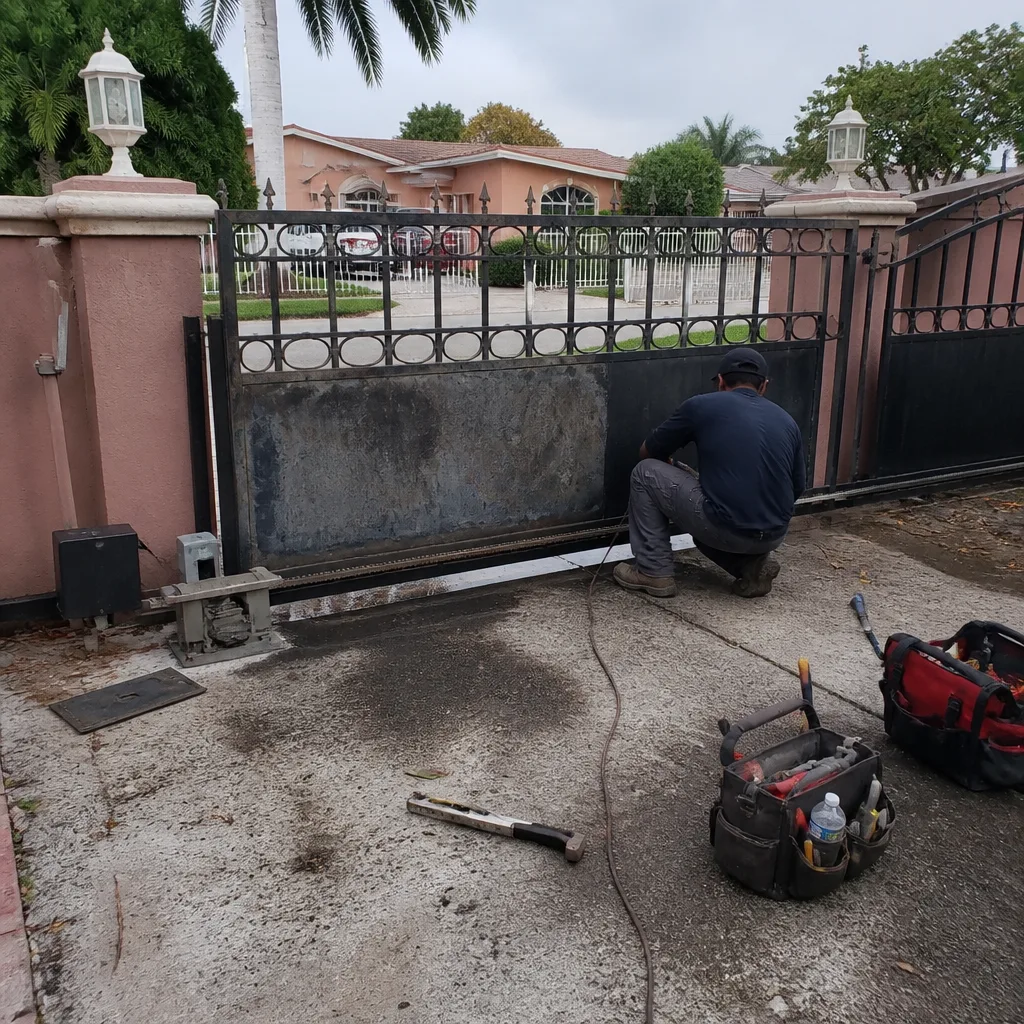 Before
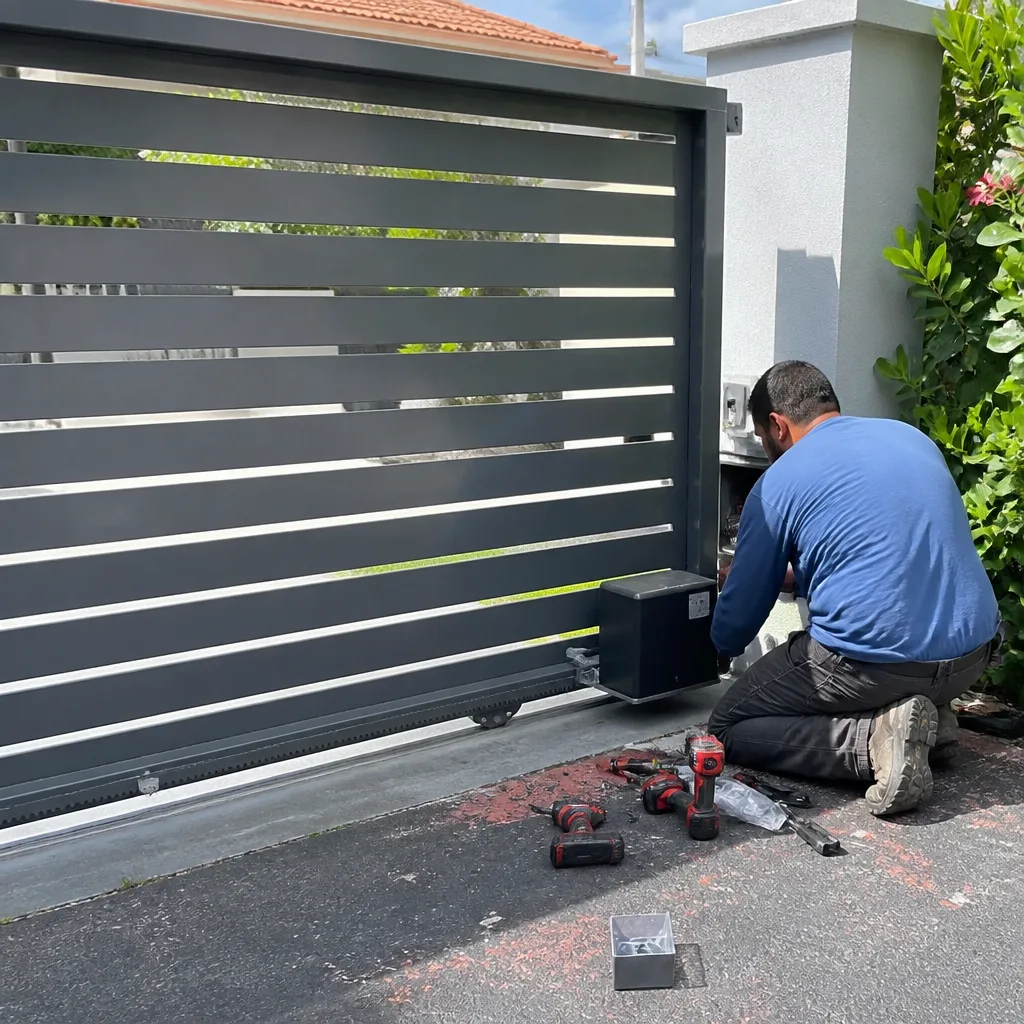 After
After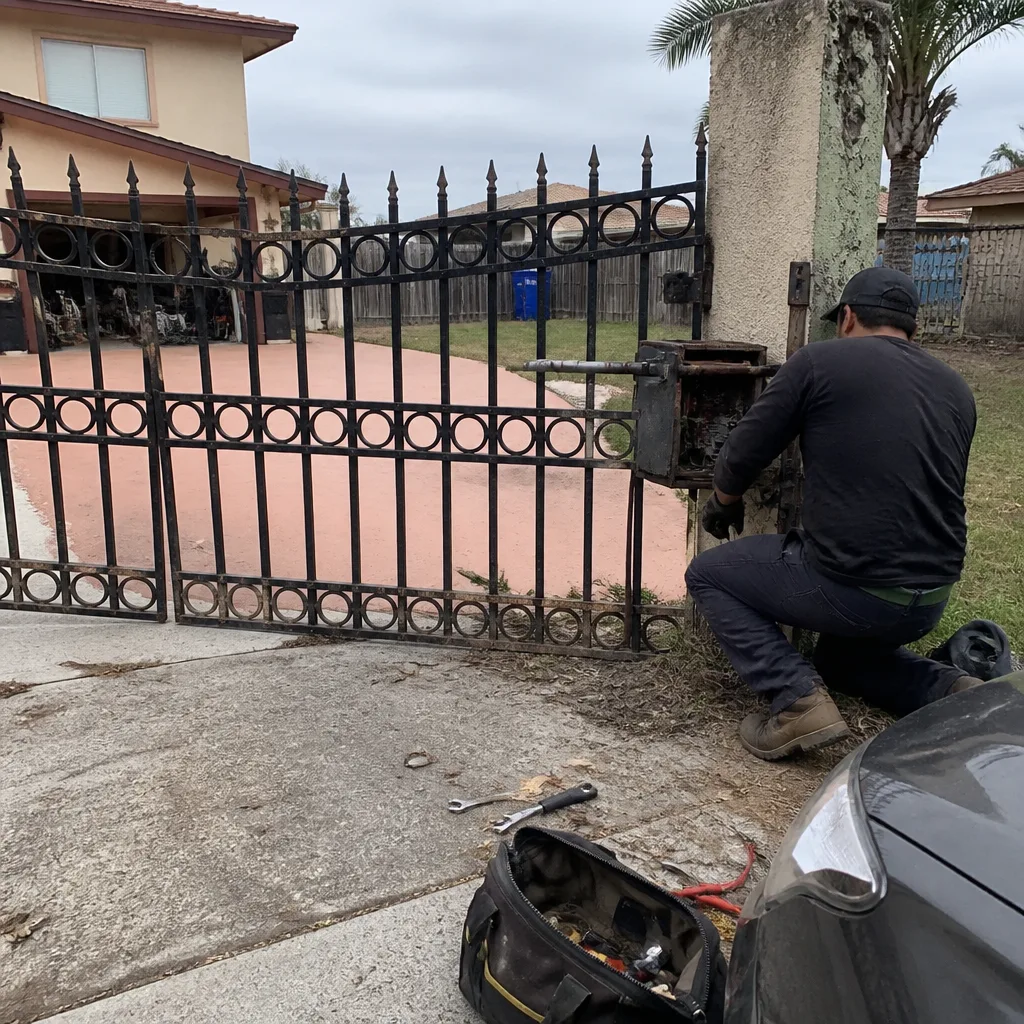 Before
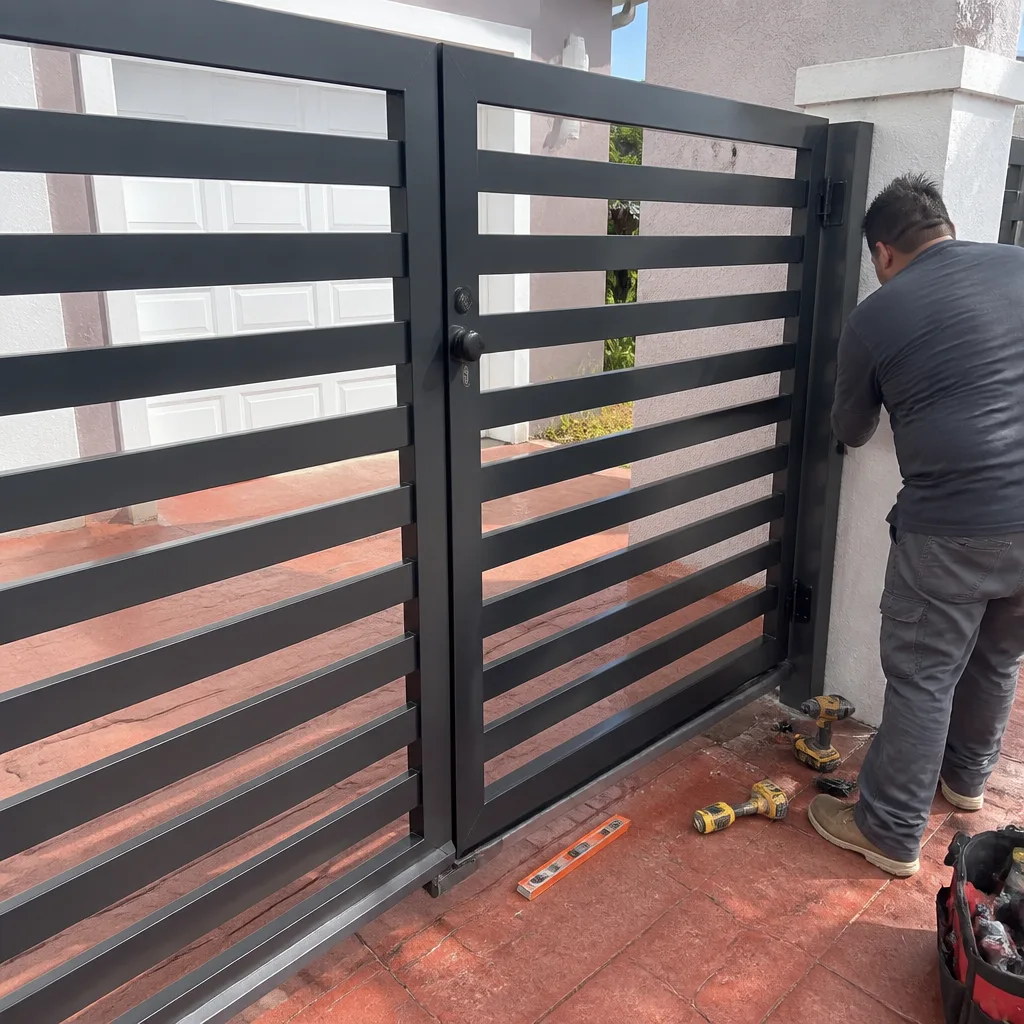 After
After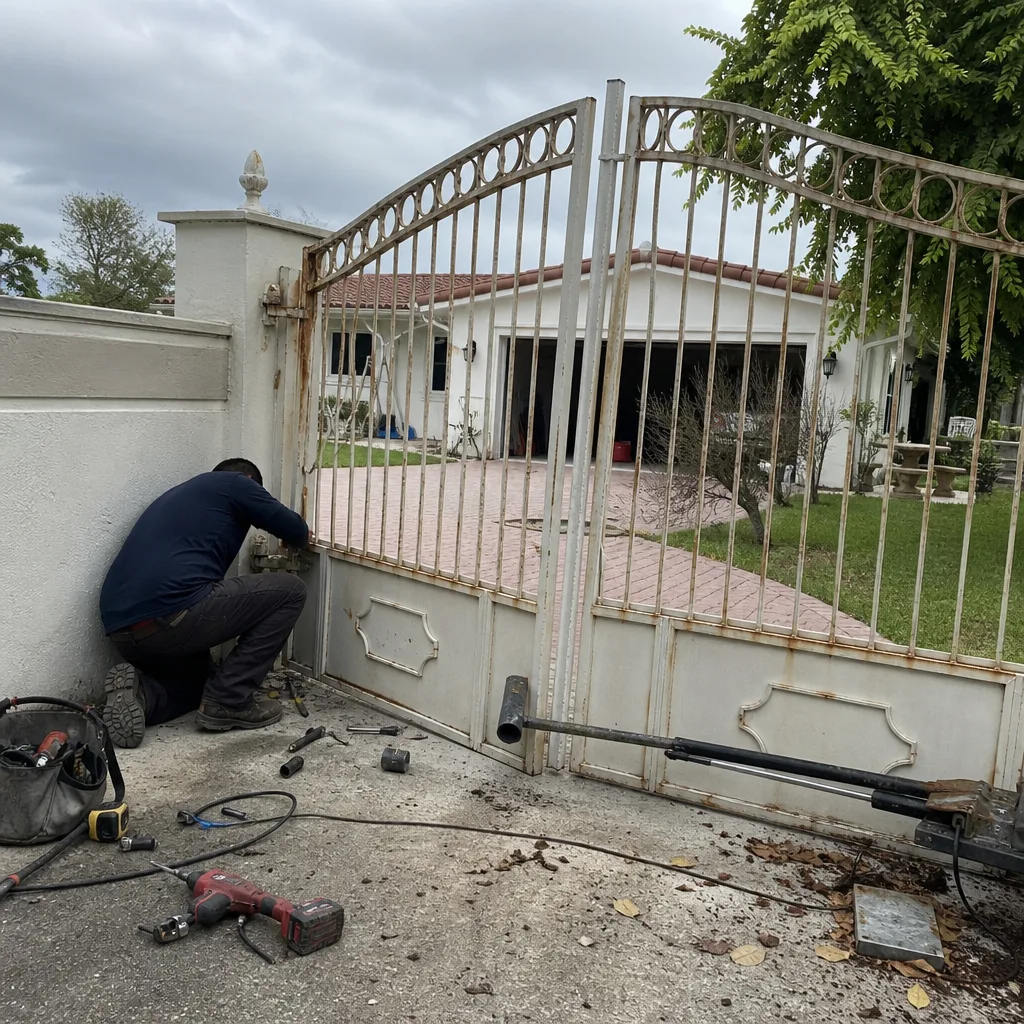 Before
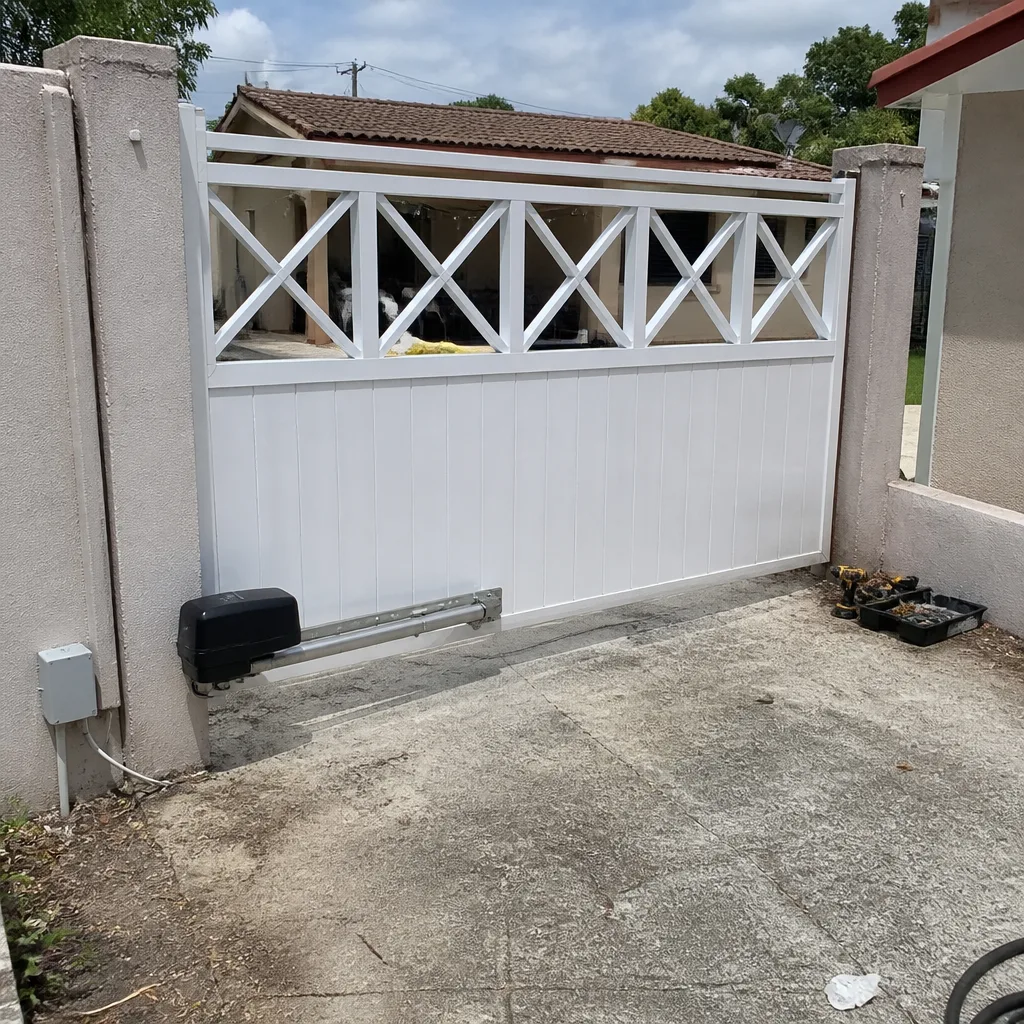 After
AfterSeasonal Gate Repair Care for Hialeah: Year-Round Homeowner’s Guide
Most seasonal gate maintenance guides are written for climates with four distinct seasons. Hialeah doesn’t work that way. Our city sees 62 inches of rain annually, and roughly 90% of it arrives between June and October. A gate system that enters that wet season unprepared spends five months under daily electrical stress on components that were already borderline. The real calendar here has two critical transition points: the May preparation window before the storms arrive, and the October-November assessment window after they’ve passed. Everything else is maintenance in the margins. In The Complete Guide to Gate Repair in Hialeah, we’ll rebuild the seasonal care calendar around what actually breaks gates in Hialeah - the humidity, the lightning, the soil saturation and contraction, and the incremental voltage damage that most homeowners never notice until the opener stops responding.
Quick Answer
Seasonal gate care in Hialeah centers on two transitions: May preparation for wet-season electrical stress, and October-November assessment of humidity and lightning damage. Homeowners should inspect surge protection, test battery backup under load, clear photo-eye drain channels, and document baseline conditions before each season. A simple photographic log, repeated year over year, catches component drift before it becomes a failure.
Table of Contents
- Why the Four-Season Model Fails in Hialeah
- May Preparation: The Pre-Storm Checklist
- Wet-Season Protection: June Through October
- October/November Assessment: What Five Months Leave Behind
- Dry-Season Maintenance: December Through April
- The Hidden Damage Pattern: Afternoon Thunderstorms and Control Boards
- Building Your Seasonal Log: What to Photograph and Measure
- Common Mistakes to Avoid
- When to Call a Professional
- Frequently Asked Questions
 Before
 After
AfterWhy the Four-Season Model Fails in Hialeah
The standard gate maintenance calendar - spring tune-up, summer inspection, fall weatherization, winter lubrication - assumes freeze-thaw cycles, falling leaves, and snow load. None of these apply in Hialeah. Our soil doesn’t freeze. Our leaves don’t drop in autumn. Our gates don’t face salt from road de-icing.
What we do face is more insidious: months of near-daily thunderstorms that subject control boards to repetitive voltage spikes; humidity that penetrates sealed housings over time; soil so saturated it swells against concrete posts, then contracts so hard in the dry season that it cracks foundations. The damage accumulates slowly, invisibly, until a component that tested fine in April fails in July.
In our experience at Vance Gate Repair Hialeah home, the gates that survive longest in Hialeah aren’t the ones with the most expensive openers. They’re the ones with owners who tracked conditions year over year and caught the drift before it crossed the failure threshold. That tracking starts with understanding what actually happens to gate systems here.
The four-season model also misallocates effort. It suggests spreading maintenance evenly across the year. In Hialeah, 70% of the value is concentrated in the six weeks before and after wet season. The dry season is for documentation and minor adjustment, not major prevention. A homeowner who power-washes their gate track in January and calls it seasonal care has missed the point entirely.
We’ve documented this pattern across thousands of service calls since 2014. The gates that fail in July were almost always showing precursor signs in April - a slightly slower open cycle, a photo-eye that needed one extra wipe-down, a battery that held charge for 2.5 cycles instead of 3. The owners who noticed and logged these details avoided the emergency call. The ones who didn’t, called our Gate Repair services in the rain.
May Preparation: The Pre-Storm Checklist
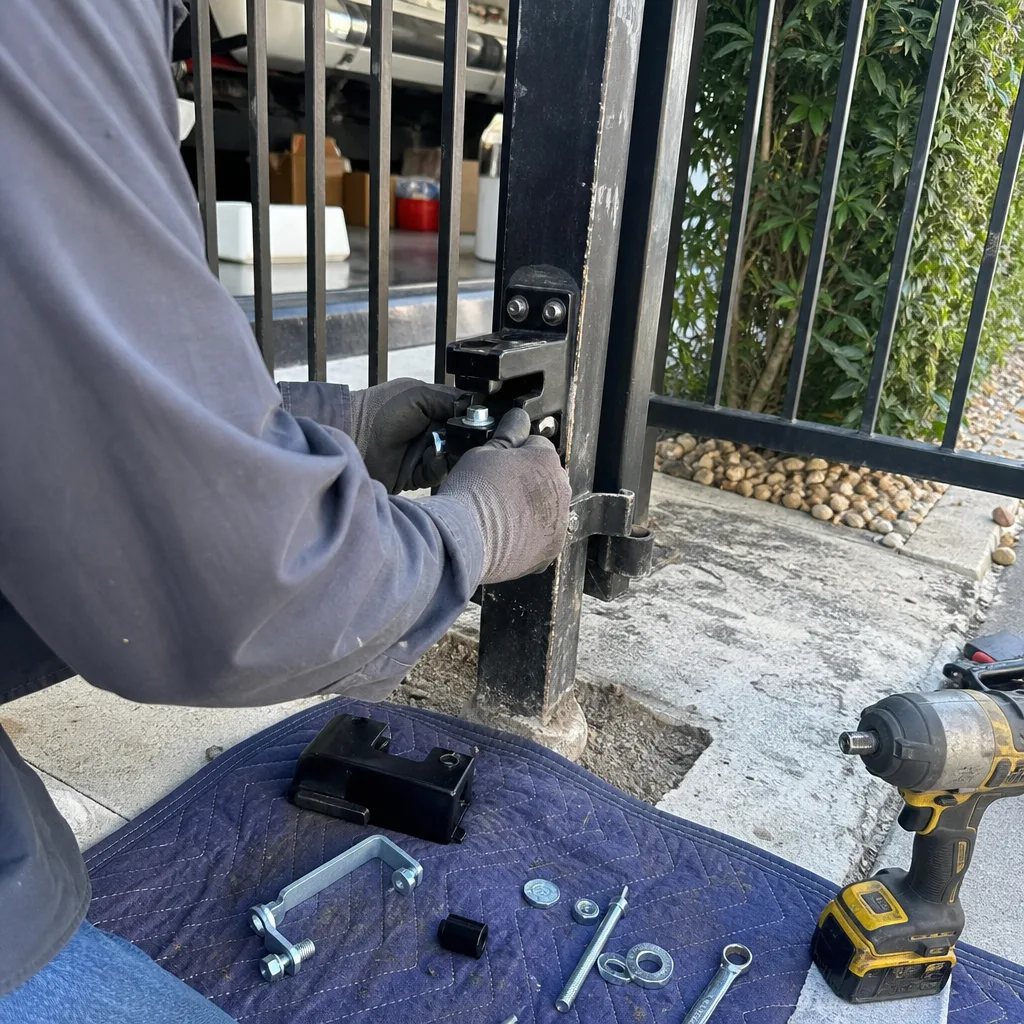
May is the narrow window before Hialeah’s daily thunderstorm pattern establishes itself. By Memorial Day, most homeowners have already missed their best opportunity to prevent wet-season failures. Here’s what we check on every pre-season service call, and what a competent homeowner can verify independently.
1. Surge Protector Inspection
Every automated gate in Hialeah should have surge protection on the power feed to the control board. Not a power strip. A dedicated surge protector rated for motor loads, typically 20-40 kA clamping capacity. We find these degraded or bypassed on roughly 30% of residential gates we service.
Check the indicator light. Most surge protectors use a green LED that goes dark or turns red when protection is exhausted. If the light is out, the device is either failed or was never properly grounded. Replacement cost runs $45-$120 for the hardware, plus installation. Under Clause 1 of The Haven Standard, we quote this in writing before touching the panel.
2. Battery Backup Load Test
Florida building code requires battery backup on automated gates in many jurisdictions, and Hialeah’s frequent power outages during storm season make it essential regardless of code. A battery that reads 12.6 volts at rest may collapse under the 8-10 amp load of a gate motor.
The proper test: disconnect AC power, cycle the gate three times, measure voltage under load. If it drops below 10.5 volts on the second or third cycle, it’s failing. Heat accelerates degradation, and a battery that tested marginal in May will be dead by August. Replacement cost for a standard 7Ah or 12Ah sealed lead-acid battery: $85-$180 installed, depending on brand and tray configuration.
3. Photo-Eye Housing Seal Check
The photo-eye - the infrared beam pair that stops the gate if something crosses the path - is the most common wet-season failure point we see in Hialeah. Water enters through cracked housings, degraded gaskets, or improper cable entry points. Once inside, it corrodes the emitter or receiver surface, causing intermittent misalignment that reads as a random safety fault.
Inspect the housing for UV cracking, especially on units more than three years old. Check that the cable gland (the compression fitting where the wire enters the housing) is tight and the rubber seal is intact. Wiggle the cable gently; if the housing moves independently of the cable, water has a path in. Replacement photo-eye pairs run $120-$280 for residential grades, $340-$520 for commercial-grade units with better sealing.
4. Drain Channel Clearance
Every gate system has low points where water collects: the operator housing base, the post cap, the track channel on sliding gates, the receiver trench on underground operators. In Hialeah’s afternoon deluges, these fill in minutes.
Clear vegetation and debris from all drain paths. On sliding gates, remove the track cover if present and verify the drain holes at track low points are open. On swing gates with underground operators (FAAC, BFT, and some Elite models), check that the receiver box drain is functional and the lid gasket seats properly. Standing water in an underground operator housing destroys the limit switch assembly - a $600-$1,400 repair we perform several times each wet season on gates that skipped May prep.
5. Control Board Enclosure Assessment
Open the operator housing and look for dust, insect nests, or prior moisture marks. Note the condition of wire terminations - green copper at screw terminals indicates prior moisture exposure. Photograph everything before touching it. This baseline becomes your reference for the November assessment.
If you find moisture marks or corrosion, call for service. Control board replacement ranges from $380 for basic Mighty Mule or Ghost Controls units to $1,200-$1,800 for multi-function DoorKing or FAAC boards with integrated receivers. Under our 365-Day Done Right Promise, any board we replace is covered for a full year, including damage from subsequent weather events if the installation was at fault.
Wet-Season Protection: June Through October
Once the pattern establishes, protection shifts from prevention to monitoring. Hialeah’s wet season isn’t just rain - it’s a specific electrical environment that degrades gate systems in ways invisible to casual observation.
Daily Monitoring Habits
- Listen to the open/close cycle. A motor drawing harder against increased friction sounds different - a longer ramp-up, a lower pitch at peak load. Note the date if you hear change.
- Watch for delayed response. If the gate takes more than 2-3 seconds to start moving after remote activation, the control board may be processing errors from a degraded component.
- Check the photo-eye indicator after heavy rain. Most units have a small LED visible from outside the housing. Solid green means aligned and clear. Flashing or off means misalignment, obstruction, or moisture intrusion.
- Verify battery backup monthly. Brief AC disconnect, one cycle, reconnect. Log the result.
After Every Major Storm
Hialeah sees 80-100 thunderstorm days annually, and 5-10 tropical systems with sustained winds above 40 mph. After each significant event:
- Visually inspect the gate for physical damage - bent arms, displaced track, debris impact.
- Cycle the gate twice, listening for mechanical strain.
- Test all access methods: remote, keypad, vehicle loop, manual release.
- Check the operator housing for water entry - condensation on the interior lid, moisture at wire entry points, standing water in the base.
- Photograph any changes and add to your seasonal log.
Documenting immediately after storms creates a timestamped record that proves valuable for insurance claims and for tracking gradual degradation. Under Haven Standard Clause 4, our technicians photograph the same points on every service call and leave the homeowner a copy.
October/November Assessment: What Five Months Leave Behind
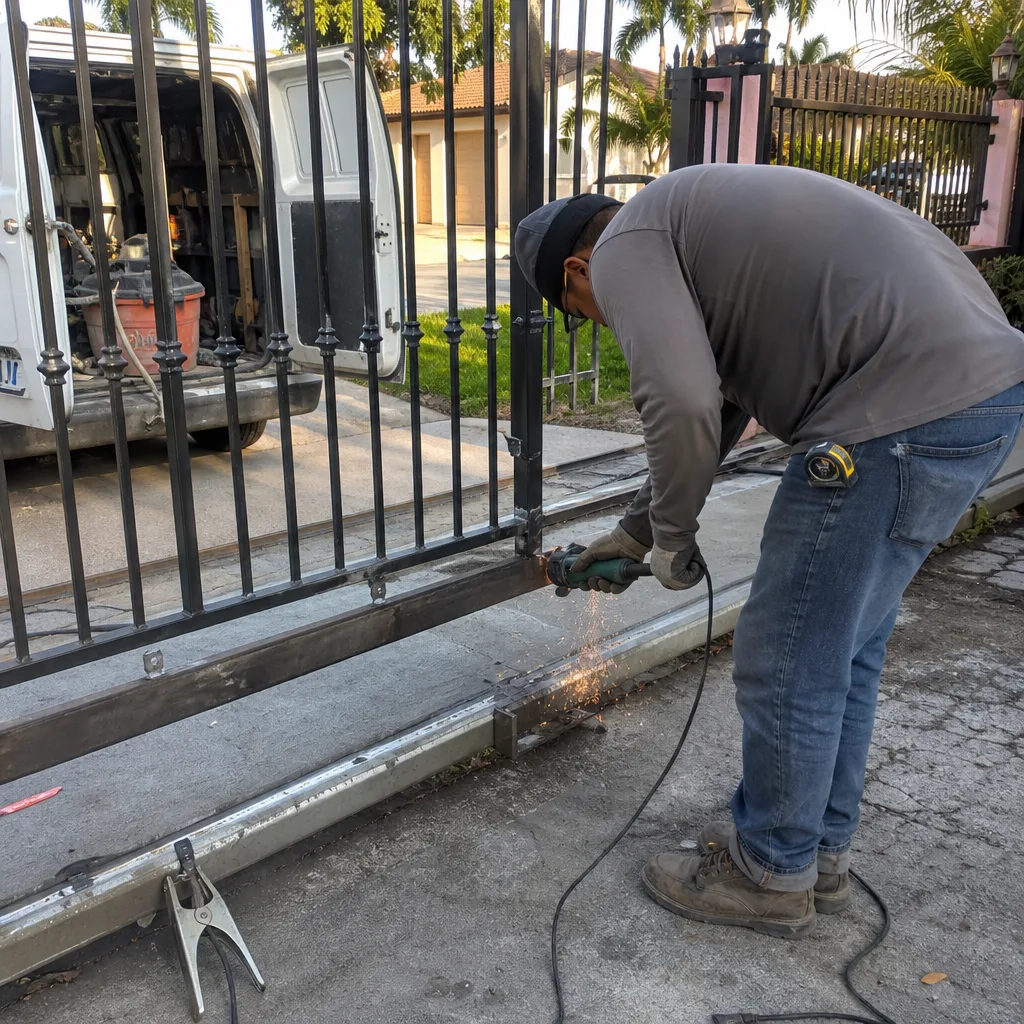
By late October, Hialeah’s thunderstorm frequency drops sharply. The soil is at maximum saturation. The air remains humid, but the electrical stress on control boards diminishes. This is the assessment window - the time to document what changed and establish your dry-season baseline.
What to Assess
Control board condition: Compare to your May photographs. Look for new corrosion at terminals, discoloration on the board surface, or swollen capacitors (the cylindrical components; their tops should be flat, not domed). Any change warrants professional evaluation. Control boards with wet-season damage often fail in the dry season when heat stress returns - the component was weakened, not killed, and the thermal cycle finishes the job.
Motor performance: Time the open and close cycles with a stopwatch. Compare to your May baseline. A 10% slowdown indicates increased mechanical load - typically hinge corrosion, track debris accumulation, or arm bushing wear. Address it now; dry-season heat increases friction further.
Battery capacity: Repeat the three-cycle load test. A battery that passed in May but fails now has been degraded by heat and deep-cycling during outages. Replace before dry season; cold nights (relatively speaking, Hialeah’s December lows average 60°F) reduce chemical activity in already-marginal units.
Structural elements: Check concrete posts for new cracking, especially at the ground line. Wet-season soil saturation swells clay soils; dry-season contraction creates voids that allow post movement. A post that tilts 1/4 inch doesn’t sound like much, but it changes gate geometry enough to strain hinges and operators. In Hialeah’s western neighborhoods with higher clay content - areas near the Miami-Dade County line - we see this more frequently than in the sandier soils closer to the Palmetto Expressway.
Photo-eye alignment: Measure the beam path height at three points: transmitter, midpoint, receiver. Compare to May. A height change of even 1/2 inch indicates post movement or housing degradation. Realign and document.
Documentation for Insurance and Warranty
If you’re filing an insurance claim for storm damage, the October/November assessment provides your damage documentation. Photographs with dates, performance measurements, and component condition notes satisfy most adjusters. If Vance Gate Repair performed your May preparation, we have our own documentation to cross-reference - under Haven Standard Clause 4, every visit produces a photographed record filed by address and date. For a deeper comparison of handling repairs yourself versus hiring professionals, see DIY vs Professional Gate Repair: The Hialeah Homeowner’s Decision Guide.
Dry-Season Maintenance: December Through April
Hialeah’s dry season brings lower humidity, minimal rainfall, and the highest annual temperatures in May before the rains return. Gate maintenance during this period is less urgent but equally specific to local conditions.
Concrete Post Inspection
The soil contraction that follows wet-season saturation is the primary threat. In Hialeah’s older neighborhoods - Palm Springs, West Hialeah, and areas near the historic downtown - many residential gates were installed with posts set in concrete footings that weren’t engineered for South Florida’s expansive clay. The wet-dry cycle creates a pumping action: water enters during saturation, soil swells, then contracts and leaves voids as it dries. Over years, the footing loosens.
Inspect for:
- New cracking in the concrete, especially radiating from the post base
- Gap formation between the footing and surrounding soil
- Post movement when you apply lateral pressure at the top
- Gate binding that wasn’t present in October
Post stabilization or replacement is not a DIY project for automated gates - the electrical and mechanical alignment must be reestablished. Typical cost for residential post replacement with proper footing depth and rebar: $680-$1,400 depending on gate weight and soil conditions.
Hinge Lubrication Before Heat Peaks
Hialeah’s May temperatures regularly reach 88-90°F. Any remaining lubricant from prior service will thin and migrate. We use lithium-complex grease with NLGI #2 consistency on residential gate hinges - it stays in place through heat better than general-purpose greases. Application in January or February gives time for the lubricant to distribute before peak thermal stress.
On commercial-grade gates with self-lubricating bushings (common on DoorKing and some Elite heavy-duty hinges), verify the zerk fittings accept grease and the bushings aren’t extruded. Extrusion - the bushing material pushed out past the housing - indicates the hinge has been operating dry and the bushing is failing.
Operator Housing Deep Clean
January is ideal for opening the operator housing and removing accumulated debris. Insects, spider webs, and dust create conductive paths across control board traces. Use compressed air, not a vacuum - vacuums generate static. Photograph before and after. Note any wire chafing, especially where harnesses pass through metal edges.
Access Control Update
If your system uses keypad codes, remotes, or telephone entry, review who has access. Remove codes for former tenants, service personnel, or vendors. Test all remotes and replace batteries - the small coin cells in keyfobs degrade faster in Hialeah’s heat, even stored indoors. For Gate Access Control in Hialeah systems with audit trails, export the log and review for anomalous entries.
The Hidden Damage Pattern: Afternoon Thunderstorms and Control Boards
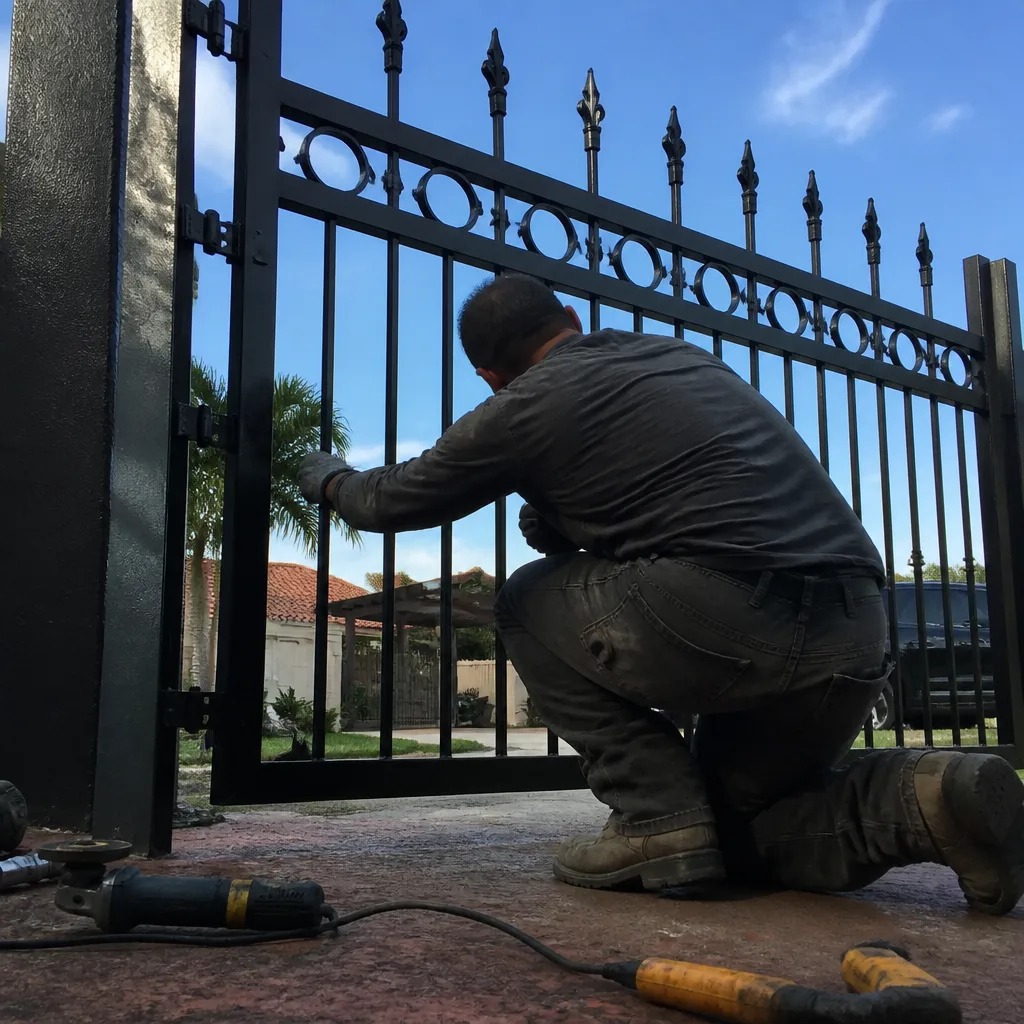
This is the failure mode most gate owners in Hialeah never consider, and it’s the one that produces the most expensive surprises.
Lightning damage is obvious: the gate stops, the board is blackened, insurance gets involved. But lightning doesn’t need a direct strike to degrade electronics. Every thunderstorm within a mile or two induces voltage transients on power lines. A single afternoon storm might produce 20-50 such transients. Over Hialeah’s 80-100 thunderstorm days, that’s 1,600-5,000 voltage events annually.
Each transient degrades metal-oxide varistors (MOVs) in surge protectors and control board protection circuits slightly. The degradation is cumulative. A control board that survived five years in a low-lightning climate might fail in two years in Hialeah - not from one dramatic strike, but from thousands of small insults.
The symptoms are subtle: occasional missed remote commands, slightly longer response times, keypad entries that need repetition. These are often dismissed as interference or user error. They’re early warnings of protection circuit fatigue.
Our documentation habit, carried over from commercial access-control work, helps here. When we service a gate in Hialeah, we record the control board model, manufacture date if visible, and any prior repair history we can reconstruct. Over time, we’ve identified which board designs tolerate Hialeah’s electrical environment better. LiftMaster’s newer residential boards with discrete surge protection stages, for example, outlast earlier integrated designs in our records. FAAC’s 740 and 844 series control boards, properly protected, show excellent longevity. Mighty Mule’s entry-level boards, while cost-effective, typically need earlier replacement in high-transient environments - not a flaw, but a design tradeoff that informed owners can plan around.
The practical implication: if your gate is showing any intermittent electrical behavior during wet season, don’t wait for total failure. The repair cost doesn’t increase linearly with damage - a board with degraded protection circuits often takes the motor with it when it finally fails, and motor replacement adds $400-$900 to the repair.
Building Your Seasonal Log: What to Photograph and Measure
This is the practice that separates reactive gate owners from proactive ones. A simple log, maintained year over year, catches slow drift before it becomes breakdown. Here’s the template we recommend, based on the documentation habit Adrian Vance established in commercial access control in 2014. For more guides & resources on gate maintenance, visit our blog.
Page 1: Baseline Documentation (May and November)
- Gate identification: Address, gate type (swing/slide), operator brand and model, installation date if known.
- Photograph set A - operator housing interior: Wide shot showing full board and wiring. Close-up of each terminal block. Close-up of any manufacturer labels with model and serial numbers.
- Photograph set B - mechanical components: Hinge points showing lubrication condition. Track or roller condition for sliding gates. Arm attachment points for swing gates.
- Photograph set C - site conditions: Drainage paths, vegetation proximity, soil condition at post bases, photo-eye mounting.
- Performance measurements: Open cycle time (seconds), close cycle time (seconds), battery voltage at rest, battery voltage under load after three cycles, photo-eye beam height at transmitter/midpoint/receiver.
Page 2: Event Log (Ongoing)
Date, weather event or observation, action taken, result. Examples:
- 6/14 - Afternoon storm, 2-inch rain in 45 minutes. Checked operator housing, found slight moisture at cable entry. Tightened gland, dried with compressed air. No recurrence as of 6/21.
- 8/3 - Gate failed to respond to remote on third attempt. Tested at panel: keypad worked fine. Replaced remote battery (CR2032, $4). Normal function restored.
- 10/12 - Post-Hurricane Idalia check. No physical damage. Cycle time increased from 14.2 to 15.8 seconds. Scheduled hinge service.
Storage
Keep digital copies - phone photos uploaded to cloud storage with date in filename. Keep a printed summary in the operator housing if there’s space, or taped inside the electrical panel in the house. The goal is that any technician, including one from Vance Gate Repair, can reconstruct the gate’s history in five minutes.
Under Haven Standard Clause 4, we provide our own photographed record on every visit and encourage homeowners to maintain their own parallel log. The two sources together create unambiguous documentation for warranty claims, insurance, and future service planning.
Common Mistakes to Avoid
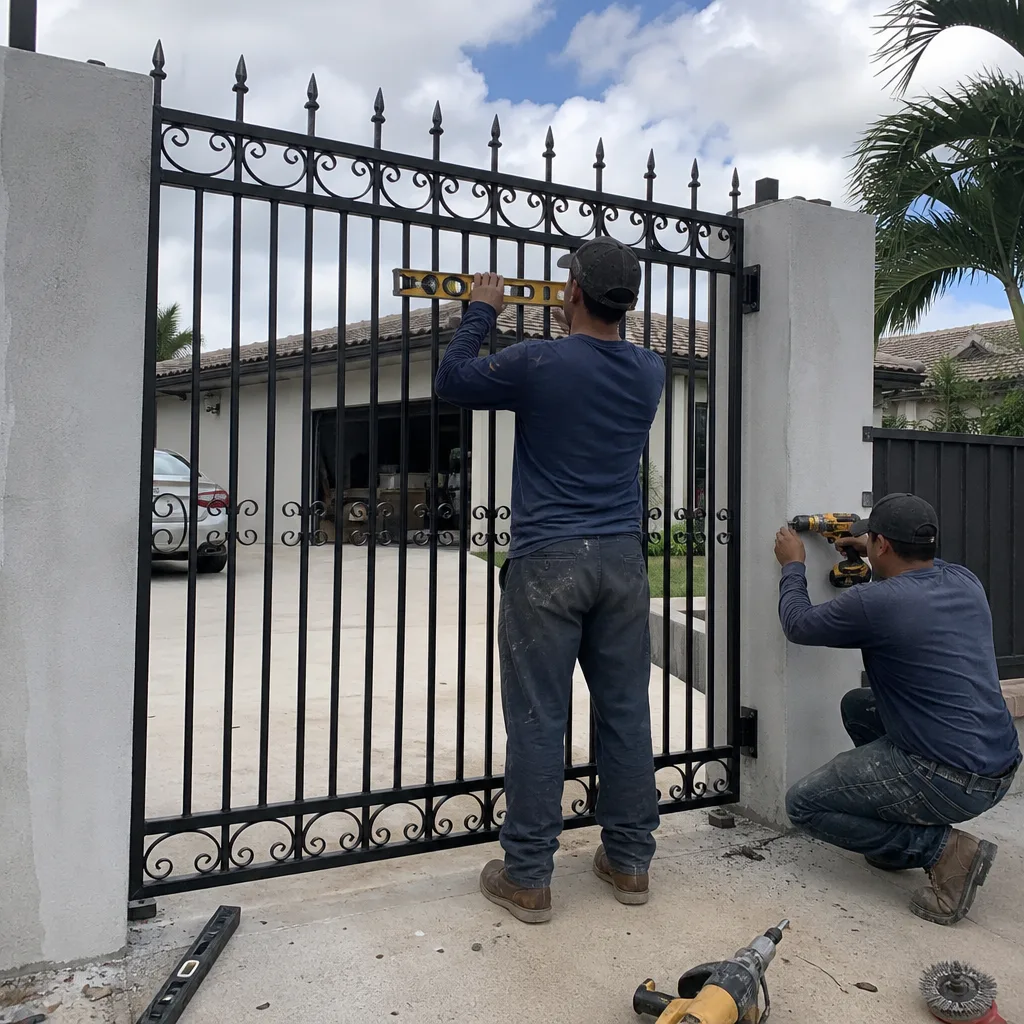
- Treating January like a “spring tune-up.” Hialeah has no spring. January maintenance should focus on dry-season soil contraction and pre-heat lubrication, not northern concepts like weatherization.
- Power-washing the operator housing. We’ve seen this dozens of times. The housing is rated for rain, not for pressurized water at close range directed at gasket seams. It forces water past seals that would otherwise survive the season.
- Ignoring the battery until it fails completely. A battery that won’t hold load is already past the point where it may have damaged the charger circuit through excessive draw. Test under load, not just at rest.
- Assuming surge protection is “set it and forget it.” MOV-based protectors degrade with each event. The indicator light is the only monitoring most residential units provide. Check it monthly in wet season.
- Measuring only one photo-eye point. Beam height at transmitter and receiver tells you about alignment. Height at midpoint tells you about post movement or cable sag. All three matter.
- Waiting for total failure to call. Intermittent electrical behavior in wet season is the gate’s warning system. The repair cost at that stage is typically 40-60% of the cost after catastrophic failure.
- Not documenting. The homeowner who can show us a dated photo of the control board from May gets faster, more accurate diagnosis in November. The one who can’t gets exploratory work and broader estimates.
When to Call a Professional
Some gate maintenance is appropriate for attentive homeowners. Some requires specialized tools, electrical knowledge, or safety training. Call for professional service if you find corrosion on control board terminals, detect burning smell from the operator housing, observe post movement or concrete cracking, experience intermittent electrical behavior that doesn’t resolve with remote battery replacement, or need surge protector or battery replacement on systems with high-voltage AC components.
High-tension spring-assisted gates and any system with 120V or 240V AC inside the operator housing present genuine electrocution risk. We don’t provide DIY guidance for these components; the potential consequences of error exceed any reasonable savings.
Gate Repair in Hialeah from Vance Gate Repair includes free estimates with written pricing before any work begins. We service nine automation brands - LiftMaster, FAAC, BFT, Linear, Viking, Ghost Controls, DoorKing, Elite, and Mighty Mule - and we don’t steer customers toward replacement when repair is viable. A live person answers at (786) 458-8210, 24 hours a day. If you have a written estimate from another company, we’ll review it at no charge under our free second-opinion policy.
Frequently Asked Questions
Professional seasonal inspection and adjustment typically runs $180-$340 for a single residential gate, depending on access complexity and whether component replacement is needed. Surge protector replacement adds $45-$120 for hardware; battery replacement adds $85-$180. We quote every item in writing before starting work, under Haven Standard Clause 1. Call (786) 458-8210 for an exact quote - estimates are free.
Homeowners can handle visual inspection, debris clearing, photo-eye cleaning, and basic performance logging. Any work involving the control board, high-voltage AC, or spring tension should be left to trained technicians. We’ve responded to emergency calls where well-intentioned DIY attempts created additional damage or safety hazards. Document what you observe; let professionals address what you find.
Test monthly during wet season (June-October), when heat and power outages accelerate degradation. Test once during dry season. The proper test is a three-cycle load test with AC disconnected, not just a voltage check at rest. A battery that passes at rest but fails under load is already a reliability risk.
The most common causes are moisture in the photo-eye housing, debris in the track or drain channels, and voltage transients from nearby lightning that degraded protection circuits. Check photo-eye indicators and clear drainage paths first. If problems persist after the weather clears, the control board may need professional assessment. Document the correlation between rain events and symptoms - it significantly speeds diagnosis.
Skipping the May preparation window and waiting for failure during wet season. Emergency service calls in July cost 25-40% more than scheduled maintenance in May, and the failure often damages secondary components that would have been fine with earlier intervention. The second most expensive mistake is ignoring intermittent electrical behavior as “just a quirk” - it’s almost always precursor damage from voltage transients.
We offer scheduled seasonal service with documented inspection records under The Haven Standard. Each visit produces a written scope, written price, and photographic evidence of conditions found and work performed. The 365-Day Done Right Promise covers all completed work. For Gate Installation in Hialeah customers, we include the first seasonal inspection at no charge. Call (786) 458-8210 to schedule or to discuss a maintenance plan for your specific gate system.
The Bottom Line
Hialeah’s gate maintenance calendar has two seasons that matter: the wet season that tests electrical systems from June through October, and the dry season that reveals structural stress from December through April. The transitions in May and October-November are where proactive owners prevent emergencies. A simple photographic log, maintained year over year, transforms guesswork into evidence and catches component drift while it’s still inexpensive to address. The specific threats here - voltage transients, humidity penetration, soil saturation and contraction - don’t appear in generic maintenance guides because they don’t exist in climates those guides were written for. Build your maintenance around what actually breaks gates in Hialeah, and you’ll avoid the emergency calls that dominate our summer schedule.
Written by Adrian Vance, Owner at Vance Gate Repair Hialeah, serving Hialeah since 2014.