
Last updated September 21, 2026
Free on-site gate assessment - hinges, posts, and your LiftMaster or Nice gate operator checked before anything is quoted
The assessment is free and the quote is the invoice.
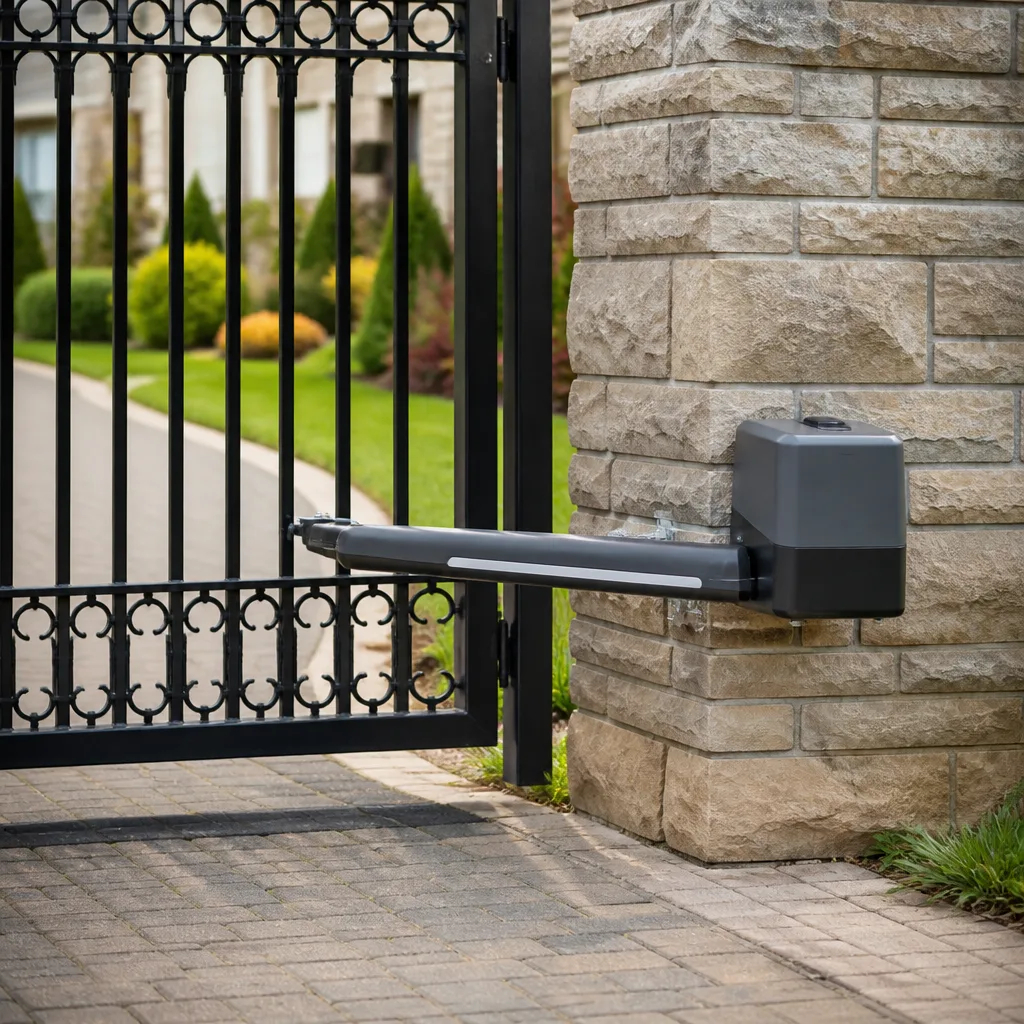
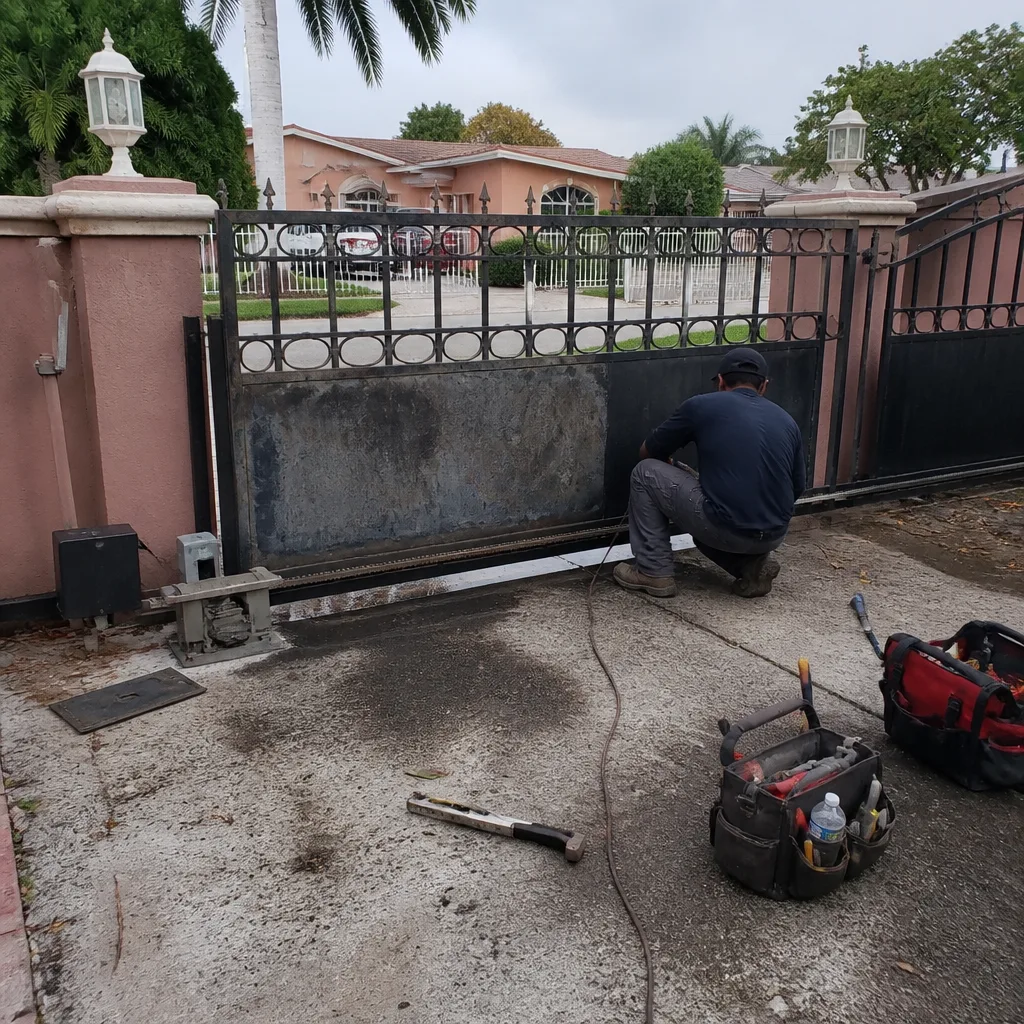 Before
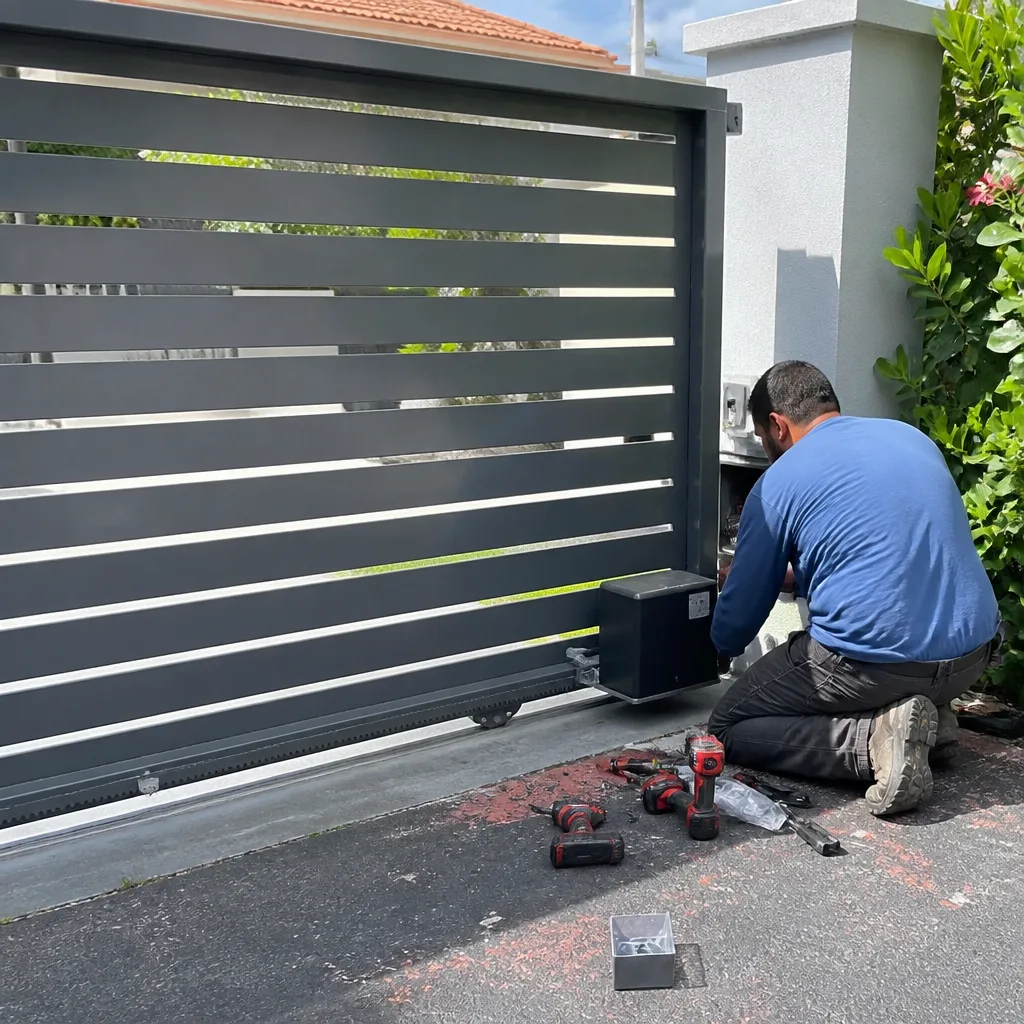 After
After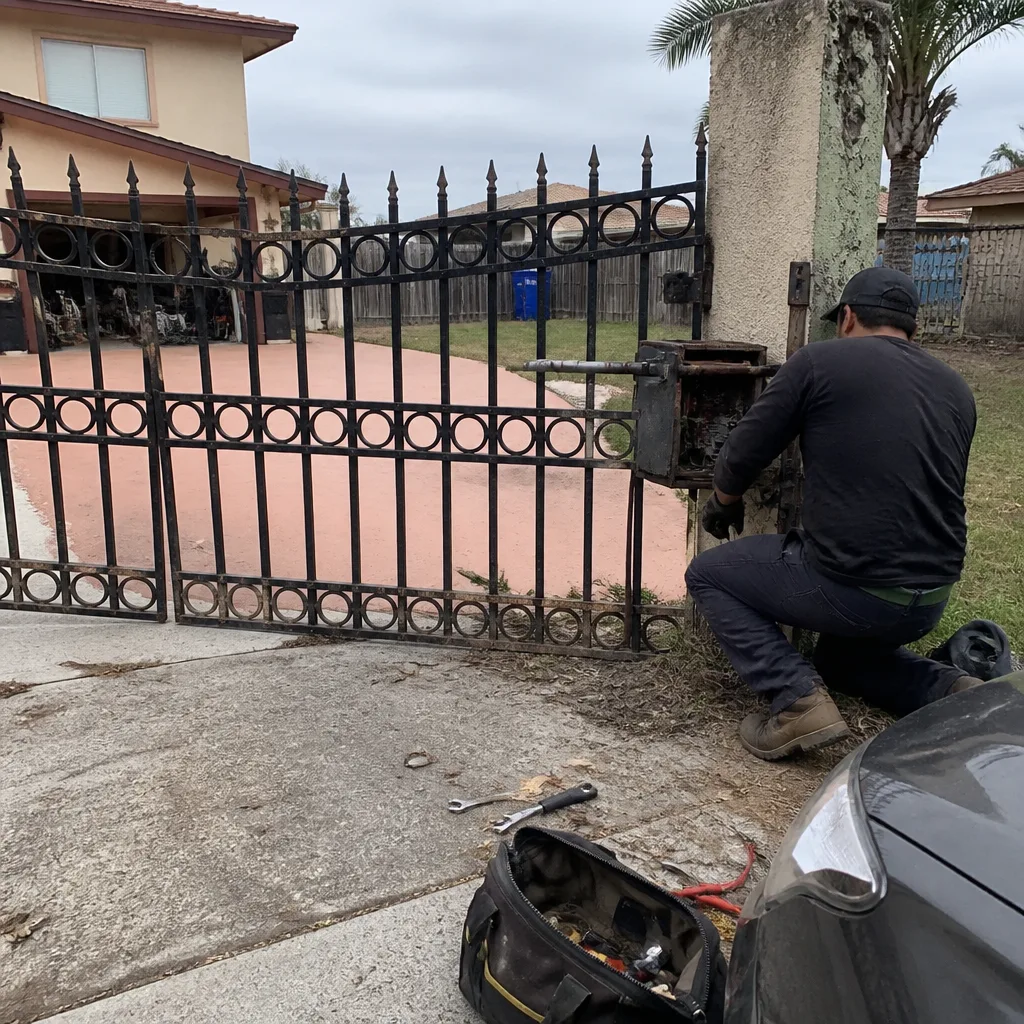 Before
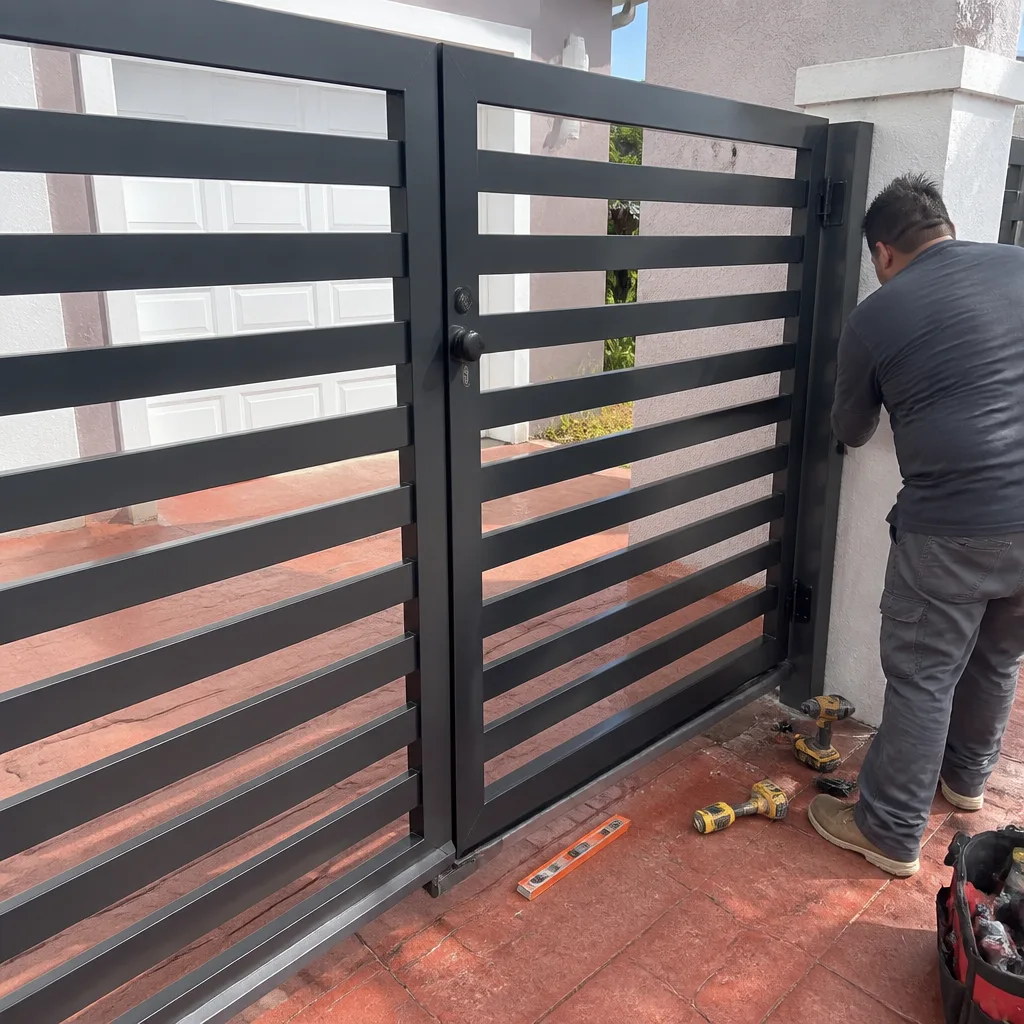 After
After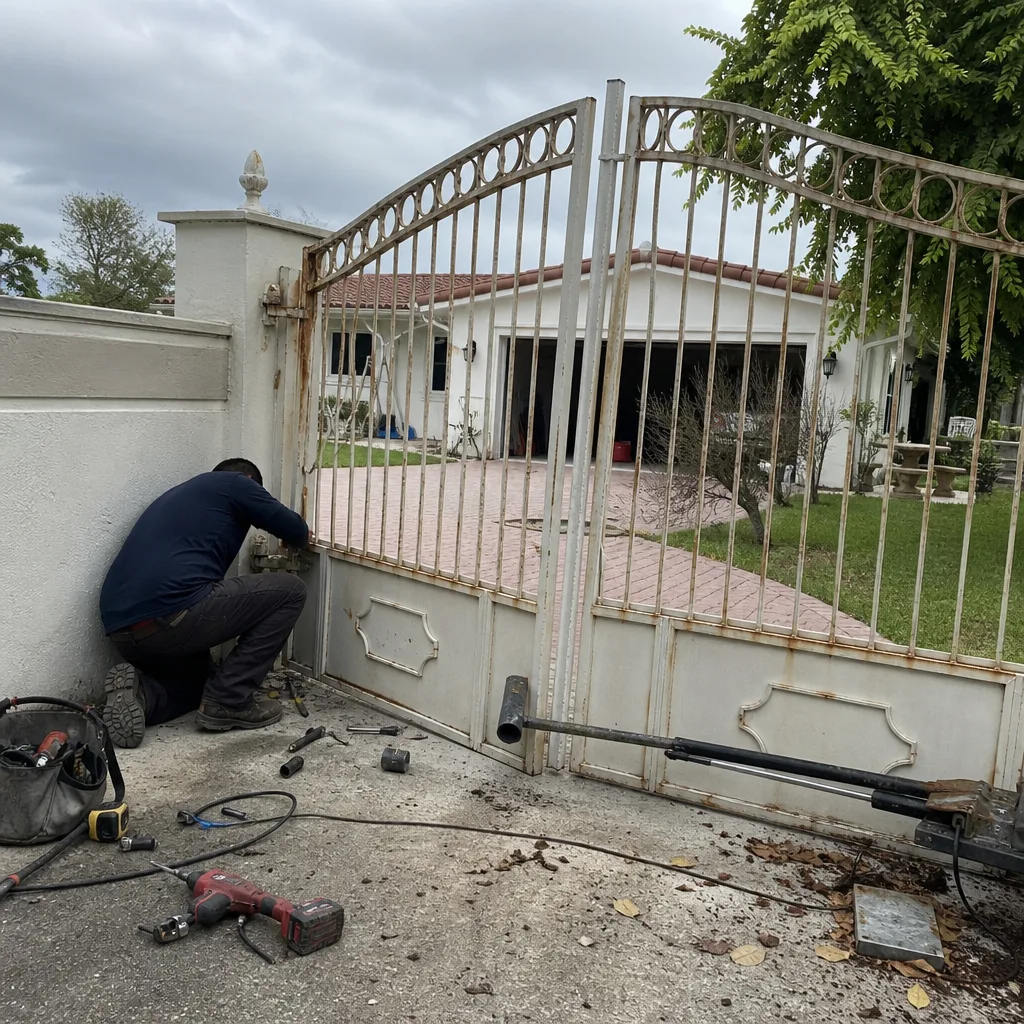 Before
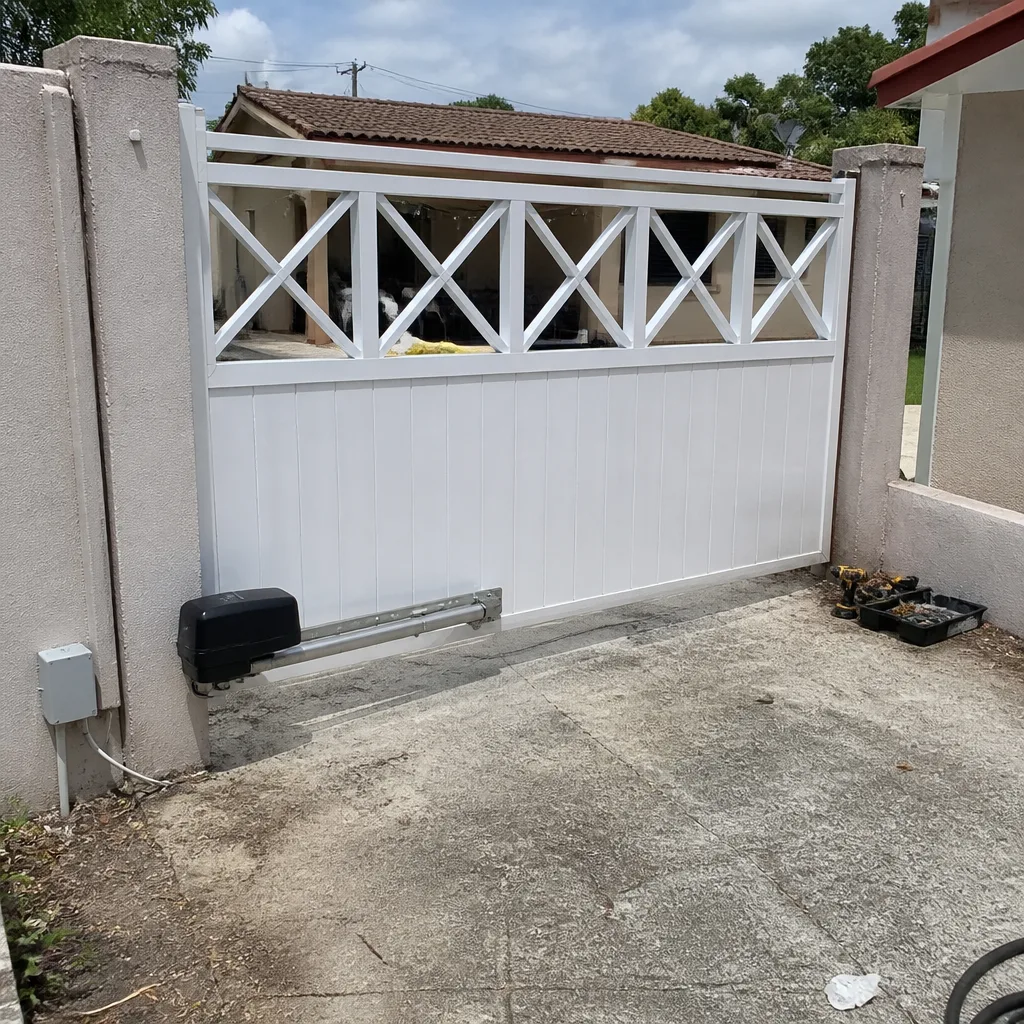 After
AfterGate Repair Warning Signs: A Hialeah Homeowner’s Reference Guide
The most expensive gate repair call is the third one for the same symptom. Each time a new technician guesses without documented evidence from the previous visits, the homeowner pays for the diagnostic from scratch. In Hialeah, we’ve seen this pattern repeat across every neighborhood from Palm Springs to Westwood Lakes: a gate that hesitates on cold January mornings gets diagnosed as a motor problem, then a humidity problem, then a track problem, with three invoices and no fix. This guide teaches you to read your gate’s warning signs precisely enough to get the right Gate Repair the first time.
Quick Answer
A gate needs professional attention when its symptoms point to a specific cause: slow opening indicates motor strain or hinge drag, grinding signals gear wear or debris, and mid-travel reversing means limit switch drift or safety sensor faults. In Hialeah’s climate, rust streaks near hinge pins and swollen wooden panels after rainy season are early warnings of corrosion and overload that most homeowners miss until the operator fails.
Table of Contents
- The Symptom-to-Cause Matrix: What Each Warning Sign Actually Means
- Hialeah Climate Warning Signs: What the Humidity Hides
- Intermittent Failures: Capturing Evidence Before It Disappears
- Remote and Keypad Symptoms: When the Problem Isn’t the Gate
- Stop Immediately vs. Schedule Within 30 Days: The Safety Decision
- What Good Documentation Looks Like (And Why Most Companies Don’t Leave It)
- Common Mistakes to Avoid
- When to Call a Professional
- Frequently Asked Questions
 Before
 After
AfterThe Symptom-to-Cause Matrix: What Each Warning Sign Actually Means
Gate problems don’t speak in general alarms. They speak in specific symptoms with specific causes, and conflating them leads to parts replaced without fixing the root problem. Here’s what we’ve documented across 22,000+ gates since 2014.
Slow Open Cycle
A gate that takes longer to open than it did six months ago is telling you something measurable. The first step is timing it: most residential swing gates complete a 90-degree open in 12-16 seconds. If yours now takes 20+ seconds, the cause falls into three categories.
Motor amperage draw. The operator is working harder against increased resistance. We measure this with a clamp meter on the motor leads. A LiftMaster or FAAC motor drawing 3.5 amps where it used to draw 2.1 amps hasn’t failed yet, but it’s compensating for drag somewhere in the system.
Worn motor brushes. In DC motors common to Mighty Mule and Ghost Controls operators, brushes wear unevenly and create arcing that reduces torque before total failure. The symptom is gradual slowing, not sudden stopping. We photograph the brush length and commutator condition under Haven Standard Clause 4, so the next technician doesn’t have to disassemble the motor to see what we found.
Hinge drag. This is the most commonly missed cause. A hinge pin with dried grease or early corrosion creates resistance the motor feels as load. In Hialeah, we see this accelerate where sprinkler systems overspray galvanized hardware, or where pool chemicals migrate through air to metal components. The fix is rarely the motor. It’s hinge disassembly, cleaning, and re-lubrication with a lithium-based grease rated for outdoor exposure.
Grinding Noise
Grinding is the gate’s most honest symptom because it’s mechanical and locatable. The error is assuming it always means the motor.
- Gear wear in the operator gearbox: A rhythmic grinding at consistent intervals points to damaged worm or spur gears. Common in operators past 8-10 years of service, especially where previous technicians over-greased and attracted grit.
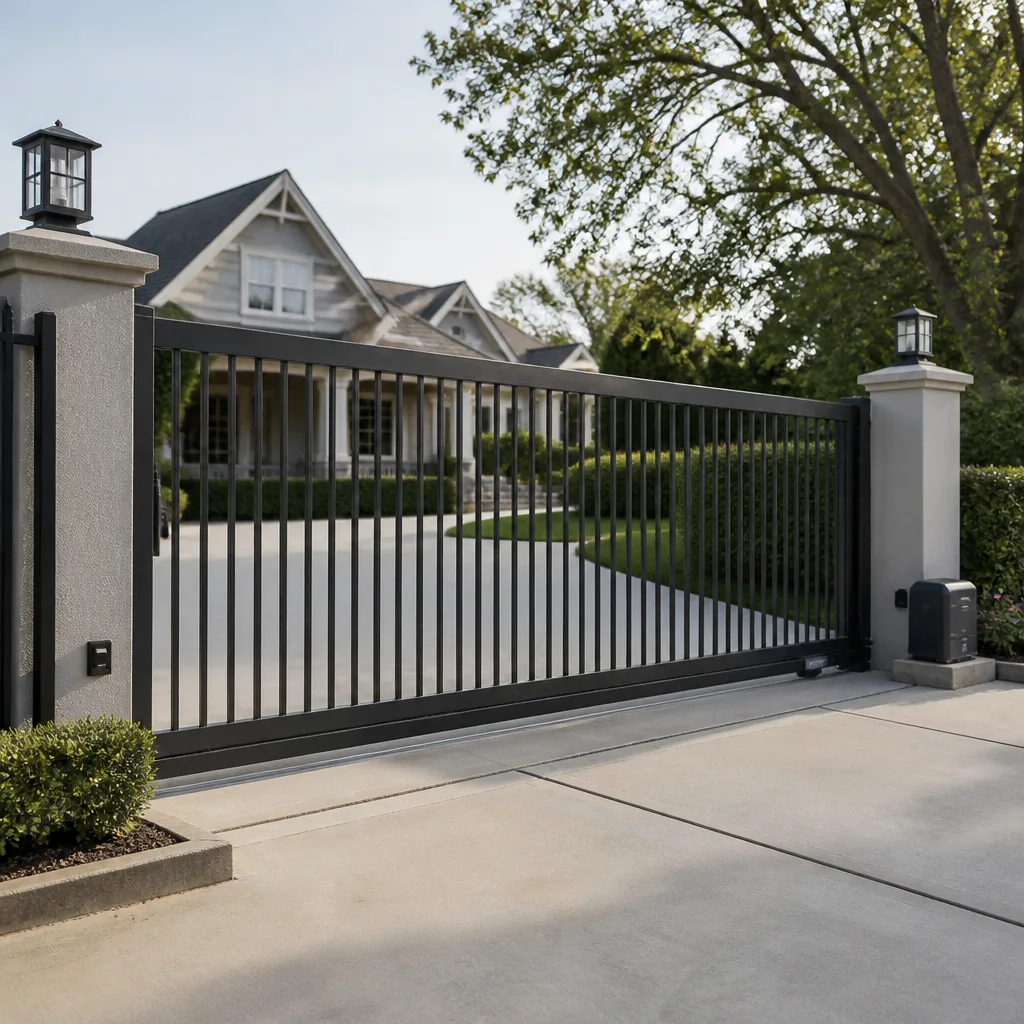
- Debris in the track (sliding gates): Hialeah’s royal poinciana and gumbo limbo trees drop seed pods and leaves that compact in V-groove tracks. The grinding is intermittent, worse after storms, and often accompanied by visible scoring on the track walls.
- Roller bearing failure: Sliding gate rollers use sealed bearings that fail when seals degrade in UV exposure. The grinding becomes constant, and the gate may develop lateral wobble in the track. We replace with stainless rollers in coastal Hialeah properties where salt air accelerates standard steel corrosion.
Gate Reversing Mid-Travel
This is the symptom that generates the most unnecessary parts replacements because three different systems can cause it, and each requires different testing.
- Limit switch drift. The magnetic or mechanical switches that tell the operator “the gate is fully open” or “fully closed” can shift with temperature cycling or loose mounting. We check limit position with the gate manually moved to true closed, then compare to the operator’s electronic reading. On BFT and Linear systems, we record the pulse count or encoder position and leave it in the job file.
- Obstruction sensor sensitivity. Photo-eyes (the infrared beam that stops the gate if something crosses the path) can misalign by fractions of an inch and trigger false reversals. In Hialeah’s afternoon thunderstorms, we’ve seen water droplets on the lens scatter the beam enough to trip the circuit. We clean, realign, and photograph the beam path under Clause 4.
- Board logic fault. The control board may interpret normal motor current fluctuation as an obstruction. This is the hardest to catch because it often happens only under specific load conditions: hot afternoons when motor resistance drops, or cold mornings when grease viscosity increases. We log ambient temperature and cycle count during testing, and when the pattern is clear, we document it for the homeowner to reference if the symptom returns.
Hialeah Climate Warning Signs: What the Humidity Hides
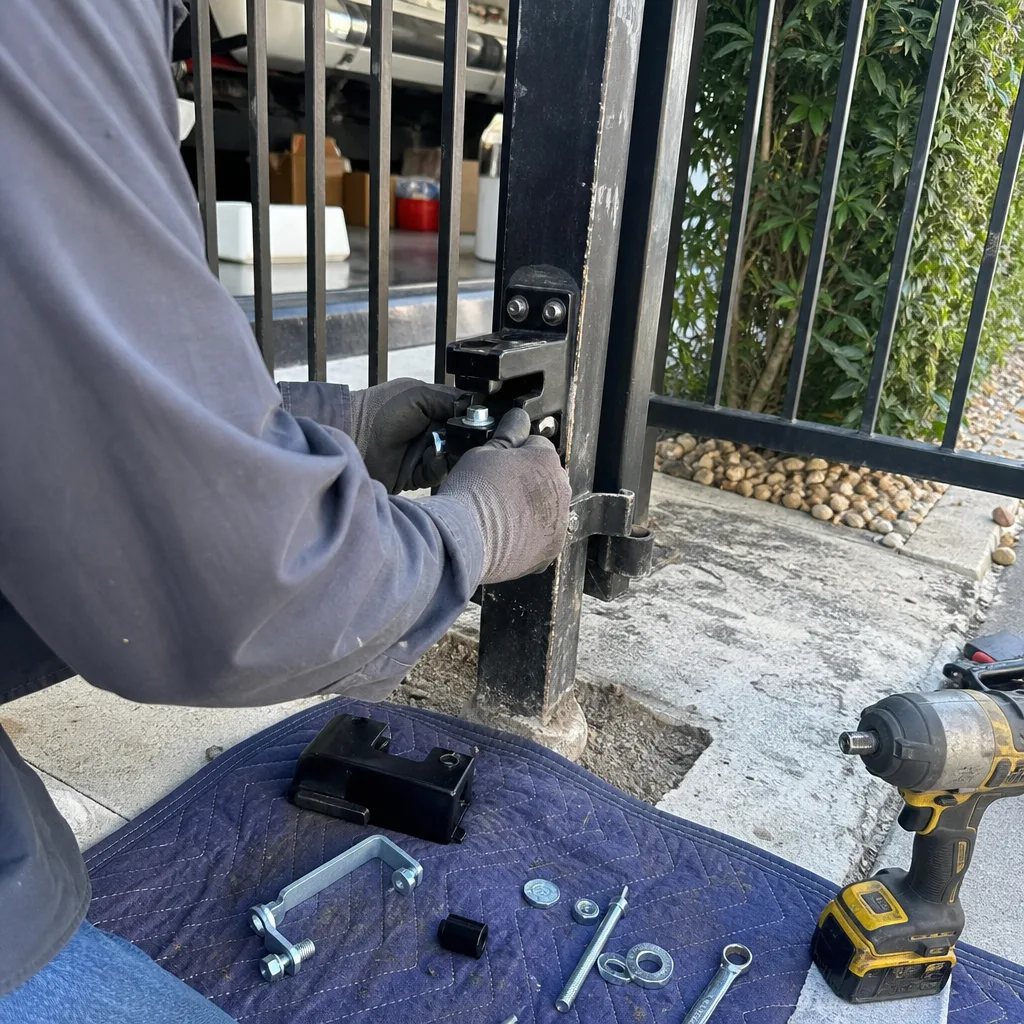
Hialeah’s subtropical climate creates gate problems that don’t exist in drier markets, and the warning signs often appear where homeowners aren’t looking; see our Seasonal Gate Repair Care for Hialeah: Year-Round Homeowner’s Guide for what to watch each season.
Rust-Colored Streaks on Concrete
Those reddish-brown lines running from your hinge pin down the concrete aren’t just staining. They’re evidence of galvanic corrosion: where dissimilar metals (typically a galvanized hinge pin against a stainless or aluminum bracket) create an electrochemical reaction accelerated by moisture. The pin is dissolving from the inside. By the time the streaks are visible, the pin may have lost 30-40% of its cross-section. We’ve replaced hinge pins in Hialeah’s Palm Springs and Miami Lakes-adjacent neighborhoods that sheared clean during normal operation because this early warning was dismissed as cosmetic.
Swollen Wooden Infill Panels
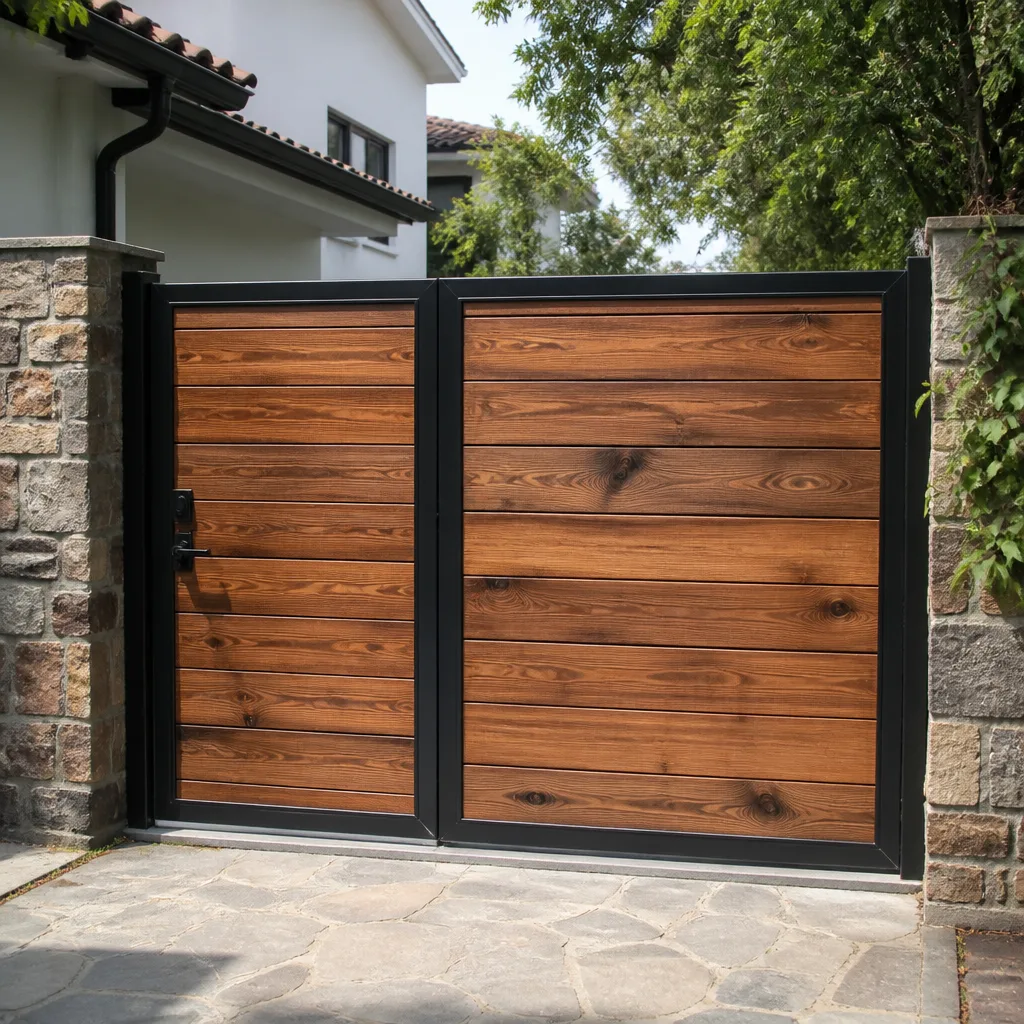
Many ornamental gates in Hialeah use cedar or pressure-treated pine infill panels between metal frames. After our June-through-October rainy season, these panels absorb moisture and expand. A gate that was properly balanced in January may now present 15-20 pounds of additional load the operator wasn’t rated for. The warning sign is subtle: the gate opens normally but closes with visible strain, or the operator’s thermal cutoff trips after three or four consecutive cycles on hot afternoons. We measure panel moisture content with a pin meter when we suspect this, and we’ve documented cases where drying the panels and sealing with marine-grade varnish restored normal operation without any motor work.
Receiver Antenna Corrosion
The thin wire antenna that extends from gate operator control boards is rarely inspected. In Hialeah’s salt air, the copper strands corrode at the terminal block, reducing range until the remote works only from 10 feet instead of 50. Homeowners replace remotes, then receiver boards, when the fix is typically a $3 antenna wire and five minutes with a wire brush and dielectric grease.
Control Board Condensation
Operators mounted in direct sun without ventilation can reach 140°F internal temperature, then cool rapidly in afternoon thunderstorms. The resulting condensation on circuit boards causes intermittent faults that clear when the board dries. We’ve found this most often in west-facing installations in Hialeah’s Westwood Lakes and Country Club of Miami areas, where afternoon sun is most intense. The warning sign is a gate that fails only during or immediately after rain, then works normally hours later. A vented enclosure or relocation to shaded mounting solves it permanently.
Intermittent Failures: Capturing Evidence Before It Disappears
The failures that cost homeowners the most are the ones that heal themselves before the technician arrives. Here’s how to document them so the next repair isn’t a guess.
What to Photograph and When
- The gate position when failure occurs. Is it 18 inches from closed? Fully open and starting to close? Mid-travel reversing happens for different reasons at different positions, and “it just stops sometimes” loses critical information.
- The operator’s LED status indicator. Most LiftMaster, FAAC, and BFT boards have diagnostic LEDs that flash specific patterns for specific faults. Photograph the pattern while it’s happening; the board may reset and show normal status when you check later.
- Ambient conditions. Note temperature, recent rain, and time of day. Board logic faults and thermal cutouts often correlate with specific conditions that won’t exist at 10 AM when the technician arrives.
- The remote distance when failure occurs. If the gate works from 5 feet but not from 30, that’s antenna or receiver degradation, not motor failure. Measure and record.
Under Haven Standard Clause 4, we ask Hialeah homeowners to text us photos before we dispatch when the symptom is intermittent. This lets us bring the right parts and testing equipment on the first visit rather than scheduling a return trip after ordering components. In our experience, a homeowner with three photos and a note on conditions reduces diagnostic time by 60% and eliminates most return visits.
The Thermal Cutout Pattern
Operators have internal thermal protection that shuts down the motor when winding temperature exceeds safe limits. The warning sign is a gate that works fine for two or three cycles, then stops responding for 15-30 minutes, then works again. Homeowners often describe this as “the remote stopped working” because they’re testing repeatedly during the cooldown period. The actual cause is usually increased mechanical load (hinge drag, track debris, swollen panels) forcing the motor to run longer and hotter per cycle. Replacing the remote or receiver won’t help. Measuring motor run time and comparing to factory specification will.
Remote and Keypad Symptoms: When the Problem Isn’t the Gate
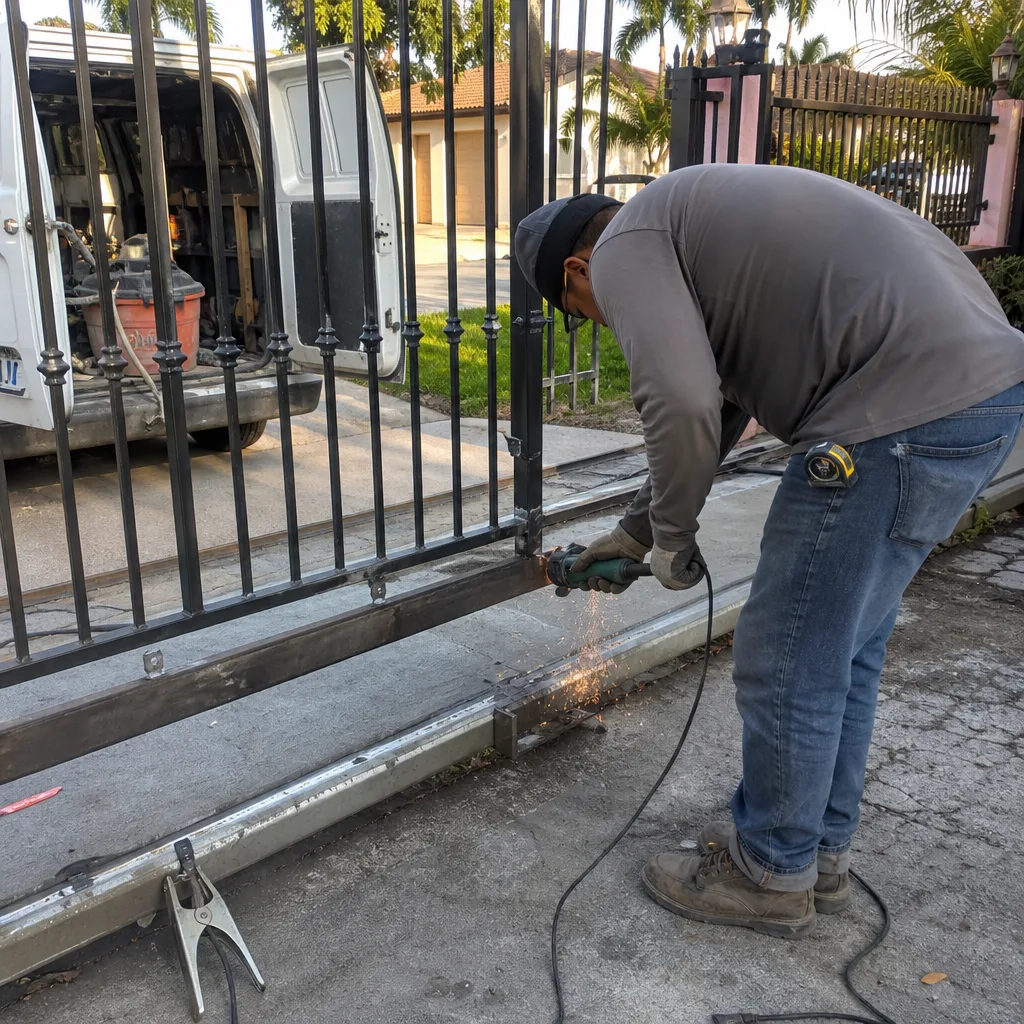
Perhaps 30% of “gate repair” calls we receive in Hialeah are actually access-control issues masquerading as mechanical failures. The homeowner has correctly observed that the gate doesn’t move, but misidentified where the command is breaking down.
Low Battery in Transmitter
A remote with a weak 12-volt battery may have enough power to light the LED but insufficient current to transmit a readable signal to the receiver. The gate appears unresponsive. We test with a fresh remote from our inventory before disassembling any mechanical component. The fix is a $5 battery, not a $400 motor replacement. We document the signal strength reading in millivolts under Clause 4 so there’s no question later about what was tested.
Keypad Wiring Degradation
Surface-mounted keypads in Hialeah take direct sun and rain exposure. The low-voltage wiring inside conduit can develop internal breaks that pass a continuity test when cool but open when heated by sun exposure. The symptom is a keypad that works mornings and evenings but fails midday. We’ve traced this to wire fatigue at the conduit entry point, where vibration from gate operation flexes the same spot thousands of times per year. The repair is replacing the last 18 inches of cable with outdoor-rated stranded wire and a drip loop to prevent future water intrusion.
Access-Control Board Firmware Issues
Modern operators from DoorKing, Elite, and some LiftMaster lines run firmware that can glitch after power fluctuations. The symptom mimics a dead motor: no response to any input, yet the board shows normal power. A controlled power cycle (disconnect for 60 seconds, not 5) often restores function, but the underlying cause is usually inadequate surge protection on the supply circuit. In Hialeah’s lightning-prone summer months, we recommend whole-operator surge arrestors as standard equipment, not an upgrade. We’ve replaced too many control boards after storms that a $40 arrestor would have protected.
Stop Immediately vs. Schedule Within 30 Days: The Safety Decision
Not every warning sign demands the same urgency. Misjudging this distinction either creates unnecessary emergency fees or, worse, allows a hazardous condition to persist.
Stop Using the Gate Immediately
UL 325 entrapment risk. If your gate reverses inconsistently, sometimes stopping on obstruction and sometimes not, stop using it. This is the failure mode that causes injury: a gate that usually reverses lulls users into trust, then fails to reverse when a child or pet is in the path. The standard requires consistent, predictable reversal force. Any inconsistency is a stop-immediately condition. We treat these calls with same-day response under our 24/7 live-answer policy, and we test reversal force with a calibrated gauge, not a hand wave, before returning the gate to service.
Visible structural failure. A cracked weld at the gate frame hinge point, a gate leaf that has shifted visibly on its posts, or a sliding gate that has jumped its track are all stop-immediately conditions. Continued operation risks catastrophic collapse or entrapment between the gate and structure.
Schedule Within 30 Days
Slow cycle speed with consistent operation. The gate completes every cycle but takes longer. This indicates developing wear, not imminent failure. Schedule during normal business hours, avoid emergency rates, and expect a thorough diagnostic with written pricing before work begins.
Cosmetic rust without structural involvement. Surface rust on decorative elements should be addressed before it penetrates, but it doesn’t create immediate operational or safety risk. Sand, prime, and repaint, or call for welding repair if pitting has begun.
Single remote failure with keypad and wall button working. This is a peripheral issue, not a gate system failure. Replace the remote battery, and if that doesn’t resolve it, schedule a receiver test at convenience.
What Good Documentation Looks Like (And Why Most Companies Don’t Leave It)
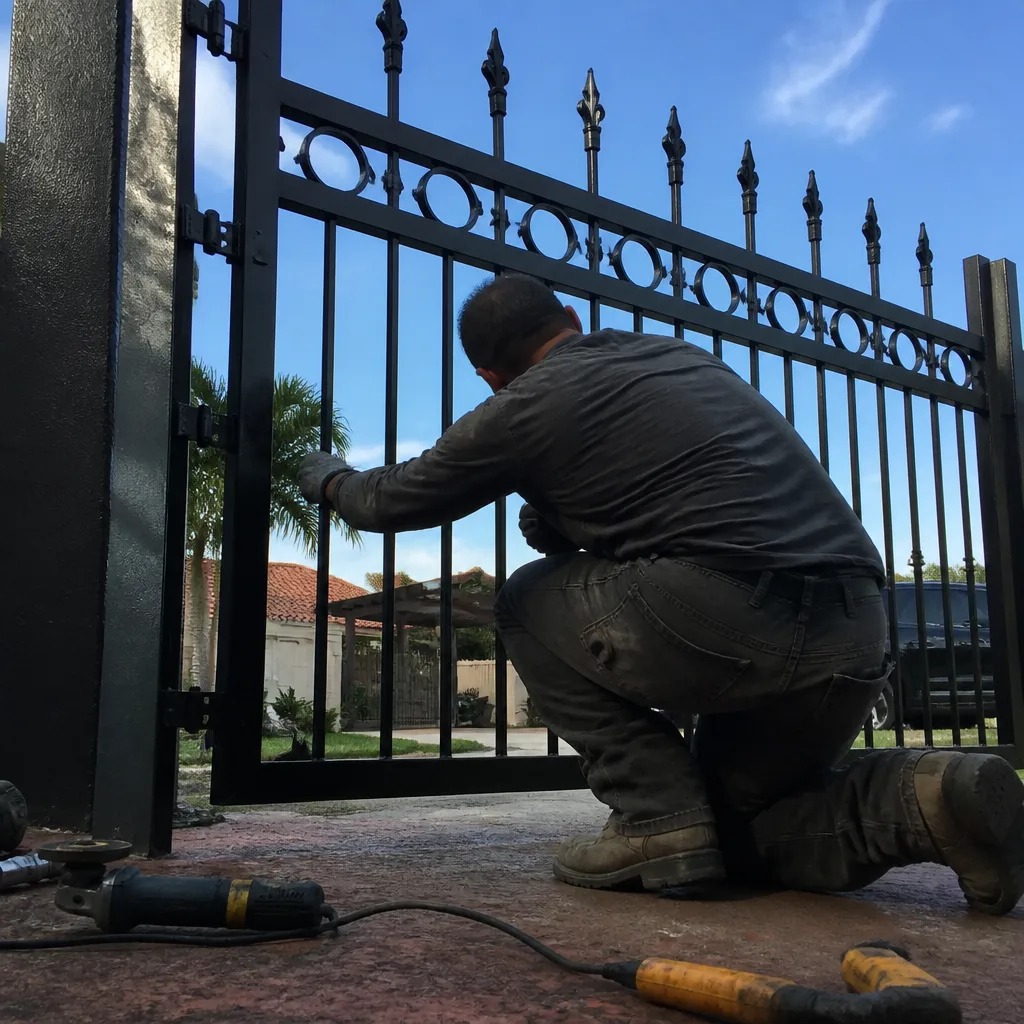
The diagnostic guesswork that drives repeat repairs happens because most gate repair contractors in Hialeah leave no record of what they found, what they adjusted, and what they set. When the symptom returns, the next technician starts from zero.
Under The Haven Standard, every Vance Gate Repair Hialeah visit includes three documents: a written scope and price signed before work starts (Clause 1), a photographed record of conditions found and adjustments made (Clause 4), and a post-service summary with part numbers, settings, and recommendations. Here’s what that looks like in practice for warning sign diagnosis.
When we respond to a gate reversing mid-travel in Hialeah’s Palm Springs neighborhood, we photograph the photo-eye alignment before touching it, then photograph the corrected position with a tape measure visible in frame. We record the limit switch pulse count on FAAC and BFT systems, or the mechanical stop position on Viking and Linear operators. If we replace a control board, we note the firmware version and leave the old board labeled in a bag for the homeowner’s reference.
This matters because gate problems recur. Hinges need re-lubrication every 18-24 months in Hialeah’s climate. Motors that were drawing high amperage will eventually need brushes or replacement. When we have the baseline documentation, the next visit takes 20 minutes instead of two hours, and the homeowner doesn’t pay twice to rediscover the same hinge drag we measured two years prior.
Most competitors don’t do this because it takes time they don’t bill for, and because it requires a technician who can document clearly. Adrian Vance developed this discipline on commercial access-control sites starting in 2014, where undocumented work created liability exposure and repeat dispatch costs. We’ve applied the same standard to every residential gate in Hialeah since.
Common Mistakes to Avoid
- Assuming the motor is the problem because the gate doesn’t move. In our Hialeah experience, roughly 40% of “dead motor” calls are actually power supply, control board, or access-control issues. Test the simple things before authorizing motor replacement.
- Ignoring seasonal patterns. A gate that fails only in summer probably has a thermal or moisture-related cause. Describing it as “random” to your technician loses the most useful diagnostic clue you have.
- Accepting verbal estimates for major repairs. A written price before work starts isn’t just consumer protection, it’s a discipline that forces the technician to actually diagnose rather than guess. Under Haven Standard Clause 1, we don’t pick up a tool until you’ve seen and approved a written scope and price.
- Using WD-40 on gate hinges and tracks. WD-40 is a solvent and light penetrant, not a lubricant. It displaces existing grease and leaves metal exposed. In Hialeah’s humidity, hinges treated with WD-40 corrode faster than untreated ones. Use lithium-based or molybdenum-disulfide grease rated for outdoor load-bearing applications.
- Replacing a remote without testing the receiver. We’ve seen homeowners buy three remotes before discovering the receiver antenna was corroded at the terminal block. A $3 wire fixed what $150 in remotes didn’t.
- Delaying repair because “it still works sometimes.” Intermittent failures are documenting themselves when they happen. The longer you wait, the harder they are to trace, and the more likely a minor adjustment becomes a major replacement.
- Hiring a general handyman for gate operator work. Gate operators are specialized electromechanical systems with specific safety standards. A handyman who can install a ceiling fan is not qualified to adjust UL 325 entrapment protection or set limit switches to manufacturer specification. We’ve been called to correct handyman repairs that created safety hazards.
When to Call a Professional
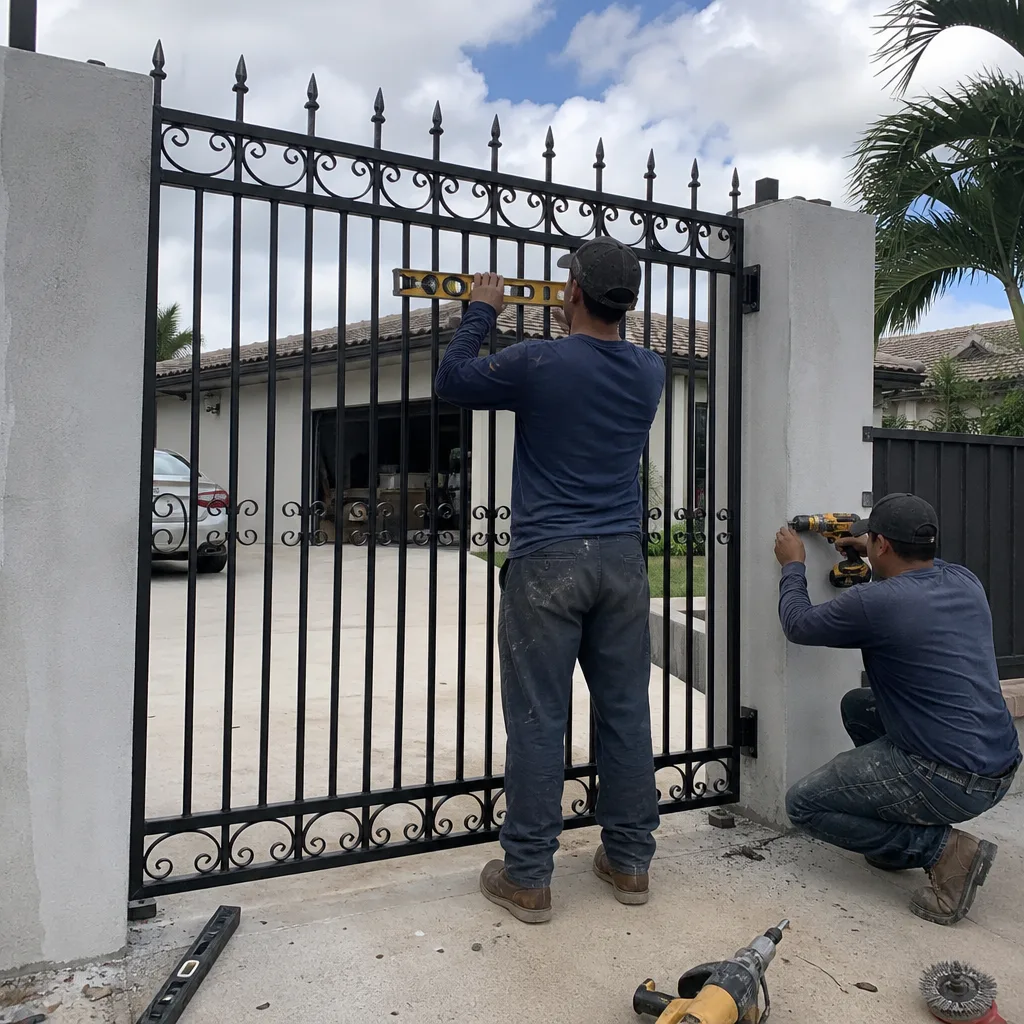
Call when a warning sign points to a cause you can’t verify yourself: motor amperage draw requires a clamp meter, control board logic faults require diagnostic equipment, and structural welding requires certification. Call when the symptom involves safety: inconsistent reversal, visible frame cracks, or a gate that has jumped track. And call when you’ve already paid for one repair that didn’t resolve the problem; we offer free second opinions on any written estimate from another company, and we’ll review their paperwork against what we find.
Vance Gate Repair Hialeah offers free estimates in Hialeah - call (786) 458-8210. A live person answers 24 hours a day, and we dispatch background-checked, uniformed technicians with name and photo provided before arrival. Every repair is governed by The Haven Standard: written price before work starts, documented photo record on every visit, and our 365-Day Done Right Promise covering all completed work.
Frequently Asked Questions
Most residential gate repairs in Hialeah range from $180 for hinge service and adjustment to $650 for control board replacement, with motor replacements typically running $850-$1,400 depending on brand and gate weight. We deliver a written, itemized price before any work begins under Haven Standard Clause 1, and we never invoice above the approved quote. Call (786) 458-8210 for a free estimate - estimates are free.
We offer same-day response for safety-related issues including inconsistent reversal, structural cracks, and track jumps. For non-urgent symptoms like slow cycle speed or cosmetic rust, we typically schedule within 24-48 hours. A live person answers our phone 24/7 to triage urgency and dispatch appropriately. Call (786) 458-8210 to discuss your symptom.
Temperature and humidity affect multiple systems: motor resistance drops in heat and increases in cold, thermal cutouts trip more easily when ambient temperature is high, and control board condensation forms when hot enclosures cool rapidly in thunderstorms. In Hialeah’s climate, we also see swollen wooden panels and accelerated corrosion that add mechanical load. The specific pattern - morning vs. afternoon, dry vs. rainy - tells us which system to test first.
This is almost always a receiver or antenna issue, not the remote itself. The remote has enough power for close-range transmission but the receiver isn’t sensitive enough for distance. We test with a known-good remote first, then check receiver antenna condition and antenna wire integrity at the terminal block. In Hialeah’s salt air, antenna corrosion is common and easily fixed. Call (786) 458-8210 and we’ll diagnose it on the first visit.
We service and repair nine major automation brands: LiftMaster, FAAC, BFT, Linear, Viking, Ghost Controls, DoorKing, Elite, and Mighty Mule. We don’t steer customers toward replacement with a different brand; we repair what’s installed and document what we find. If replacement becomes necessary, we recommend based on your gate’s weight, cycle frequency, and existing infrastructure, not on brand exclusivity.
Our technician arrives in a marked vehicle, uniformed, with name and photo already texted to you. We listen to your symptom description, then test systematically: power supply, access control, mechanical operation, safety systems. We photograph conditions before touching anything. Then we present a written scope and flat price for your approval. Only after you sign do we begin work. When finished, we test all functions, photograph the completed work, and leave you with a record of what was found, what was done, and what was set. This is The Haven Standard on every single visit.
The Bottom Line
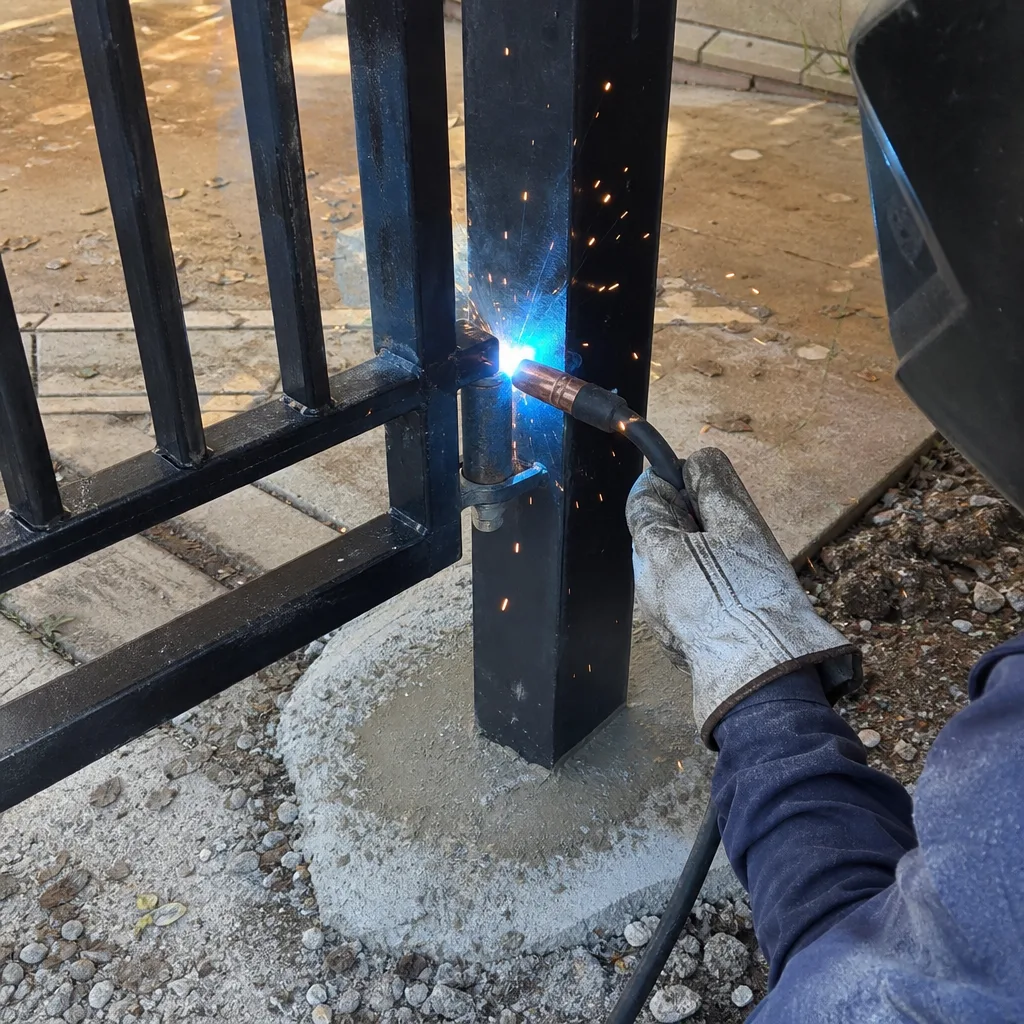
Gate warning signs are useful only when they’re read precisely. A slow gate in January and a slow gate in July point to different causes. A grinding noise at the motor and a grinding noise at the track require different repairs. The homeowner who can describe when, where, and under what conditions a symptom occurs gets the right fix the first time. The homeowner who says “it’s just acting weird” pays for diagnostic roulette. In Hialeah’s demanding climate, the early warnings are there: rust streaks, swollen panels, antenna corrosion, thermal patterns. Notice them, document them, and demand that your technician does the same. The alternative is the third repair call for the same symptom, and no one wants that invoice.
Written by Adrian Vance, Owner at Vance Gate Repair Hialeah, serving Hialeah since 2014.