
Last updated September 21, 2026
Free on-site gate assessment - hinges, posts, and your LiftMaster or Nice gate operator checked before anything is quoted
The assessment is free and the quote is the invoice.
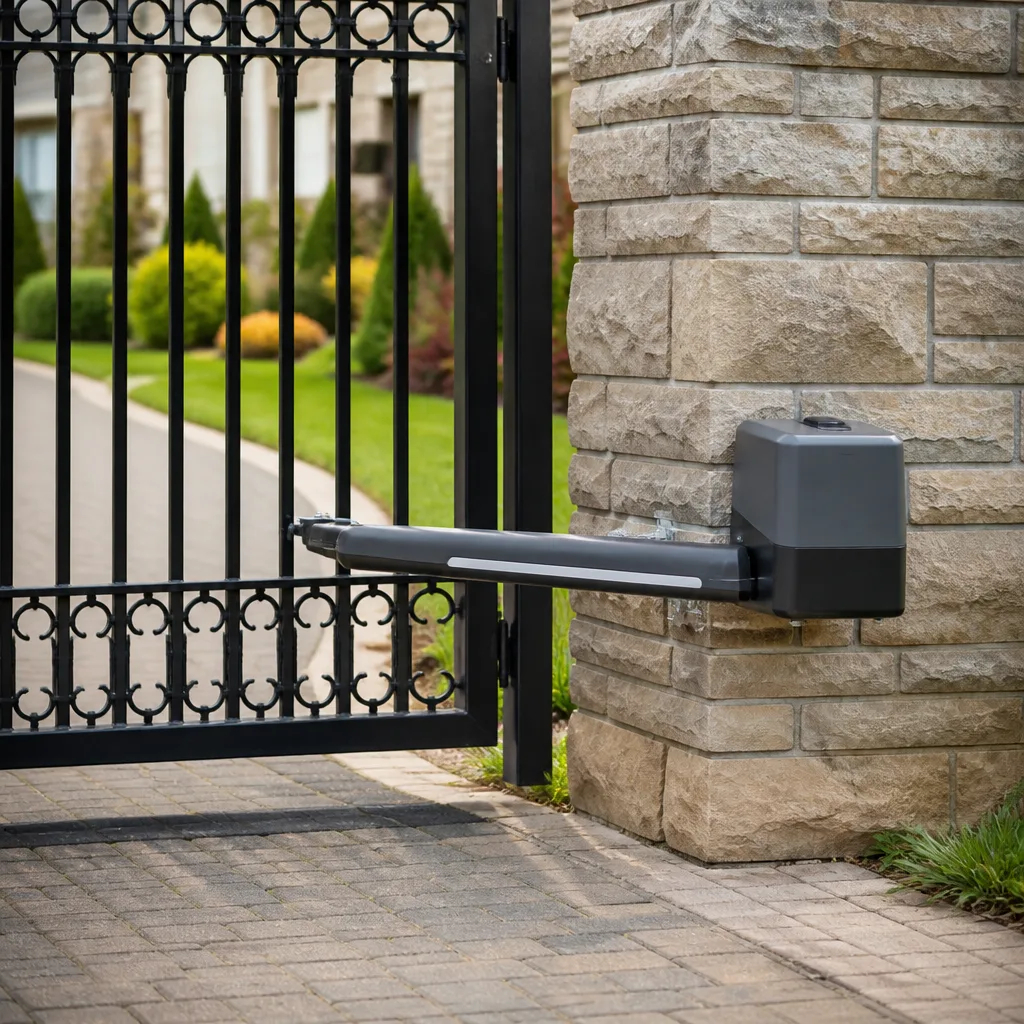
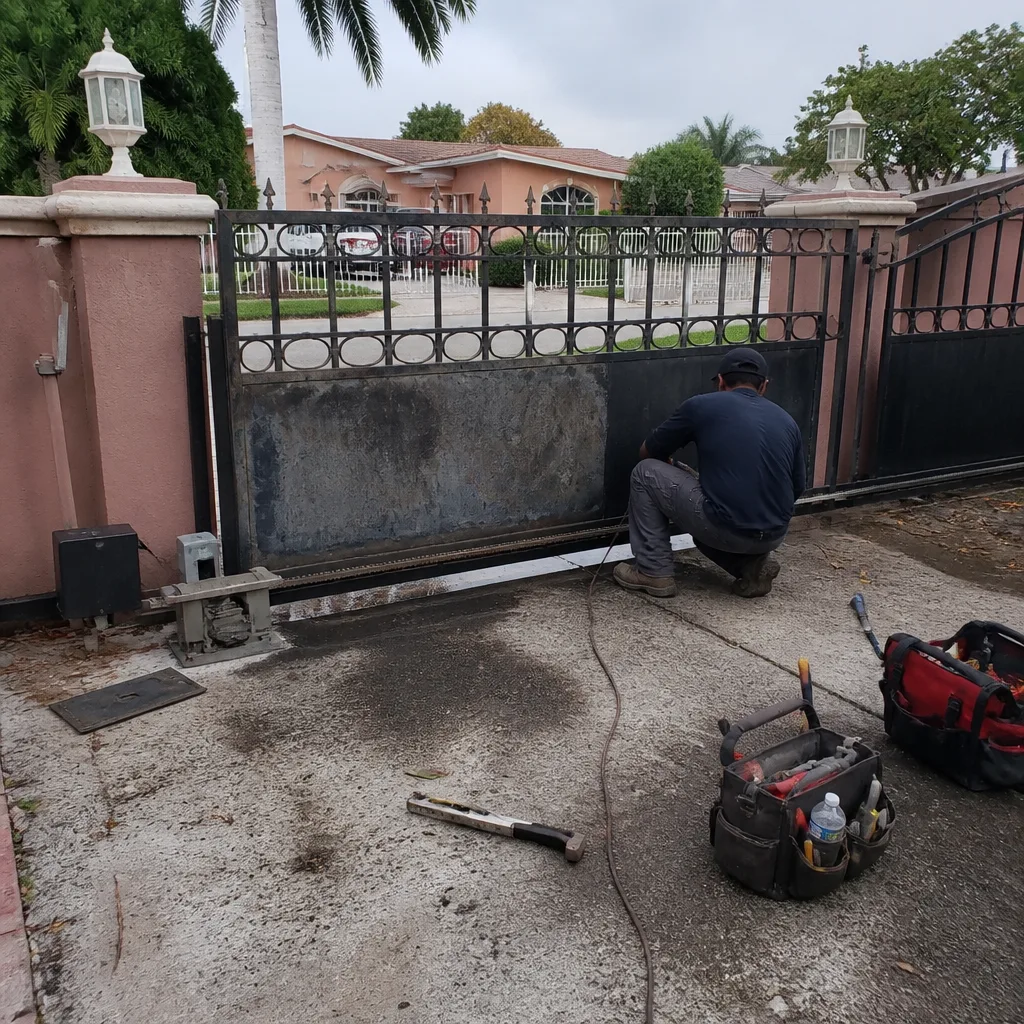 Before
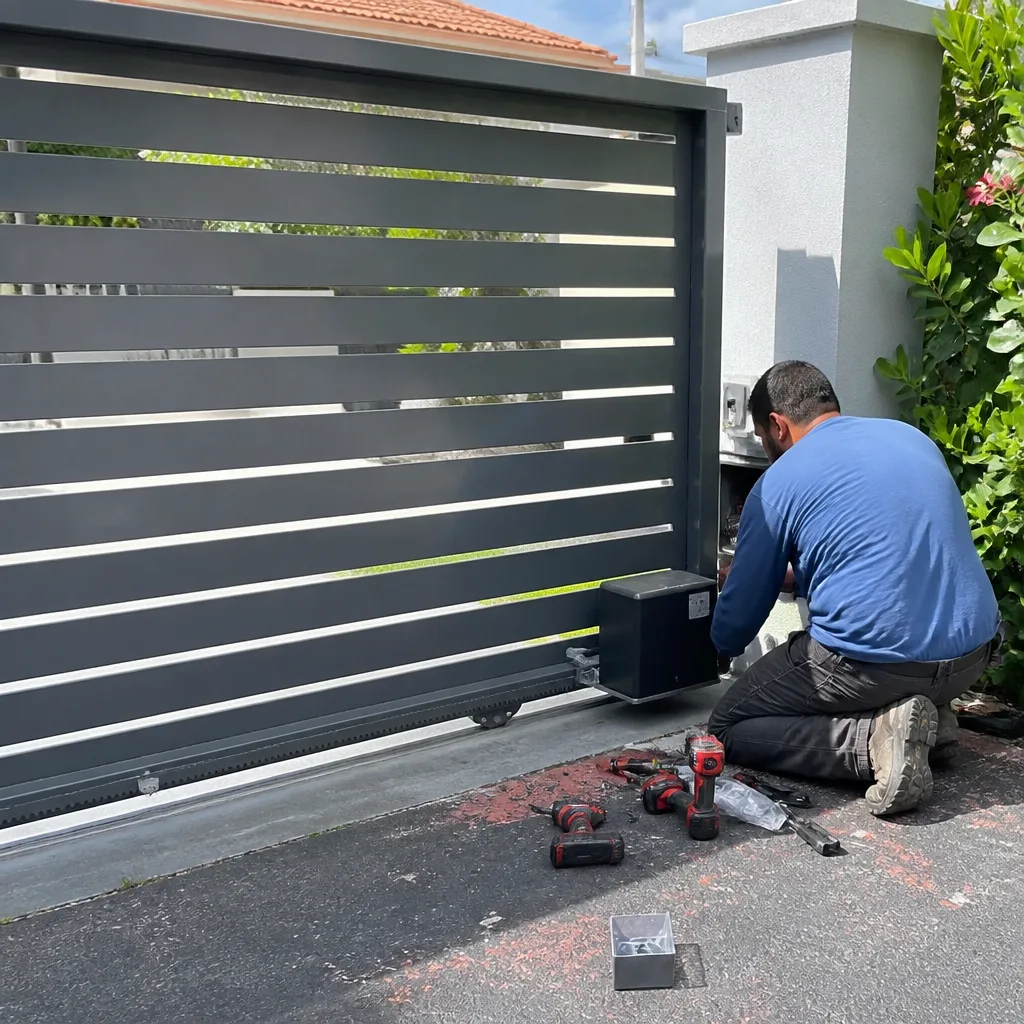 After
After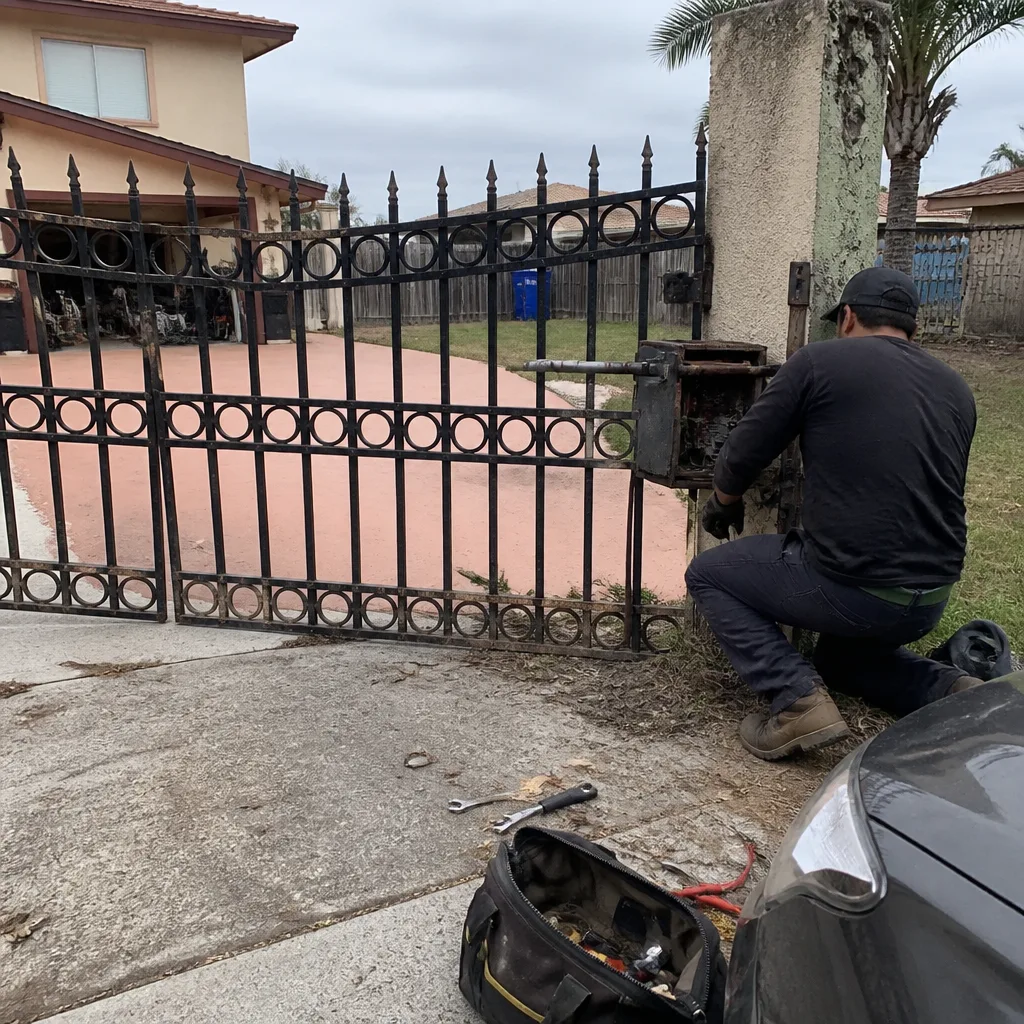 Before
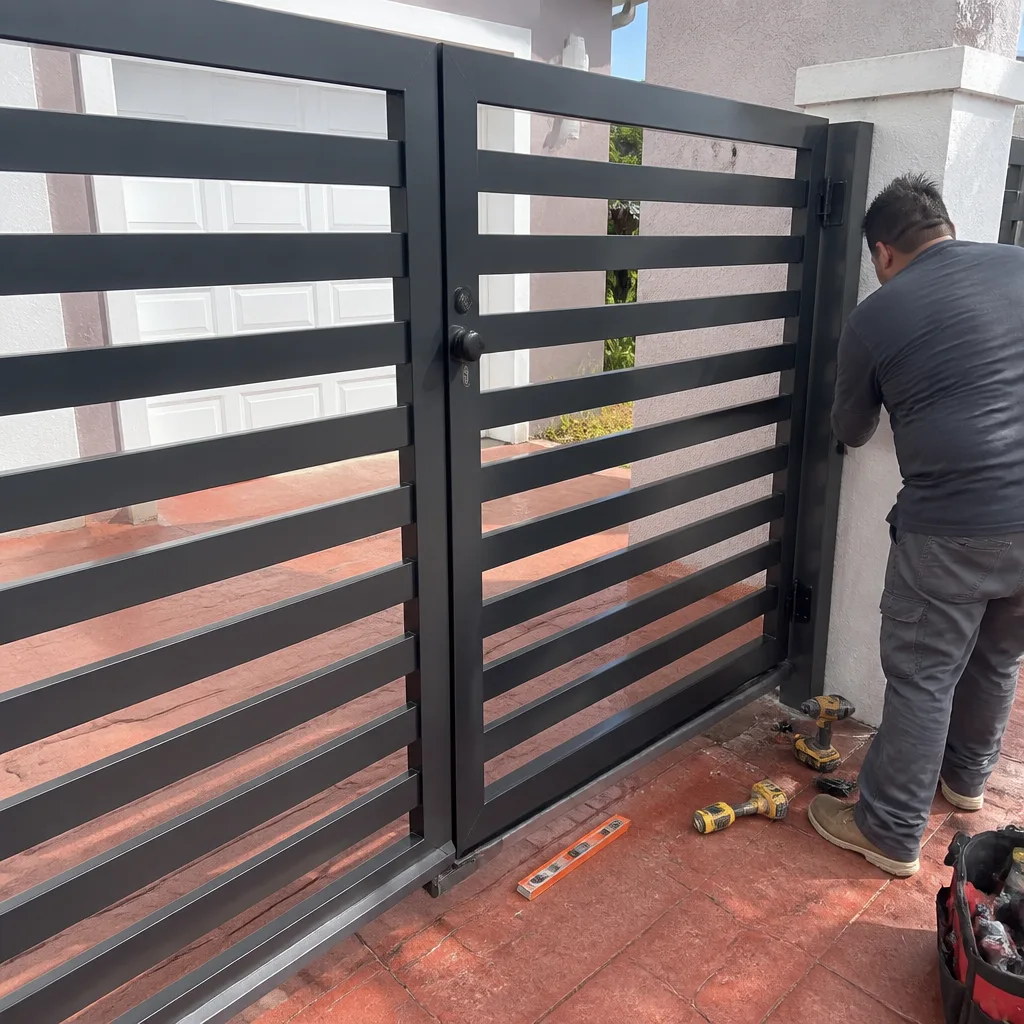 After
After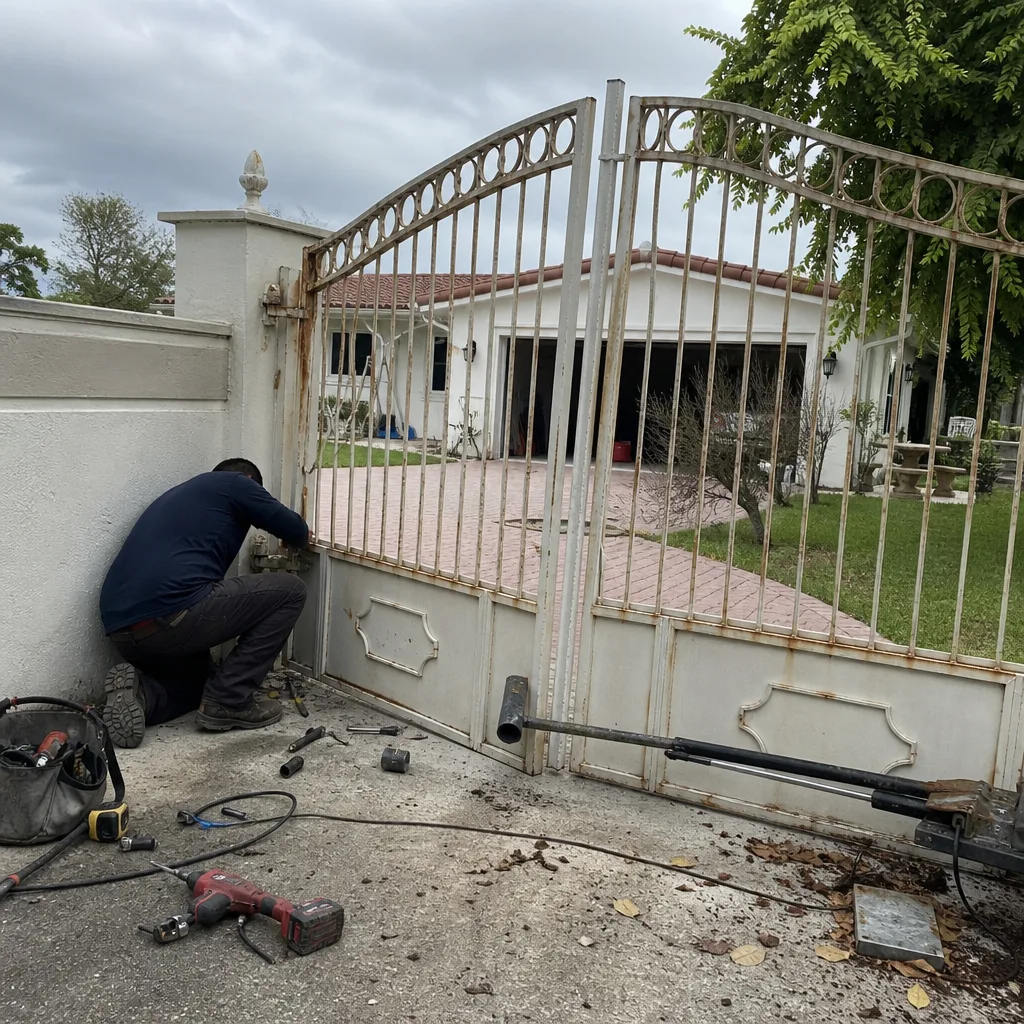 Before
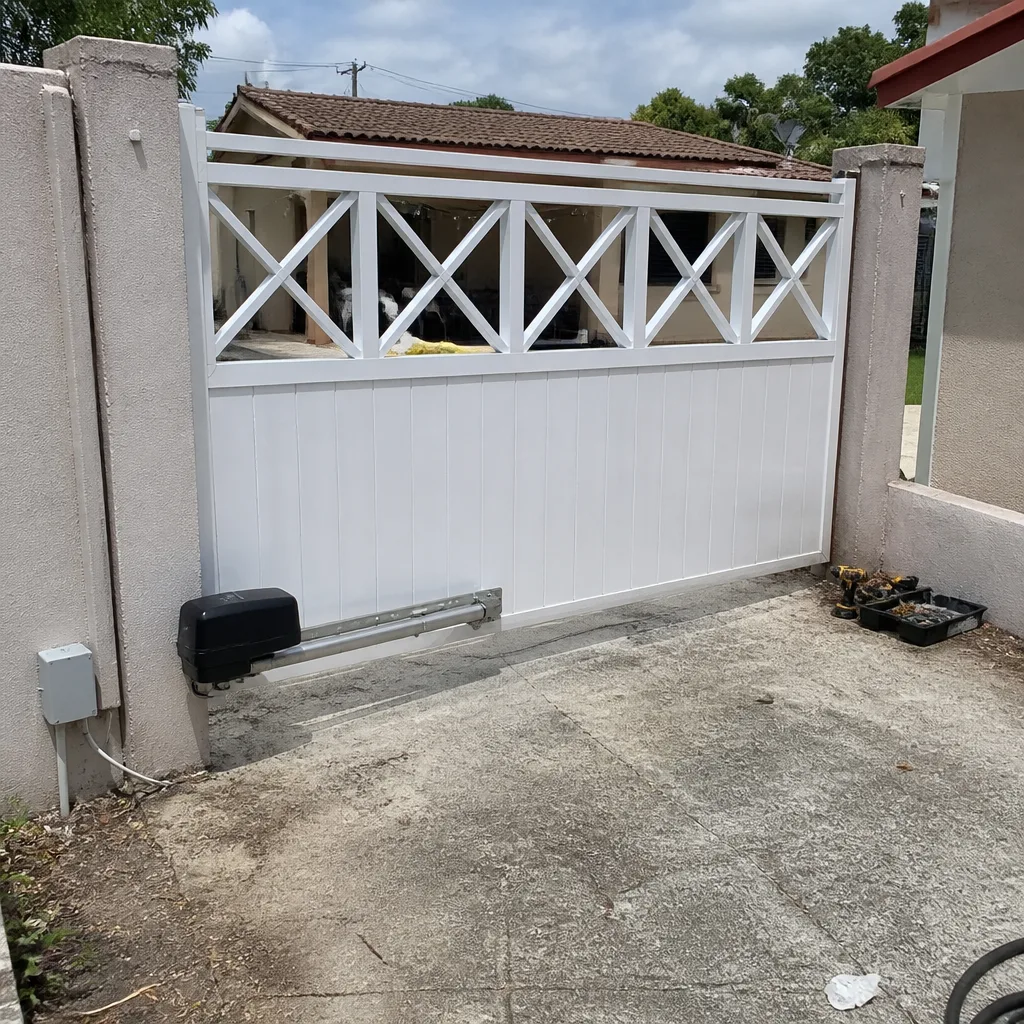 After
AfterGate Repair Maintenance Checklist for Hialeah Homeowners
The most common phrase a gate technician hears when arriving at a neglected gate is “we had it serviced last year” - but without a written record of what was actually measured and adjusted, that service call might as well not have happened. In Hialeah, where the rainy season runs from May through October and salt air from Biscayne Bay accelerates corrosion on every metal surface, a vague checklist creates the illusion of maintenance without producing any evidence it happened. This guide delivers a checklist built around numbers you can record and hand to our Gate Repair services or the next technician, cutting diagnostic time by 30 minutes and preventing the surprise $800 repair that follows a skipped battery test.
Quick Answer
A proper gate maintenance checklist for Hialeah homeowners includes monthly visual inspections, quarterly measurable checkpoints (hinge pin play, photo-eye voltage, operator amperage draw), and seasonal deep inspections timed to the May rainy season and November dry season. Record every reading in a simple log with photos; this documentation is more valuable than the lubrication itself, because it proves what was actually found rather than what was vaguely “checked.”
Table of Contents
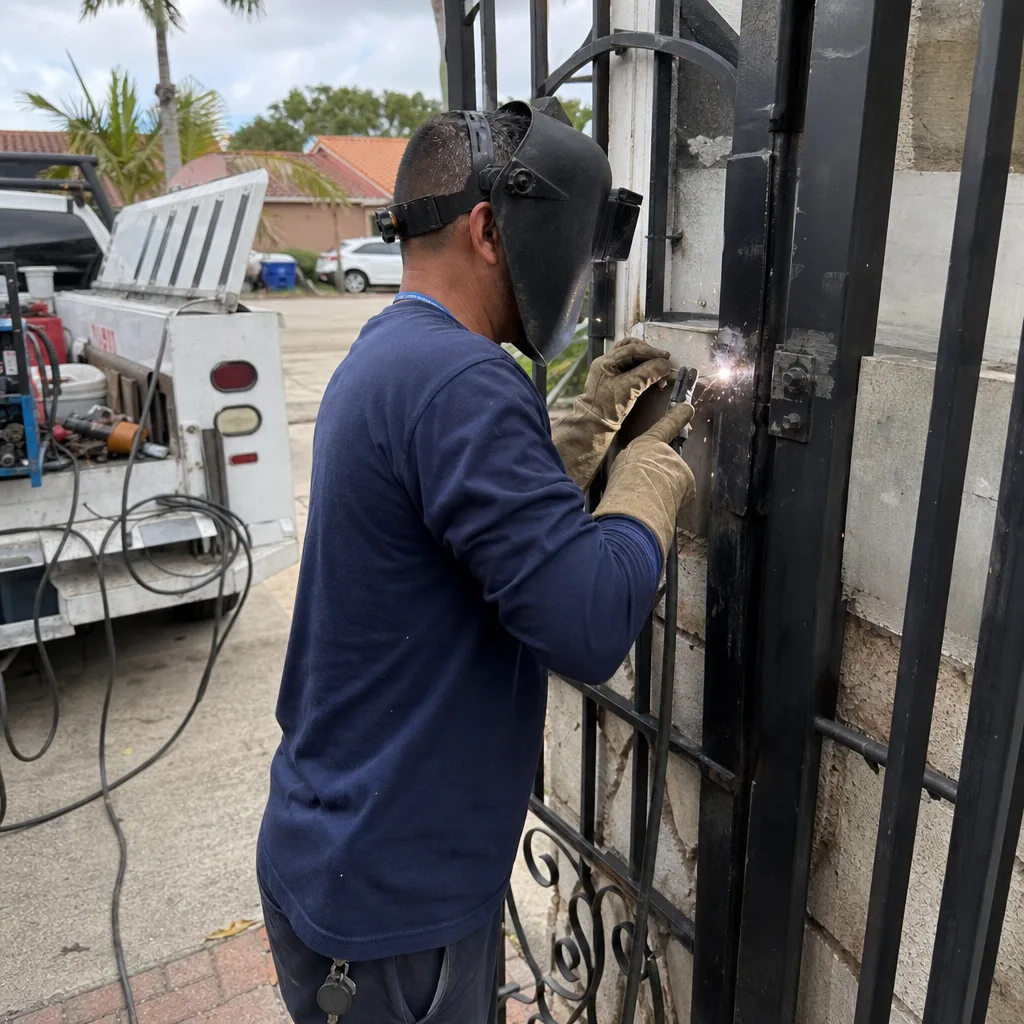
- Why Measurable Checkpoints Beat Vague Tasks
- Monthly Visual Inspection (15 Minutes)
- Quarterly Measured Checkpoints (45 Minutes)
- Seasonal Deep Inspections: Hialeah’s Two-Season Calendar
- Lubricants That Survive South Florida Heat
- Three Skipped Items That Bankrupt Budgets
- Building Your Homeowner Log
- Common Mistakes to Avoid
- When to Call a Professional
- Frequently Asked Questions
 Before
 After
AfterWhy Measurable Checkpoints Beat Vague Tasks
Every gate maintenance guide on the internet tells you to “lubricate moving parts” and “check for wear.” We’ve arrived at gates in Hialeah where the homeowner faithfully followed that advice for three years, yet the hinge pins had 4 millimeters of play (failure starts at 2 millimeters), the photo-eye alignment voltage had dropped to 4.1 volts (threshold for reliable operation is 5.0 volts on most Elite and Mighty Mule systems), and the operator was drawing 6.2 amps on the close cycle against a manufacturer spec of 4.5 amps. The gate moved. It made noise. It looked “checked.” It was failing.
A measurable checkpoint produces a number. A number can be compared to a spec. A spec tells you whether to act now or record and watch. This is the difference between maintenance and performance theater.
Here’s what we mean by measurable versus vague:
| Vague Task | Measurable Replacement | Pass/Fail Threshold |
|---|---|---|
| “Check hinges” | Measure hinge pin vertical play with calipers | Less than 2 mm play |
| “Test safety devices” | Photo-eye receiver voltage at control board | 5.0 VDC minimum |
| “Listen for unusual sounds” | Operator amperage draw at open and close | Within 15% of nameplate rating |
| “Inspect wiring” | Ground wire continuity, load side to earth | Less than 1.0 ohm resistance |
The tools for these measurements cost less than a single service call: a $25 digital caliper, a $40 multimeter, and a $30 clamp ammeter. In our experience at Vance Gate Repair Hialeah home, homeowners who maintain a written log with these numbers rarely need emergency repairs. The log reveals drift before failure.
Monthly Visual Inspection (15 Minutes)
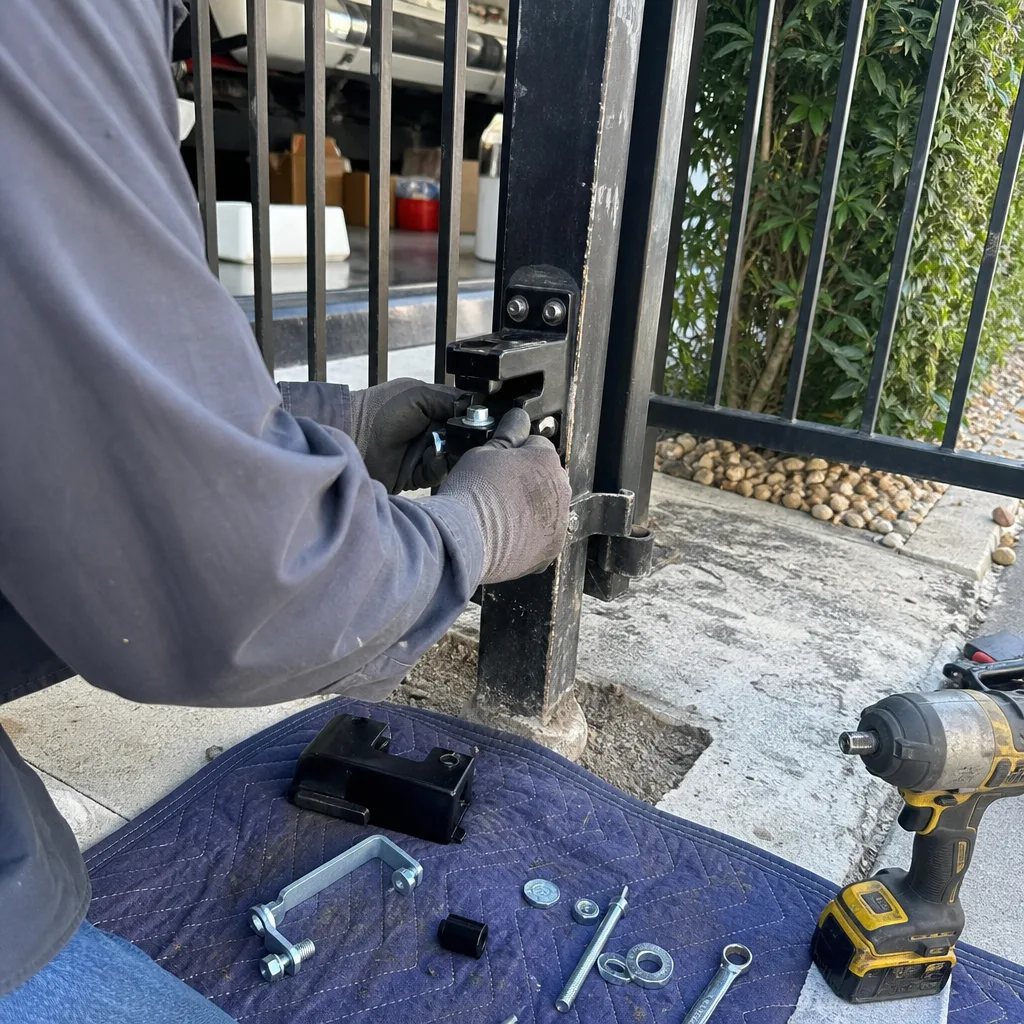
This is not where the critical work happens, but it’s where you catch the obvious before it becomes expensive. Do this on the first Saturday of each month. Walk the full gate path in both directions, with the operator powered off and the gate in manual release.
- Gate-to-post gap measurement. Use a tape measure at the top, middle, and bottom of the gate leaf where it meets the latch post. Record all three numbers. In Hialeah, thermal expansion of aluminum gates can shift this gap by 3/16 inch between January and August. A gap that narrows at the top but not the bottom indicates hinge pin wear or post settlement - both need attention before the gate starts dragging.
- Photo-eye lens condition. Wipe with a dry microfiber cloth. Look for spider webs, water spots from sprinkler overspray, or the white haze that develops on lenses facing west into Hialeah’s intense afternoon sun. Check that both emitter and receiver LEDs are solid (not flickering) when the gate path is clear.
- Track and roller condition (sliding gates). Run a finger along the track surface. You should feel smooth steel, not rust pits or dried grease that has turned to grinding paste. In Hialeah’s limestone-rich soil, track settlement is common in the first five years after installation; look for gaps between track support brackets and the concrete pad.
- Control box interior. Open with the power off. Look for ant trails, gecko droppings, or moisture staining. We’ve found fire ant colonies nested inside FAAC control boxes in West Hialeah, and their conductive trails cause intermittent faults that disappear when the technician arrives. A photo of the interior now saves a diagnostic headache later.
- Manual release test. Disengage the operator and move the gate by hand. It should travel the full arc with one finger of pressure. If you need two hands, something is binding - hinge, track, or internal gearbox.
Record: date, gap measurements (three points), photo-eye LED status, and any binding noted. This takes fifteen minutes and creates a baseline that makes quarterly measurements meaningful.
Quarterly Measured Checkpoints (45 Minutes)
This is where maintenance becomes engineering. Do this in March, June, September, and December. You’ll need a digital multimeter, a clamp ammeter, and calipers.
Hinge Pin Play Measurement
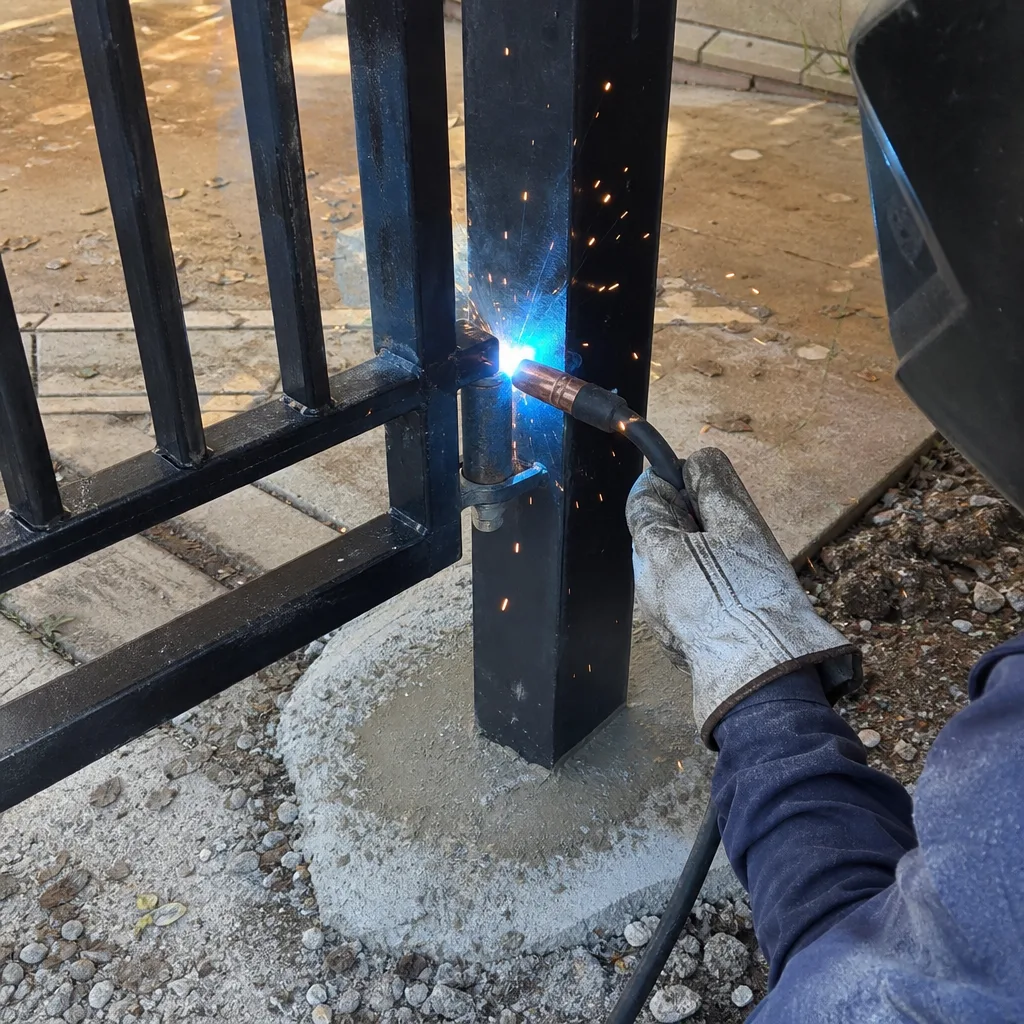
With the gate in manual release, grasp the free end of the gate leaf and lift vertically. Measure the resulting gap between the hinge barrel and the pin with calipers. On a typical residential swing gate in Hialeah, installed with standard J-bolt hinges:
- New installation: 0.3-0.8 mm play
- Acceptable: up to 1.5 mm
- Monitor closely: 1.5-2.0 mm
- Replace hinge pin or bushing: over 2.0 mm
At 2.5 mm of play, the gate leaf develops a pendulum motion that overloads the operator arm on every cycle. We’ve replaced LiftMaster LA400 arms in Hialeah that failed prematurely because the hinge play was never measured - the arm was doing the hinge’s job.
Photo-Eye Alignment Voltage
Set your multimeter to DC volts. At the control board, locate the photo-eye terminal (usually labeled PHOTO, SAFETY, or BEAM - consult your operator manual for pinout). Measure voltage between the photo-eye return and common with the beam clear. Typical readings by brand:
- Elite: 5.0-6.5 VDC when aligned, below 4.5 VDC when marginal
- Mighty Mule: 4.5-5.5 VDC when aligned, below 4.0 VDC when marginal
- LiftMaster: 5.0-7.0 VDC when aligned, below 4.5 VDC when marginal
Record the voltage and the ambient light conditions (direct sun, shade, dusk). In Hialeah, western-facing photo-eyes often read 0.5 volts lower at 5:30 PM than at 10:00 AM due to solar interference. A reading that drops below threshold intermittently causes the gate to reverse mid-travel or refuse to close - the classic “works in the morning, not in the afternoon” fault.
Operator Amperage Draw
Clamp the ammeter around one motor lead (power on, gate cycling). Record:
- Startup surge (first 0.5 seconds)
- Steady draw, open direction
- Steady draw, close direction
Compare to the nameplate rating, usually printed on the operator housing or in the manual. A close-cycle draw that exceeds the open-cycle draw by more than 20% indicates mechanical resistance - binding hinge, misaligned track, or failing gearbox bearings. A draw that climbs 10% between quarters indicates progressive wear that will accelerate.
We’ve documented a FAAC 415 in East Hialeah that drew 3.8 amps opening and 5.4 amps closing in March, then 4.1 and 6.2 amps by September. The hinge pin play had increased from 1.2 mm to 2.3 mm. The homeowner had the numbers, saw the trend, and scheduled hinge bushing replacement before the operator failed.
Ground Wire Continuity
With power off, measure resistance between the ground terminal in the control box and a known earth point (ground rod, metallic water pipe, or driven screwdriver 6 inches into soil). Record the ohm reading. It should be below 1.0 ohm. In Hialeah’s sandy, well-drained soils, ground rods sometimes corrode or loosen; readings above 2.0 ohms indicate a ground fault risk that can cause erratic control board behavior or, in lightning events, equipment damage.
Seasonal Deep Inspections: Hialeah’s Two-Season Calendar
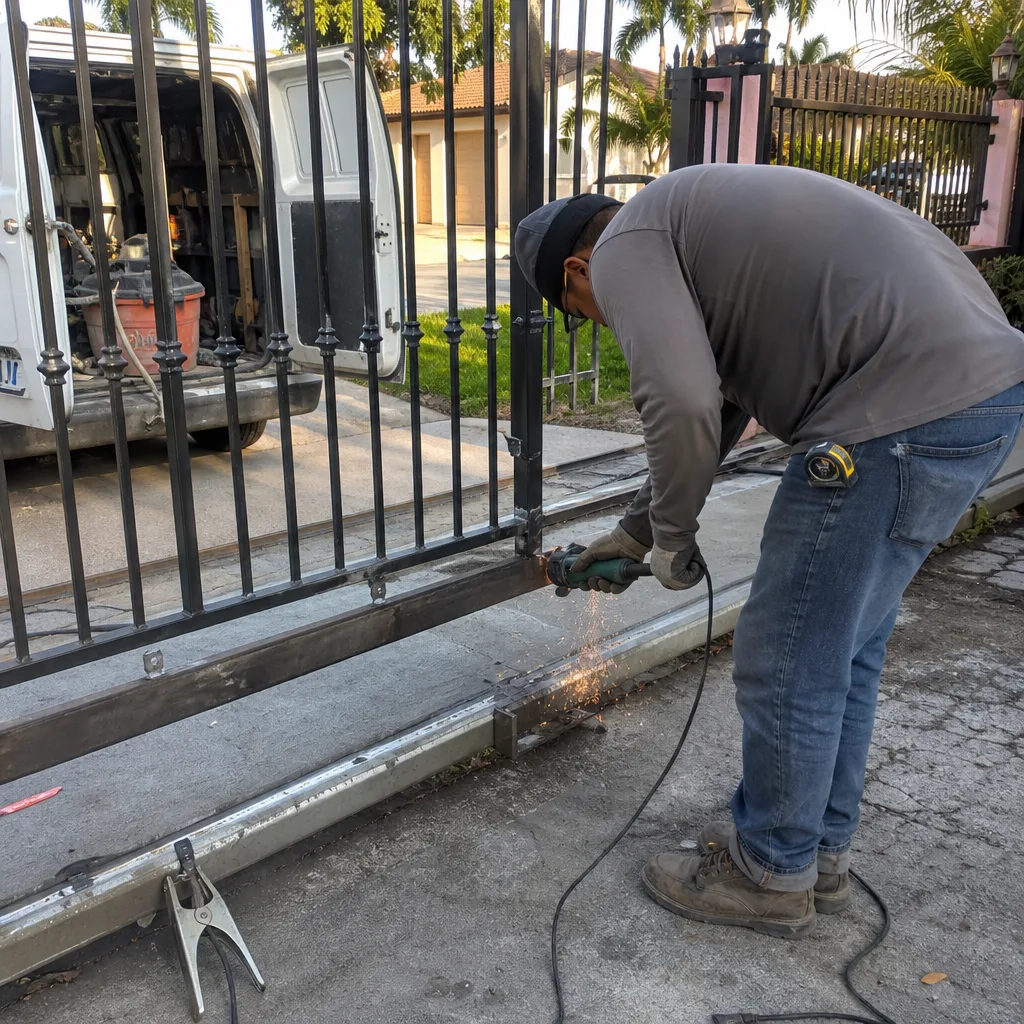
Hialeah doesn’t have four seasons. It has wet (May through October) and dry (November through April). Gate maintenance should align with this rhythm, not with a generic quarterly calendar that ignores what the weather actually does to equipment.
May Pre-Rainy-Season Electrical Inspection
Before the daily thunderstorms begin, focus on everything that water and humidity damage:
- Conduit seals. Check every point where conduit enters the control box, photocells, or keypad. In Hialeah, the expansion and contraction of PVC conduit in summer heat opens gaps that admit water. Look for cracked fittings, separated joints, or the white mineral deposits that indicate past water intrusion.
- Terminal torque. With power off, check screw terminal tightness with the correct driver. Heat cycling loosens connections over time; loose connections arc, arc creates heat, heat melts the terminal block. We’ve replaced control boards in Hialeah where the line voltage terminal was torqued to finger-tight - the homeowner smelled burning plastic before the gate failed entirely.
- Surge protector status. If your operator has a surge protection device, check the indicator LED. Many turn red or extinguish when protection is exhausted. Hialeah averages 80 thunderstorm days annually; surge protectors are consumable items, not permanent installations.
- Battery backup load test. Disconnect AC power and cycle the gate three times on battery alone. Record the battery voltage before and after. A healthy 12V battery should read 12.6-12.8 volts at rest, and not drop below 11.5 volts under load. Replacement is indicated if voltage drops below 11.0 volts or if the gate slows noticeably on battery power.
November Post-Storm-Season Mechanical Inspection
After six months of daily rain, high humidity, and occasional tropical storm exposure, focus on mechanical wear:
- Hinge pin and bushing removal and inspection. Pull the pins, clean with solvent, measure wear with calipers. Look for the blue-black discoloration that indicates overheating from inadequate lubrication. In Hialeah’s salt air, look for pitting corrosion on steel pins - this is accelerated by the combination of humidity and airborne chlorides from Biscayne Bay.
- Track re-leveling check (sliding gates). Use a 4-foot level on the track surface. Maximum allowable deviation is 1/4 inch over 10 feet. Hialeah’s limestone substrate settles differentially; we’ve found tracks with 3/4 inch belly in the center that caused the gate to climb the track and jam.
- Gate leaf squareness. Measure diagonals across the gate frame. They should match within 1/4 inch. A gate that has racked out of square drags on the post, overloads the operator, and eventually tears the hinges from the post.
- Operator mounting bolt torque. Check with a torque wrench against manufacturer spec (typically 25-35 ft-lbs for residential operators). Vibration and thermal cycling loosen these; a loose operator rocks, flexes its mounting arm, and fails the limit switch geometry.
Lubricants That Survive South Florida Heat
This is where most maintenance guides fail Hialeah homeowners specifically. The generic advice to “grease moving parts” ignores that petroleum-based greases thin to near-liquid at 95°F ambient (common in Hialeah from May through September), run off vertical surfaces, and attract the fine coral dust that blows through every yard in Dade County.
We’ve cleaned gates in Hialeah where the homeowner applied standard automotive chassis grease to hinge pins. Six months later, the grease had liquefied, run down the gate post, and formed a paste with windborne grit that acted as grinding compound. The hinge pins were worn to half their original diameter.
What works in this climate:
| Application | Product Type | Specific Examples | Why It Works |
|---|---|---|---|
| Hinge pins and bushings | Dry PTFE spray or marine-grade grease | DuPont Teflon Non-Stick Dry-Film, Lubriplate Marine Grease | PTFE doesn’t attract dust; marine grease resists washout from rain and doesn’t thin until 300°F+ |
| Track surfaces (sliding gates) | Dry lubricant or silicone spray | Blaster Dry Lube with Teflon, CRC Silicone | No residue to mix with grit; reduces rolling resistance without building up |
| Operator gearbox | Manufacturer-specified grease only | LiftMaster part-specific, FAAC OEM | Wrong viscosity causes overheating or seal failure; these gearboxes run 40-60°F above ambient |
| Chain or rack drive | Chain and cable fluid with PTFE | Boeshield T-9, WD-40 Specialist Dry Lube | Penetrates, then dries to waxy film that doesn’t attract dust |
What to avoid: any petroleum-based grease without “marine” or “high-temp” rating, white lithium grease in exposed locations (it emulsifies with humidity and turns to soap), and spray lubricants with Teflon but high solvent content that evaporate and leave nothing behind.
Application frequency: hinge pins every November after cleaning; track surfaces every March before dust season; chain or rack every six months. Record the product used and date in your log - if a technician later finds incompatible lubricants mixed, the repair is more complex.
Three Skipped Items That Bankrupt Budgets
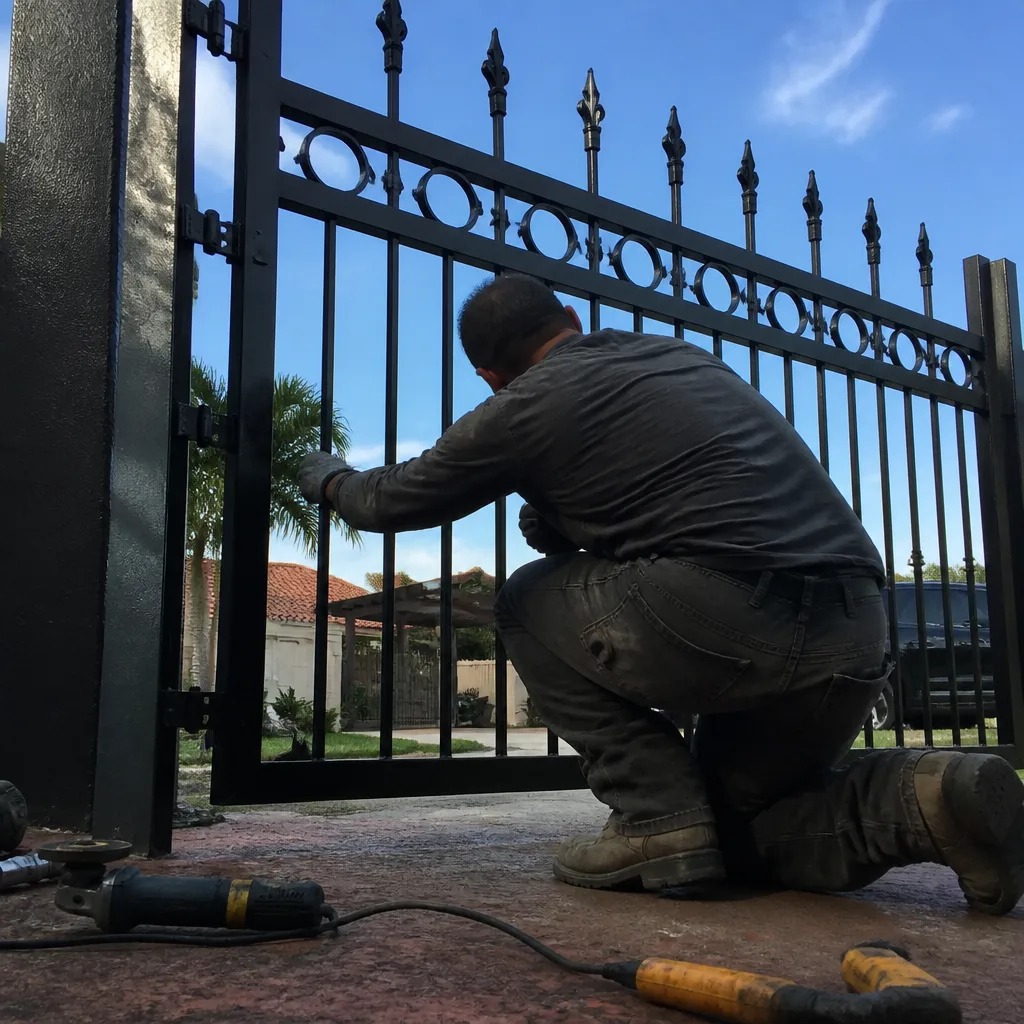
In 22,000+ gate repairs since 2014, the most expensive callbacks trace to three maintenance items that homeowners consistently skip because they’re not visible, not noisy, and not on generic checklists. For Gate Repair Warning Signs: A Hialeah Homeowner’s Reference Guide, see our companion post.
1. Battery Backup Load-Testing
Every automatic gate operator sold in Florida since 2016 must have battery backup per UL 325. The battery is a 12V sealed lead-acid unit, typically 7-12 amp-hours, that degrades predictably in heat. At 90°F ambient (Hialeah’s average summer high), battery life is roughly half the manufacturer’s 25°C rating.
A battery that tests at 12.4 volts at rest may still fail under load. The only valid test is to disconnect AC power and operate the gate. If the battery cannot complete three full cycles, it needs replacement. A dead battery doesn’t just strand you in a power outage; it overloads the charging circuit, which can damage the control board. We’ve replaced $400 control boards that failed because a $35 battery was left in service two years too long.
Test: May and November. Replace when loaded voltage drops below 11.5V or when three cycles cannot be completed. Record the test date and result.
2. Ground Wire Continuity Check
This takes 90 seconds with a multimeter and prevents the most mysterious category of gate faults: intermittent operation with no reproducible pattern. A poor ground creates ground loops, induced voltage on signal lines, and erratic behavior that looks like control board failure.
In Hialeah, the specific risk is corrosion at the ground rod clamp. The combination of sandy soil (poor conductivity) and seasonal wet/dry cycling accelerates galvanic corrosion at the clamp. A ground that read 0.8 ohms when installed can read 8.0 ohms three years later, with no visible indication until you measure it.
Test: May, before lightning season. If resistance exceeds 1.0 ohm, clean the clamp and rod, retighten, and retest. If still above 1.0 ohm, drive a supplemental rod 6 feet away and bond the two.
3. Gate-to-Post Gap Measurement Over Time
This is the single most predictive measurement for major structural repair. A gate that loses 1/8 inch of gap at the top over two years is telling you the hinge post is settling or the hinge pin is wearing. Caught early, hinge bushing replacement costs $180-$340. Ignored until the gate drags and bends the frame, repair runs $800-$1,400 and often requires operator arm replacement as well.
The measurement is simple: top, middle, bottom, monthly, recorded. The value is in the trend, not any single reading. A homeowner in Palm Springs, Hialeah, showed us three years of gap records that revealed 1/4 inch of progressive settlement. We installed a post stabilizer before the gate failed. The alternative would have been full post replacement at triple the cost.
Building Your Homeowner Log
The log is the product of maintenance. Every other task is input; the log is the output that preserves value. Without it, you’re the homeowner saying “we had it serviced last year” with nothing to show.
Format: a simple three-ring binder or cloud-stored photo folder. Each entry needs:
- Date and time
- Weather conditions (temperature, recent rain)
- All numerical measurements with units
- One photo of the limit switch position (showing the indicator or cam setting)
- One photo of any anomaly found
- Action taken or “record and monitor”
Here’s a sample entry:
March 15, 2024, 9:30 AM, 78°F, dry. Monthly inspection. Gate-to-post gap: top 3/4″, middle 5/8″, bottom 5/8″ (unchanged from Feb). Photo-eye voltage: 5.4 VDC (LiftMaster), LED solid green. Operator draw: 4.2A open, 4.4A close (within 15%). Hinge pin play: 1.1 mm. No anomalies. Next quarterly: June 15.
When you call Gate Repair in Hialeah, email or text this log ahead. A technician who knows the hinge play was 1.1 mm six months ago and is now 2.3 mm doesn’t waste 30 minutes on diagnostic guesswork. Under Clause 4 of The Haven Standard, our technician will add their findings to your log and leave you with an updated photo record.
For the limit switch photo specifically: on most operators (Elite, Mighty Mule, LiftMaster), the limit switch has a mechanical indicator or a small cam with a pointer. Photograph this from the same angle each time. If the gate starts stopping short or overrunning, the first question is whether the limit position has drifted. A photo from six months ago answers that in ten seconds.
Common Mistakes to Avoid
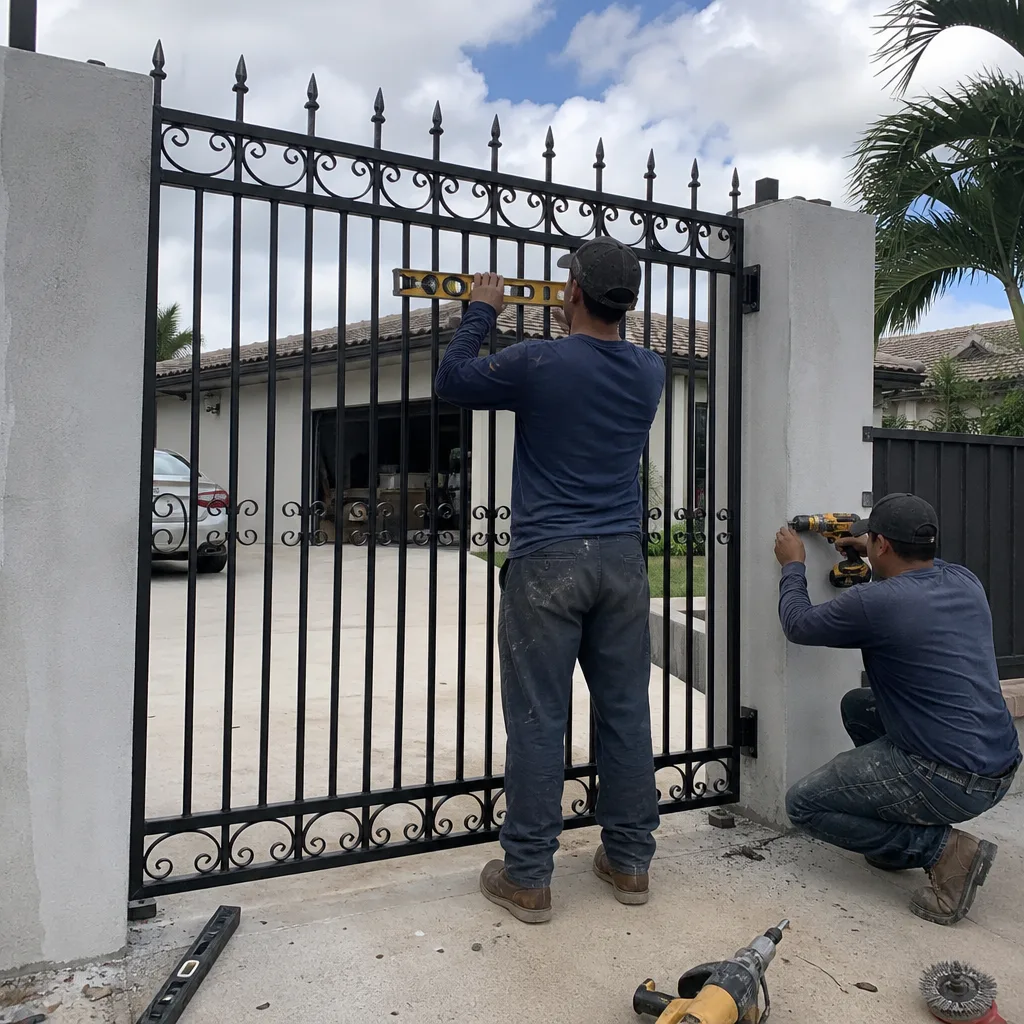
- Using pressure washers on control boxes or photocells. The force drives water past gaskets into sealed enclosures. In Hialeah’s humidity, this moisture doesn’t dry; it causes corrosion that appears months later as “random” faults. Use a damp cloth and compressed air only.
- Applying automotive brake grease to gate hinges. It’s formulated for 400°F brake calipers, not 90°F outdoor exposure. It attracts dust, turns to abrasive paste, and accelerates wear. Use dry PTFE or marine grease as specified above.
- Ignoring the manual release mechanism. Homeowners in gated Hialeah communities like Palm Springs or Miami Lakes often never test manual release until the power fails and they need to evacuate. Test monthly; lubricate the release cam with dry lube quarterly. A seized release in an emergency is a safety hazard, not an inconvenience.
- Recording “checked” without numbers. “Checked hinges” in a log is worthless. “Hinge pin play 1.3 mm” is actionable. The habit of precision is the entire point.
- Skipping the post-storm inspection after tropical weather. Even a near-miss tropical storm subjects gates to wind loads and flying debris not accounted for in normal design. After any tropical storm warning in Hialeah, run the full monthly inspection and check specifically for bent track, loose mounting bolts, and water in conduits.
- Mixing lubricant types on the same component. Petroleum grease over dry PTFE residue, or vice versa, creates a gummy compound that traps grit. If switching lubricant types, clean the component completely with solvent first.
- Assuming a new gate doesn’t need maintenance. The most critical maintenance window is the first 12 months, when settlement, thermal cycling, and initial wear patterns establish themselves. A gate that receives no attention in year one often needs major adjustment in year two.
When to Call a Professional
Some conditions exceed homeowner maintenance and require trained diagnosis. Call a technician when: the operator amperage draw exceeds nameplate rating by more than 25% (indicates mechanical binding or motor failure); the gate reverses direction intermittently and photo-eye voltage tests normal (indicates control board or limit switch fault); you find corrosion inside the control box (requires board inspection and possibly replacement); the hinge post moves when you push the gate (indicates footing failure, not hinge wear); or any repair involves the high-tension spring or counterbalance system on a vertical lift or bi-fold gate - these components store lethal energy and should never be adjusted without proper tools and training.
Vance Gate Repair Hialeah offers free estimates in Hialeah - call (786) 458-8210. Every estimate includes a written scope and price before any work begins, under Clause 1 of The Haven Standard. We service nine major automation brands including Elite, Mighty Mule, and LiftMaster, so we can repair what’s installed rather than steering you toward replacement.
Frequently Asked Questions
A scheduled maintenance visit from a qualified technician typically runs $150-$280 for a single-family residential gate, depending on access type (swing versus slide), number of operators, and whether battery replacement or minor adjustments are needed. This includes all measurable checkpoints, lubrication with climate-appropriate products, and a documented photo record. Call (786) 458-8210 for an exact quote - estimates are free.
Homeowners can and should perform the monthly visual inspection and quarterly measurements described in this guide. Professional service is indicated for electrical work inside the control box, any adjustment to high-tension components, and when measurements trend toward failure thresholds. The value of professional service is not just the work done, but the documented record that proves what was found.
Monthly visual inspection (15 minutes), quarterly measured checkpoints (45 minutes), and seasonal deep inspections in May and November. Find more guides & resources on our blog. Hialeah’s wet season demands pre-storm electrical checks; the dry season is optimal for mechanical disassembly and lubrication. This schedule prevents 80% of the emergency repairs we perform.
Three factors dominate: salt-air corrosion of unprotected steel components, water intrusion during the May-October rainy season, and hinge wear that overloads operators. The common thread is that all three are detectable months before failure through the measurable checkpoints in this guide. The failures we see are almost always maintenance failures, not equipment defects.
We service nine major automation brands: LiftMaster, FAAC, BFT, Linear, Viking, Ghost Controls, DoorKing, Elite, and Mighty Mule. Our technicians carry parts and programming tools for all nine, so we can repair what’s on your property rather than recommending replacement for brand incompatibility. Gate Motor & Opener in Hialeah details our specific services for each brand.
Every visit includes all measurable checkpoints from this checklist, climate-appropriate lubrication, battery load test, ground continuity verification, and a documented photo record of findings and adjustments. You receive a written report with all readings, trend comparison to prior visits, and any recommended repairs with flat pricing. Under the 365-Day Done Right Promise, any repair we perform is guaranteed for one full year.
Maintenance addresses wear before failure; repair addresses failure after it occurs. If your gate still operates but measurements are trending toward thresholds, that’s maintenance. If the gate doesn’t operate, reverses unexpectedly, or makes noises it didn’t make before, that’s repair. The homeowner log described in this guide makes the distinction objective rather than guesswork.
The Bottom Line
A gate maintenance checklist only protects your investment if it produces evidence. The hinge pin play in millimeters, the photo-eye voltage at the board, the amperage draw on close - these numbers are the maintenance. Everything else is preparation. In Hialeah’s demanding climate, the homeowners who avoid surprise repairs are not the ones who lubricate most often; they’re the ones who measure, record, and act on trends before thresholds are crossed. Start your log this month. The 30 minutes you save the next technician will be your own.
Written by Adrian Vance, Owner at Vance Gate Repair Hialeah, serving Hialeah since 2014.