
Last updated September 21, 2026
Free on-site gate assessment - hinges, posts, and your LiftMaster or Nice gate operator checked before anything is quoted
The assessment is free and the quote is the invoice.

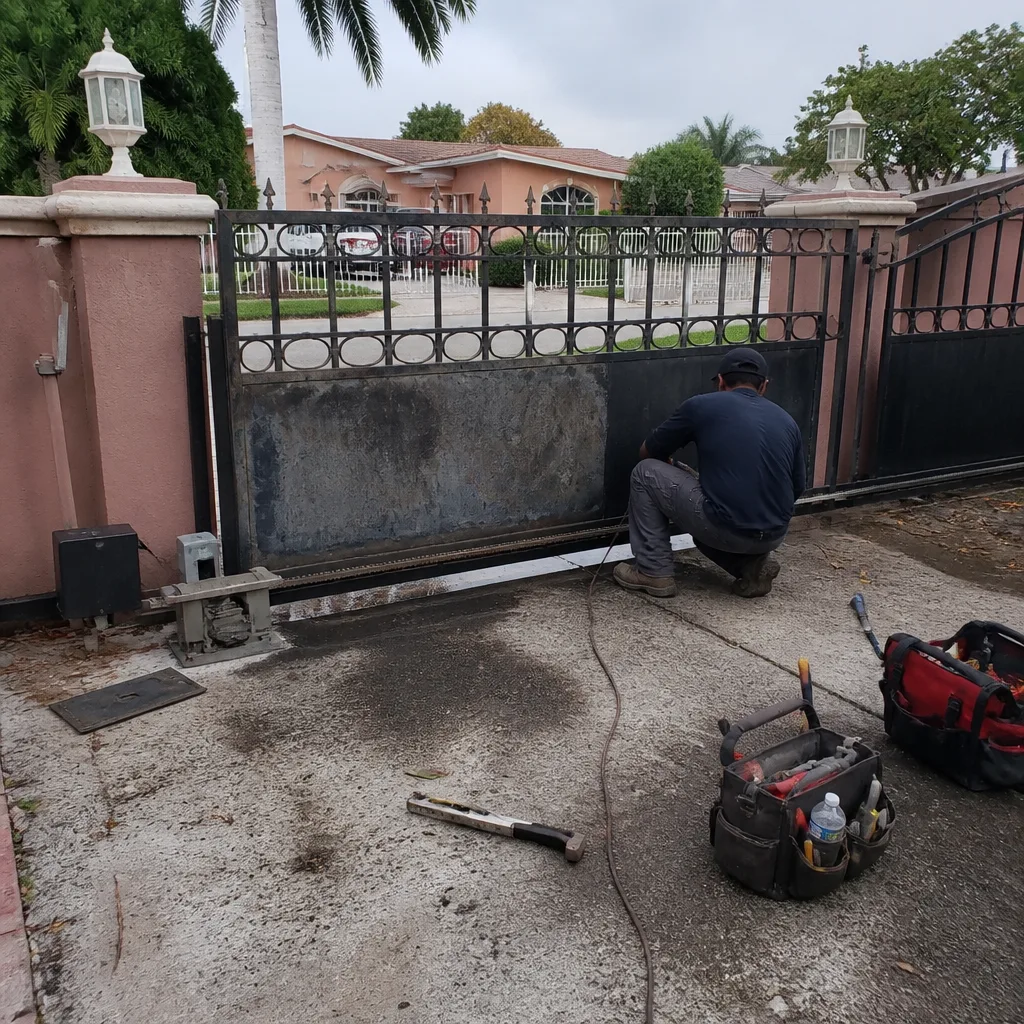 Before
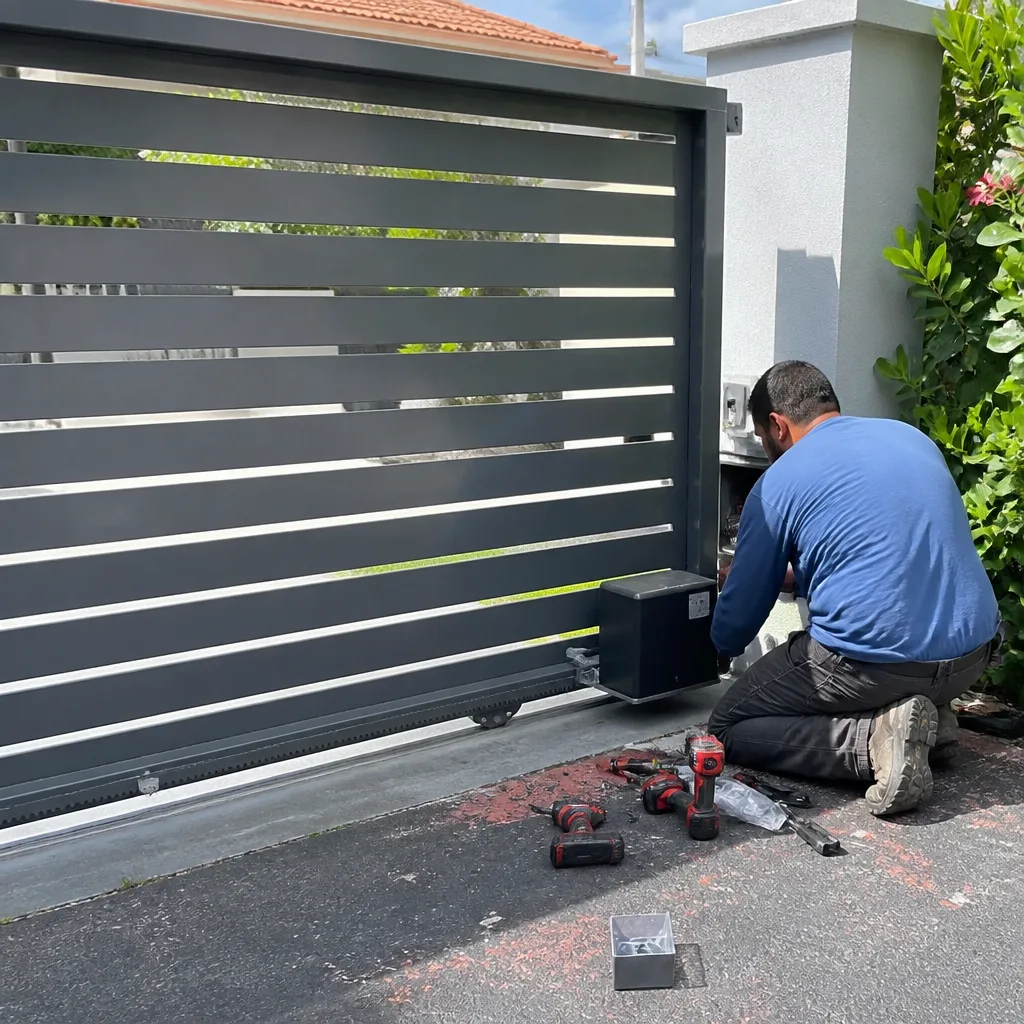 After
After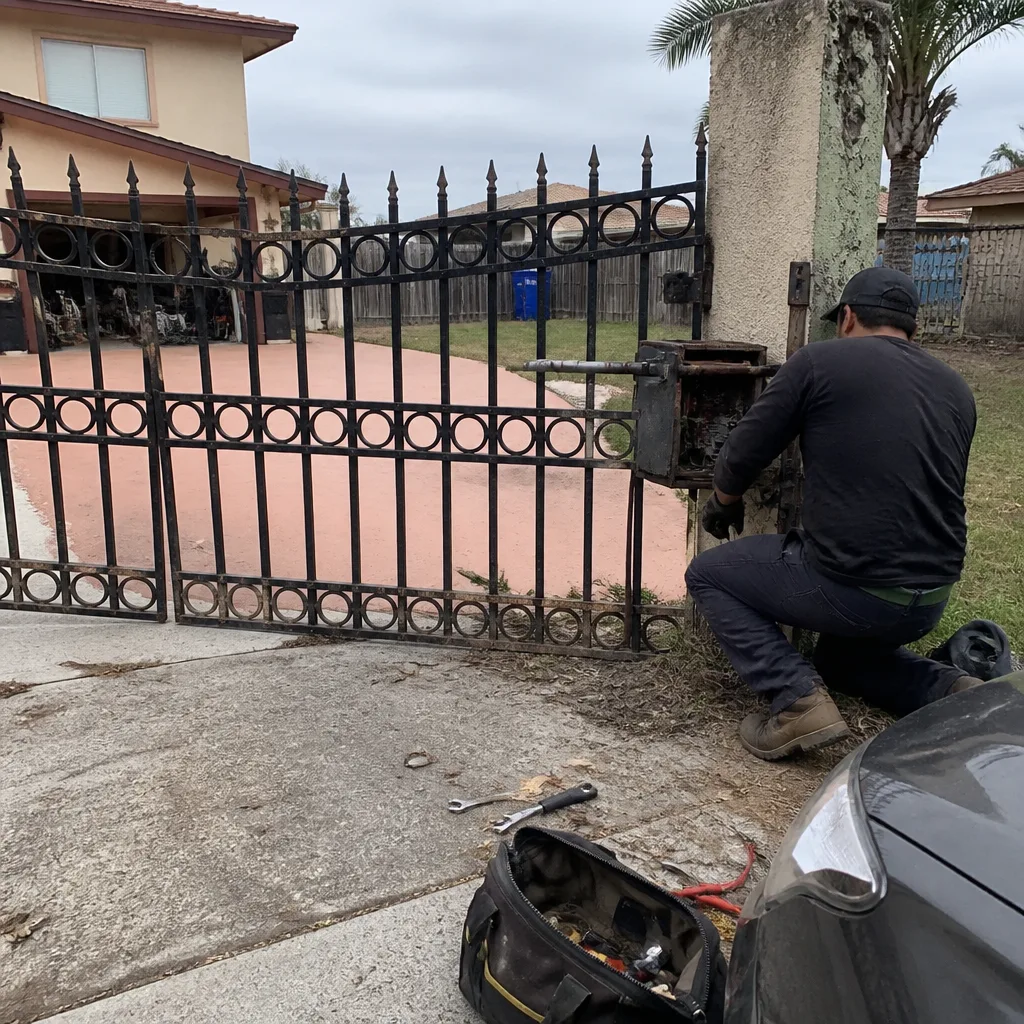 Before
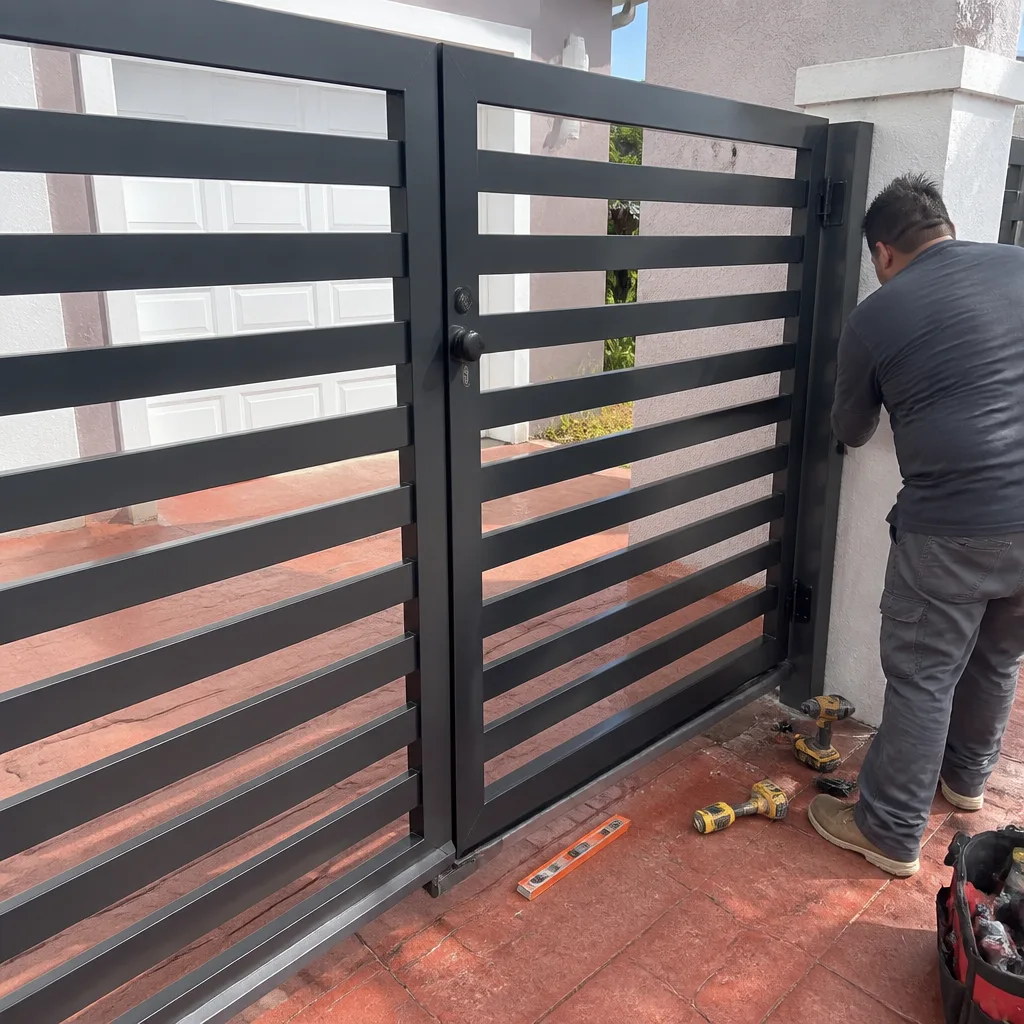 After
After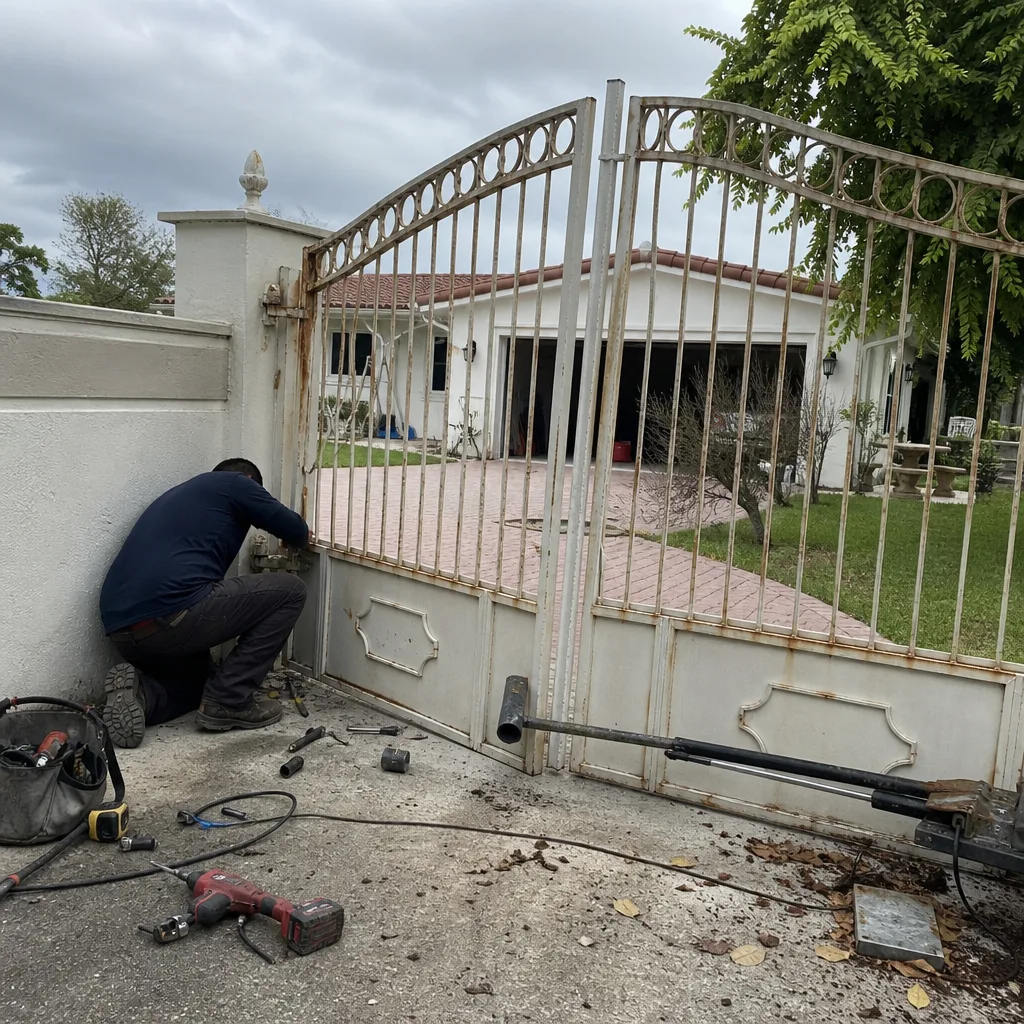 Before
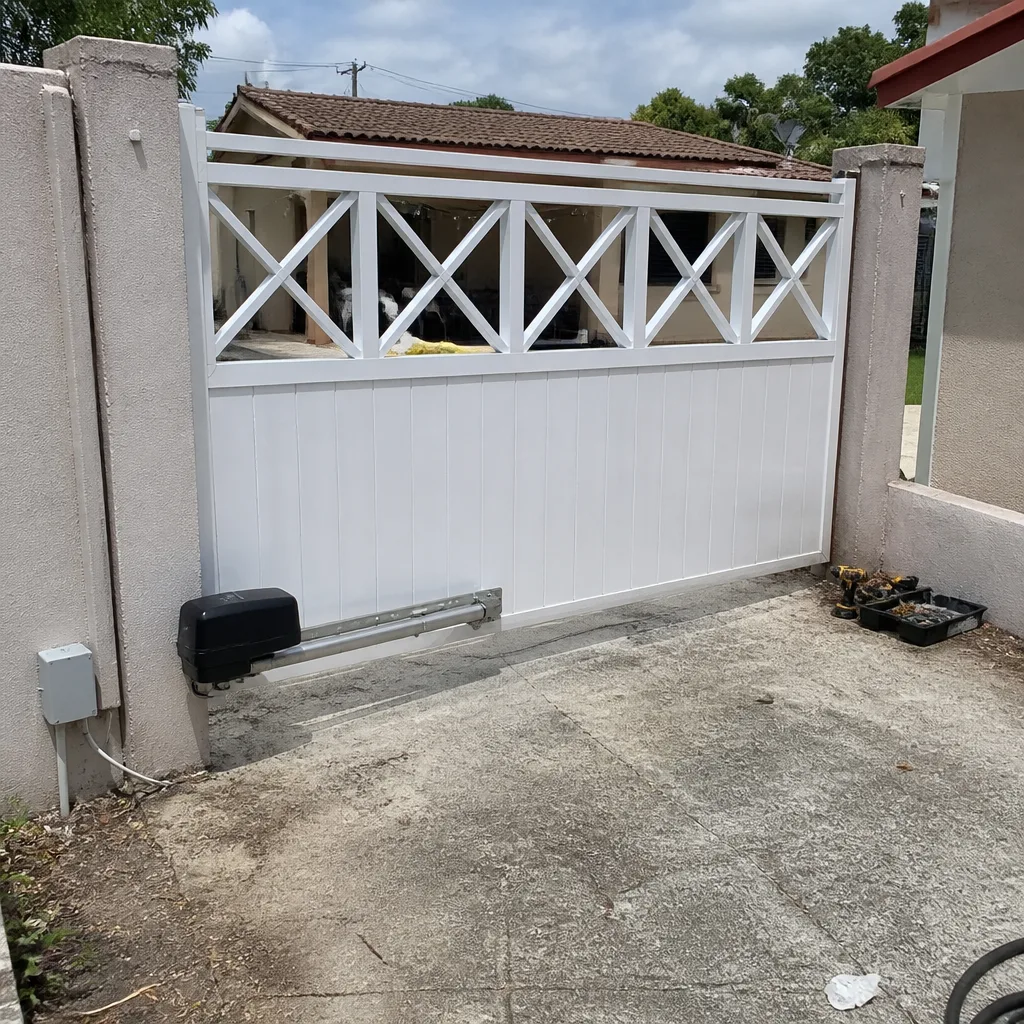 After
AfterDIY vs Professional Gate Repair: The Hialeah Homeowner’s Decision Guide
Here’s something most gate companies in Hialeah won’t tell you: adjusting your own gate’s limit switches without understanding entrapment protection zones doesn’t just risk a repair gone wrong. It can void your homeowner’s insurance coverage if that gate injures someone. Florida’s adoption of UL 325 standards means automatic gates are treated as machinery with assumed safety compliance, not as household fixtures you can tinker with like a squeaky door hinge. In this guide and our Gate Repair Maintenance Checklist for Hialeah Homeowners, we’ll draw the legal and practical line between safe homeowner maintenance and repairs that expose you to liability. You’ll learn exactly which tasks keep your gate healthy, which ones require professional documentation, and why the $40 you saved on a DIY adjustment can turn into a $4,000 claim denial.
Quick Answer
Most Hialeah homeowners can safely handle lubrication, debris clearing, remote battery replacement, and visual inspections. Any work involving limit switches, entrapment sensors, operator mounting, or control board settings crosses into UL 325 liability territory and should be performed by a technician who documents compliance. The dividing line isn’t skill, it’s legal exposure.
Table of Contents
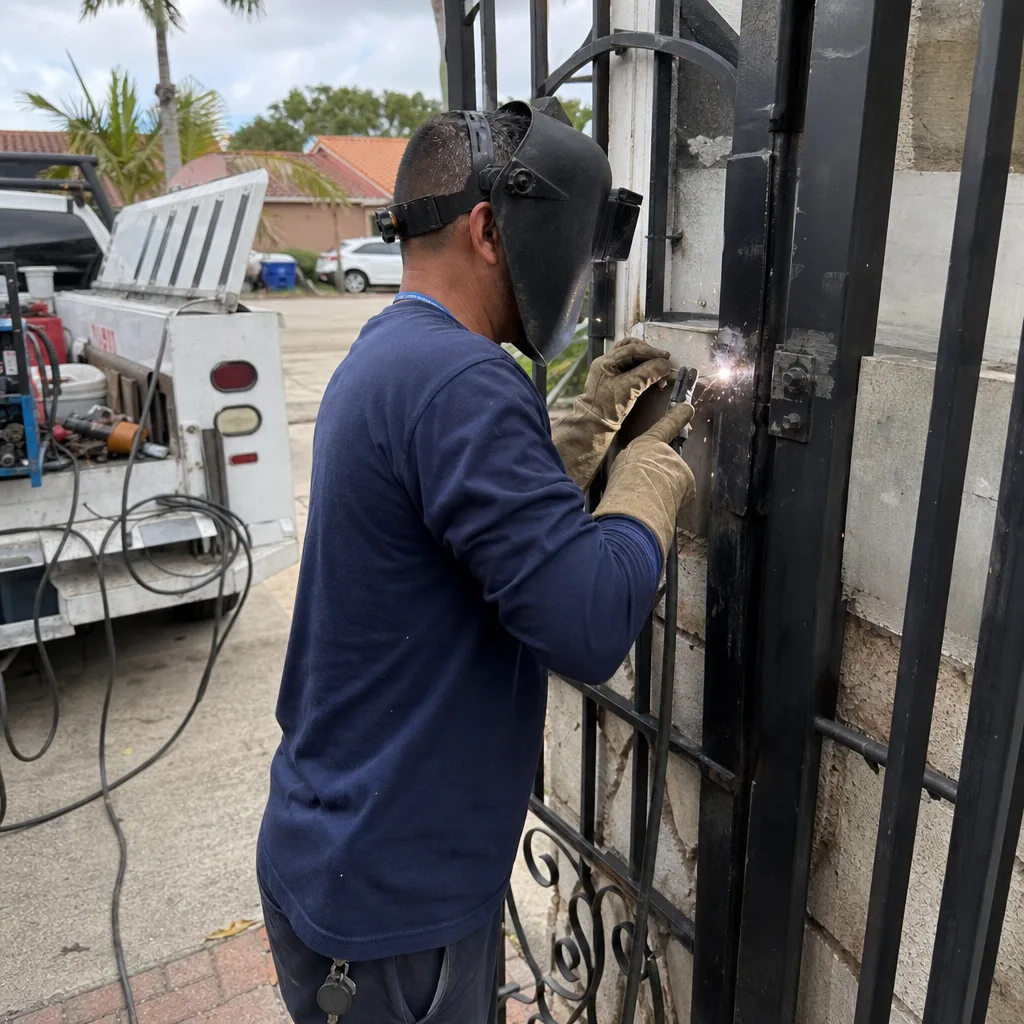
- The UL 325 Line: Where DIY Ends and Liability Begins
- What You Can Safely Do Yourself
- The Documentation Gap: Why DIY Repairs Cost More Later
- Honest Cost Math: When DIY Saves Money vs. When It Doesn’t
- What to Do Between Professional Visits
- If You Do DIY: How to Document What You Changed
- Hialeah-Specific Factors: Climate, Codes, and Common Failures
- Choosing a Technician Who Documents (Not Just Fixes)
 Before
 After
AfterThe UL 325 Line: Where DIY Ends and Liability Begins
UL 325 is the safety standard that governs automatic gate operators in the United States. Florida adopted it into state building codes, and Hialeah enforces it through permit inspections and liability assumptions. The standard defines entrapment protection zones, force limits, and sensor requirements. Here’s what matters for your decision: when you purchase an automatic gate system, the manufacturer certifies it as UL 325 compliant. Any modification you make after that point becomes your responsibility.
The critical distinction is between maintenance (preserving the existing compliant state) and modification (changing any setting that affects safety function). Maintenance is legally neutral. Modification without documentation shifts liability to you.
Tasks That Stay on the Safe Side of the Line
- Lubricating hinges, rollers, and chain with appropriate products
- Cleaning photo-eye lenses and transmitter surfaces
- Replacing remote control batteries
- Removing visible debris from the gate path
- Tightening accessible hardware to manufacturer torque specs (with a torque wrench)
- Testing the manual release function
Tasks That Cross Into Liability Exposure
- Adjusting limit switches (the electronic stops that control open/close position)
- Changing force settings or stall sensitivity
- Repositioning or recalibrating entrapment sensors (photo eyes, edge sensors, loops)
- Modifying operator mounting brackets or arm geometry
- Updating control board firmware or dip-switch configurations
- Replacing motors, gearboxes, or control boards without commissioning documentation
Here’s the insurance problem in concrete terms. If your gate strikes a visitor and they file a claim, your homeowner’s policy will investigate whether the gate was maintained to UL 325 standards. If you adjusted the limit switches last month and didn’t document the before-and-after positions, the insurer can argue the gate was not in its certified configuration. We’ve seen this ambiguity used to deny claims in Florida courts. The adjustment itself may have been correct, but without documentation, you cannot prove the gate was compliant at the moment of incident.
Professional technicians who work under documented standards, like Vance Gate Repair Hialeah home, leave a record that traces every adjustment back to manufacturer specifications. That’s not a marketing claim, it’s evidence that holds up.
What You Can Safely Do Yourself
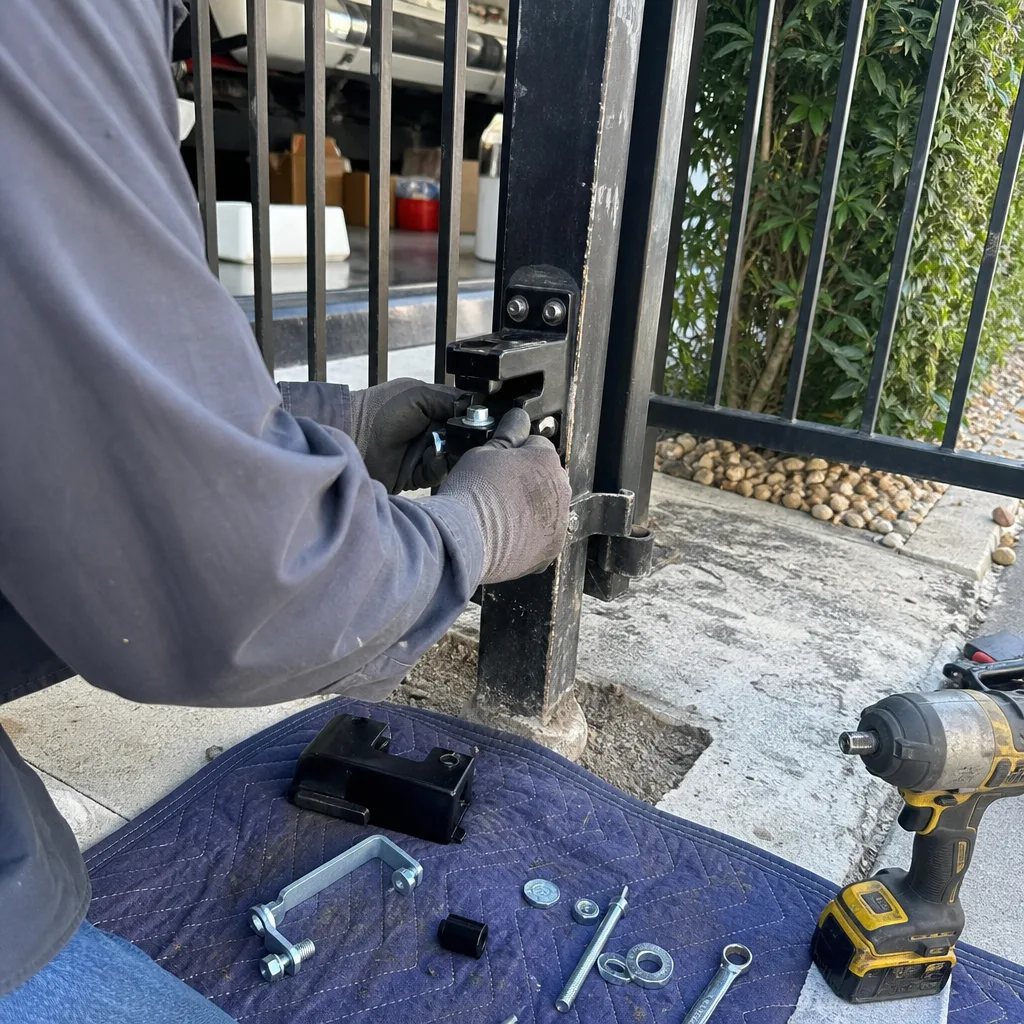
Let’s be specific about the maintenance that genuinely helps your gate and carries zero liability risk. These tasks preserve the compliant state without changing it.
Monthly Visual Inspection
- Walk the full gate path. Look for cracks in concrete mounting pads, corrosion on metal frames, and vegetation growth that could obstruct travel.
- Check photo-eye alignment. The transmitter and receiver should face each other directly, with no spider webs, leaf debris, or water spots on the lens. In Hialeah’s humid climate, algae can grow on lens surfaces in as little as three weeks during summer.
- Inspect the gate for binding or scraping. Open and close it manually using the release mechanism. It should move freely through the full arc.
- Listen to the operator during automatic cycles. Grinding, clicking, or straining sounds indicate mechanical issues that need professional diagnosis.
- Test all access methods: remotes, keypad, intercom release, and manual override. Note any delay or failure.
Quarterly Maintenance Tasks
- Lubrication: Use white lithium grease on hinge pins and chain drives. Use silicone spray on slide gate tracks. Never use WD-40 as a lubricant, it displaces moisture but doesn’t protect moving parts.
- Battery replacement: Keypad and remote batteries typically last 12-18 months in Hialeah’s heat. Proactive replacement prevents the “gate won’t open” emergency that happens at 10 PM.
- Tightening hardware: Gate hardware loosens from vibration. Use a torque wrench and check against manufacturer specs. Overtightening is as damaging as undertightening.
- Cleaning drainage: Slide gate tracks and operator housings need clear drainage. Hialeah’s afternoon thunderstorms can flood operator enclosures if drain holes are clogged.
These tasks keep your gate healthy and give you early warning of developing problems. When you call a professional, you’ll have specific observations rather than “it’s making a noise,” which speeds diagnosis and reduces labor time.
The Documentation Gap: Why DIY Repairs Cost More Later
This is the point most gate repair guides miss entirely. A homeowner who fixes a problem without recording what they found and what they changed creates ambiguity that costs more to unwind than the original repair would have.
Here’s a real pattern we encounter in Hialeah. A homeowner’s gate starts reversing before fully closing. They find a YouTube video, adjust the limit switch, and the gate closes completely. Three months later, the gate won’t open at all. They call a technician.
The technician now faces an unknown starting state. The limit switch has been moved, but from what original position? Was the initial reversal caused by a misaligned limit switch, or was the limit switch compensating for a failing encoder, a binding track, or a degraded motor capacitor? Without knowing the baseline, the technician must diagnose from scratch, running full electrical and mechanical tests that add 45-90 minutes to the service call.
Under Gate Repair in Hialeah, our standard diagnostic includes photographing every adjustment point before we touch it. If a homeowner has already adjusted the limit switch, we photograph its current position, then trace back to manufacturer default, then rebuild the configuration methodically. The labor cost reflects that reconstruction work.
The documentation problem compounds with control boards. Modern operators from brands like DoorKing and Elite store error histories and configuration tables. A factory reset erases that history. A homeowner who resets the board to “fix” an error code destroys the diagnostic trail. We’ve seen $200 repairs become $800 replacements because the error pattern that would have identified a failing component was wiped out.
Professional documentation serves two purposes: it proves compliance for liability, and it preserves diagnostic information for future service. DIY repairs typically do neither.
Honest Cost Math: When DIY Saves Money vs. When It Doesn’t
Let’s break down actual costs without the usual gate-company scare tactics. Some DIY repairs genuinely save money. Others create false economies.
Where DIY Saves Money
| Task | Retail Parts Cost | Typical Professional Charge | DIY Savings |
|---|---|---|---|
| Remote battery replacement | $4-$8 | $85-$120 service call minimum | $75-$110 |
| Photo-eye cleaning / realignment (minor) | $0 | $85-$150 | $85-$150 |
| Hinge lubrication | $12-$18 | $85-$120 | $65-$100 |
| Keypad battery replacement | $6-$12 | $85-$150 | $75-$135 |
| Debris removal from track | $0 | $85-$120 | $85-$120 |
These savings are real and worth capturing. The tasks are low-risk, require no special tools, and don’t affect safety certification.
Where DIY Doesn’t Save Money (Or Costs More)
| Task | Retail Parts Cost | Hidden Costs | Typical Professional Charge | Net DIY Outcome |
|---|---|---|---|---|
| Limit switch adjustment | $0 | Liability exposure, future diagnostic reconstruction | $150-$280 | Often negative |
| Control board replacement (Viking, Ghost Controls) | $280-$450 | No warranty on self-install, no commissioning tools | $450-$680 (with warranty) | Break-even or loss |
| Photo-eye replacement | $45-$85 | Alignment requires laser level or manufacturer jig | $180-$320 | Small savings, high failure risk |
| Gearbox rebuild | $120-$200 | Specialty pullers, seal drivers, torque specs | $380-$550 | Frequently negative due to tool costs |
The hidden cost in the second table is diagnostic capability. A professional technician arrives with an amp clamp, a multimeter with min/max capture, a control board diagnostic tool, and manufacturer-specific software for brands like Elite and DoorKing. These tools cost $2,000-$8,000 collectively. The homeowner cannot perform a proper current-draw test to identify a failing motor, cannot read fault codes from a sealed control board, and cannot verify that a replacement part is correctly commissioned.
The honest math: if the repair requires diagnosis more complex than “this part is visibly broken,” professional service usually pays for itself in correct identification and warranty protection.
What to Do Between Professional Visits
The best maintenance program combines homeowner vigilance with scheduled professional service. Here’s the interval that works for Hialeah’s climate.
Weekly (2 minutes)
- Operate the gate through one full cycle while observing
- Check that photo-eye indicator lights are steady (not blinking)
- Verify keypad backlight and button response
Monthly (15 minutes)
- Complete the visual inspection protocol from Section 2
- Clean photo-eye lenses with microfiber cloth and lens cleaner
- Test manual release and verify you can operate the gate by hand
- Check operator enclosure for water intrusion or insect nests
Quarterly (30 minutes)
- Full lubrication protocol
- Battery replacement in all remotes and keypads (proactive, not reactive)
- Torque-check accessible hardware
- Clear drainage paths around operator and track
Annually (professional service)
Schedule a technician to perform electrical testing, force verification per UL 325, control board diagnostics, and full documentation update. This is not a repair call, it’s preventive maintenance that catches degradation before failure. In Hialeah’s salt-air environment, even inland properties see accelerated corrosion on electrical connections. Annual service identifies green copper corrosion before it causes intermittent faults.
For Gate Motor & Opener in Hialeah, we recommend pairing annual service with the start of hurricane season. A gate that functions properly before a storm evacuation order is a gate that doesn’t trap your vehicle when you need to leave.
If You Do DIY: How to Document What You Changed
Sometimes you need to get the gate working before a technician can arrive. If you cross the line into adjustment territory, minimum documentation protects you legally and financially.
The Minimum Record (do this before you touch anything)
- Photograph the current state. Every adjustment point, every screw position, every display reading. Date-stamp the photos or email them to yourself for timestamp verification.
- Record the before values. If there’s a digital display, write down the reading. If there’s a mechanical stop, measure its position with a tape measure from a fixed reference point. Note which direction is “more open” vs. “more closed.”
- Make one change at a time. Test between changes. Document the result of each individual adjustment.
- Photograph the after state. Same angles, same reference points, same measurements.
- Write a description. “Adjusted close limit switch from 2.3 inches to 1.8 inches from reference bracket. Gate now closes fully without reversal. Photo-eye green light steady.”
This record serves two purposes. If the gate fails later, the technician knows where to start instead of reconstructing from scratch. If there’s an incident, you have evidence that you made a documented, measured adjustment rather than an uninformed guess.
What this minimum record does NOT do: it does not prove UL 325 compliance. Only a technician with calibrated force-testing equipment can verify that your adjustment maintains compliant entrapment protection. Documentation helps; it doesn’t replace professional commissioning.
Hialeah-Specific Factors: Climate, Codes, and Common Failures
Hialeah’s environment creates gate problems that don’t appear in generic repair guides. Understanding these local factors helps you decide whether a symptom needs professional diagnosis.
Climate Stressors
Humidity and salt air: Even properties west of the Palmetto Expressway experience corrosion from marine air that penetrates inland during onshore flow. Control board connections develop green copper oxide. Limit switch contacts pit from condensation cycling. We’ve replaced more limit switches in Hialeah from corrosion than from mechanical wear.
Intense UV exposure: Plastic photo-eye housings and keypad faceplates degrade faster here than in northern climates. A keypad that looks functional may have UV-cracked seals that allow water intrusion during summer thunderstorms.
Soil conditions: Hialeah’s limestone substrate and seasonal water table changes cause concrete pads to shift. A gate that operated fine in January may bind in August after summer rains shift the footing. This looks like an operator problem but is actually a structural issue. DIY adjustment of the operator to compensate for binding accelerates gearbox wear.
Code and Permit Context
Hialeah requires permits for new gate installations and for substantial modifications to existing automatic systems. Repairs that replace like-for-like parts typically don’t trigger permit requirements, but any change to the operator type, gate weight, or safety system configuration may. A homeowner who upgrades from a basic operator to one with more features, or who adds a second entrapment sensor, may unknowingly create a permit obligation.
Professional technicians in Hialeah know the permit boundary. We flag when a repair crosses into permit territory and handle the documentation. DIY repairs that trigger permit requirements without compliance create problems at property sale or insurance renewal.
Common Hialeah Failure Patterns
- Spring failures on swing gates: Hialeah’s humidity corrodes torsion springs faster than drier climates. A swing gate that suddenly feels heavy or won’t stay open has likely lost spring tension. This is not adjustable by the homeowner, replacement requires specialized winding tools.
- Photo-eye misalignment from settling: Concrete pad movement shifts photo-eye brackets. The homeowner sees intermittent reversal and adjusts the limit switch instead of realigning the sensor. This masks the real problem and creates entrapment risk.
- Control board failure from power surges: Hialeah’s summer lightning activity damages boards without visible signs. The gate may work intermittently, or remotes may lose range. Only board-level diagnostics identify this.
- Slide gate track obstruction from landscaping: Fast-growing tropical plants encroach on tracks within weeks. Regular clearing prevents the binding that leads to motor overload.
Choosing a Technician Who Documents (Not Just Fixes)
If you’ve read this far, you understand that documentation matters as much as the repair itself. Here’s how to identify a technician who operates under that standard.
What to Ask Before Booking
- “Do you provide a written price before starting work?” If the answer involves “we’ll see when we get there,” the technician doesn’t follow a fixed-price standard.
- “What documentation do I receive when the job is done?” Look for photo records, adjustment readings, and part numbers. Verbal summaries disappear.
- “Do you test to UL 325 force limits after adjustment?” This should be automatic, not optional. If the technician doesn’t know what you’re asking, they aren’t testing.
- “What brands do you service?” A technician who only works on one brand will steer toward replacement. We service nine major automation brands including Viking, Ghost Controls, and DoorKing, which means we repair what’s installed rather than replacing with what we stock.
Red Flags
- Verbal estimates that change after arrival
- No discussion of entrapment protection testing
- Pressure to replace rather than repair without diagnostic evidence
- No license number provided on request
- Technician arrives without company identification or uniform
The Gate Installation in Hialeah standard we apply, The Haven Standard, requires written price before work (Clause 1), documented photo record on every visit (Clause 4), and the 365-Day Done Right Promise. These aren’t marketing phrases, they’re operational rules that govern every dispatch. When a technician arrives at your property, you receive their name and photo before they get out of the truck. Background-checked, uniformed, and carrying the tools to document what they find.
Common Mistakes to Avoid
- Adjusting the limit switch to compensate for binding. A gate that doesn’t fully close has a mechanical problem, not an electronic one. Moving the limit switch masks the binding and accelerates gearbox wear. In Hialeah’s shifting soils, binding often indicates pad settlement that needs structural correction.
- Using WD-40 on gate components. This is the most common maintenance error we see. WD-40 is a water displacer, not a lubricant. It evaporates and leaves components unprotected. Use white lithium grease on hinges and silicone spray on tracks.
- Ignoring intermittent problems. A gate that reverses “only sometimes” has a real, identifiable fault. Intermittent photo-eye response, loose connections, or failing capacitors don’t fix themselves. Waiting for total failure usually means emergency rates and possible vehicle entrapment.
- Buying parts without confirming compatibility. Control boards and photo eyes are model-specific. A “universal” replacement often lacks the firmware features your gate requires. We’ve unwound many DIY part swaps that cost more in labor than professional diagnosis would have.
- Resetting the control board without recording settings. The factory reset is not a diagnostic tool, it’s a last resort. It erases error histories, custom configurations, and learned travel limits. Record everything before any reset.
- Assuming new means compliant. A newly installed DIY operator from a big-box store may not meet Hialeah’s permit requirements or your property’s specific entrapment protection needs. Compliance is verified by testing, not assumed from packaging.
- Neglecting the manual release test. Every gate operator has a manual release for power failures or emergencies. If you haven’t tested it in six months, you don’t know if it works. Hurricane season in Hialeah is the wrong time to discover a seized release mechanism.
When to Call a Professional
Call a technician when the problem involves safety systems, when you lack the tools to diagnose, or when your own adjustments don’t produce a stable result. Specifically: limit switch issues, entrapment sensor problems, control board errors, motor or gearbox symptoms, structural binding, and any situation where the gate’s force or speed has changed without explanation.
Vance Gate Repair Hialeah offers free estimates in Hialeah. We’ll review what you’ve observed, inspect the gate, and provide a written price before any work begins. If you’ve already attempted repairs, bring your documentation. We’ll incorporate it into our diagnostic rather than charging to reconstruct what you already know. Call (786) 458-8210 to schedule.
Frequently Asked Questions
You can, but you assume liability for UL 325 compliance and you won’t have documentation if an incident occurs. We recommend photographing the original position, measuring with a tape measure, and recording the change. For most homeowners, the risk exposure exceeds the $150-$280 a professional charges for documented adjustment with force verification.
Most service calls in Hialeah run $85-$150 for diagnosis, with repairs ranging from $180 for minor adjustments to $680 for control board replacement on brands like Viking or Ghost Controls. We provide the written price before starting work, so the invoice matches the quote. Call (786) 458-8210 for an exact estimate on your specific gate.
Compensating for binding by adjusting the limit switch instead of fixing the mechanical problem. Hialeah’s soil movement causes concrete pads to shift, which makes gates bind. Homeowners move the electronic stop to “make it work,” which overloads the motor and creates entrapment risk. The correct fix is pad leveling or track realignment, not limit switch adjustment.
Like-for-like part replacements typically don’t require permits. Changes to operator type, gate weight, safety system configuration, or structural mounting may trigger permit requirements. Professional technicians can identify when a repair crosses that line and handle the documentation. DIY repairs that create permit obligations without compliance cause problems at property sale.
Annual service is the minimum for Hialeah’s climate. We recommend scheduling before hurricane season starts, when you need reliable gate operation for potential evacuation. Annual service includes electrical testing, force verification, control board diagnostics, and full documentation update. Between visits, perform the monthly and quarterly homeowner maintenance protocols described in this guide.
At minimum: a written invoice with part numbers and labor descriptions, photos of the work performed, and verification that force limits were tested to UL 325 standards. Under The Haven Standard, every Vance Gate Repair visit includes a photographed record of what was found, what was adjusted, and what was installed, provided to the homeowner and filed in the job record. If your current technician doesn’t document, you’re paying for repair without proof of compliance.
The Bottom Line
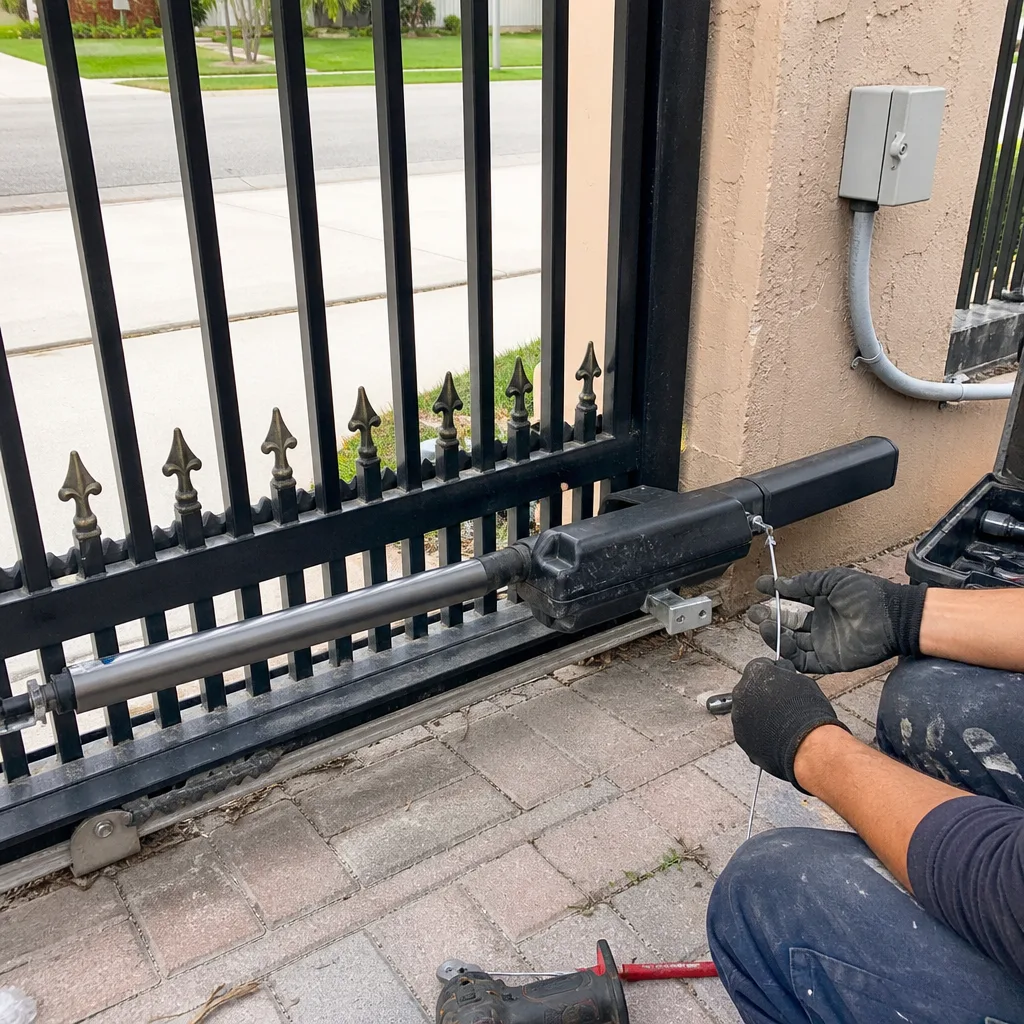
The DIY vs. professional question for gate repair isn’t about your mechanical ability. It’s about where liability begins. You can safely maintain your gate through lubrication, cleaning, inspection, and battery replacement-find more guides & resources on our blog. Any task that changes safety-critical settings, limit positions, or sensor configurations crosses into UL 325 territory where documentation and calibrated testing are required for legal protection. In Hialeah’s corrosive climate, professional annual service catches degradation before failure. When you do need a technician, choose one who documents every adjustment in writing and with photographs. The price you pay for that standard is typically recovered in faster future service, warranty protection, and the elimination of claim ambiguity if an incident ever occurs.
Written by Adrian Vance, Owner at Vance Gate Repair Hialeah, serving Hialeah since 2014.